Our planet is home to some truly extraordinary creatures. In fact, some of them are so strange that it’s hard to believe they even exist. Nature has created these animals with remarkable appearances and unique abilities that seem straight out of a sci-fi world. It’s funny that we live on this planet, yet we still know surprisingly little about much of the world around us.
Many of these magnificent animals are so rare that only a few thousand—or even just a few hundred—remain in the wild. Their unusual appearances, unique behaviors, and limited habitats make them some of the most fascinating species on Earth.
So let’s take a deep dive and learn about these exotic and rare animals that can be found in different corners of the world.
1. Saola
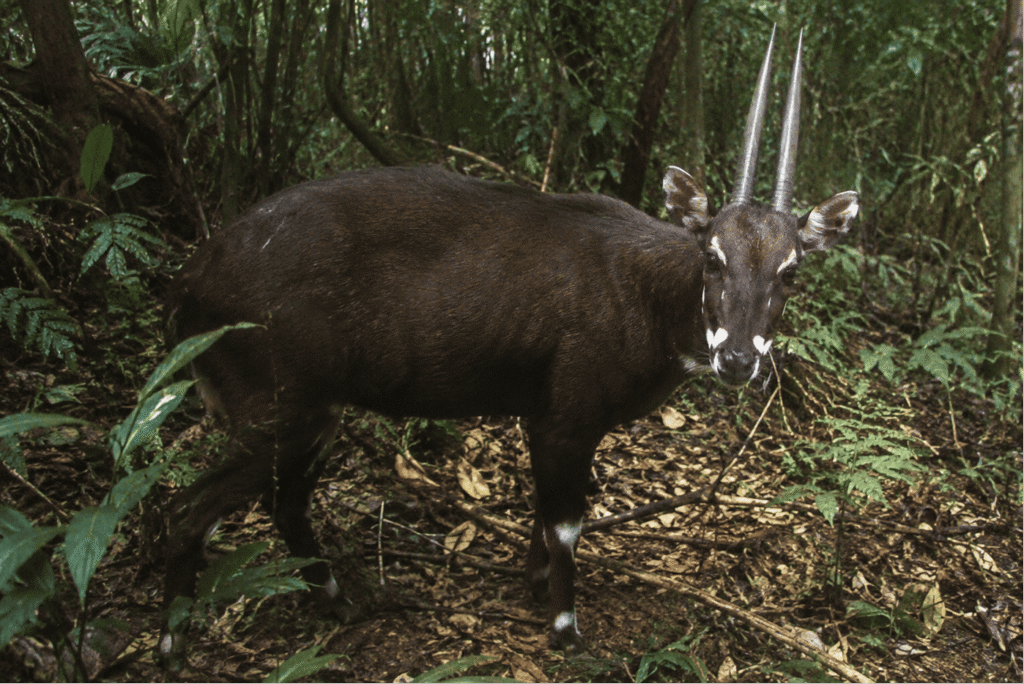
The saola (scientific name: Pseudoryx nghetinhensis) is one of the rarest and most mysterious mammals on Earth. It is often called the “Asian Unicorn” because it is so rarely seen—not because it actually has one horn.
The saola was discovered by science in 1992 in the forests of Vietnam. It was the first large mammal discovered by scientists in more than 50 years, making it one of the most remarkable zoological discoveries of the 20th century. Scientists initially knew of its existence only from skulls and horns found in local villages. These unique mammals are found only in the Annamite Mountains along the Vietnam–Laos border.
Believe it or not, they are more closely related to cattle and buffalo than to antelopes and typically weigh around 176–220 pounds (80–100 kg). One of their most distinctive features is a pair of long, straight, parallel horns found on both males and females.
The saola is classified as Critically Endangered, the highest threat category before extinction in the wild. Estimates vary, but experts believe that only a few dozen to a few hundred individuals may remain, if any survive at all.
There are currently no saolas in captivity, and some conservationists fear the species may already be on the brink of extinction. However, hope remains because the forests where it lives are remote, dense, and difficult to survey.
2. Aye-Aye
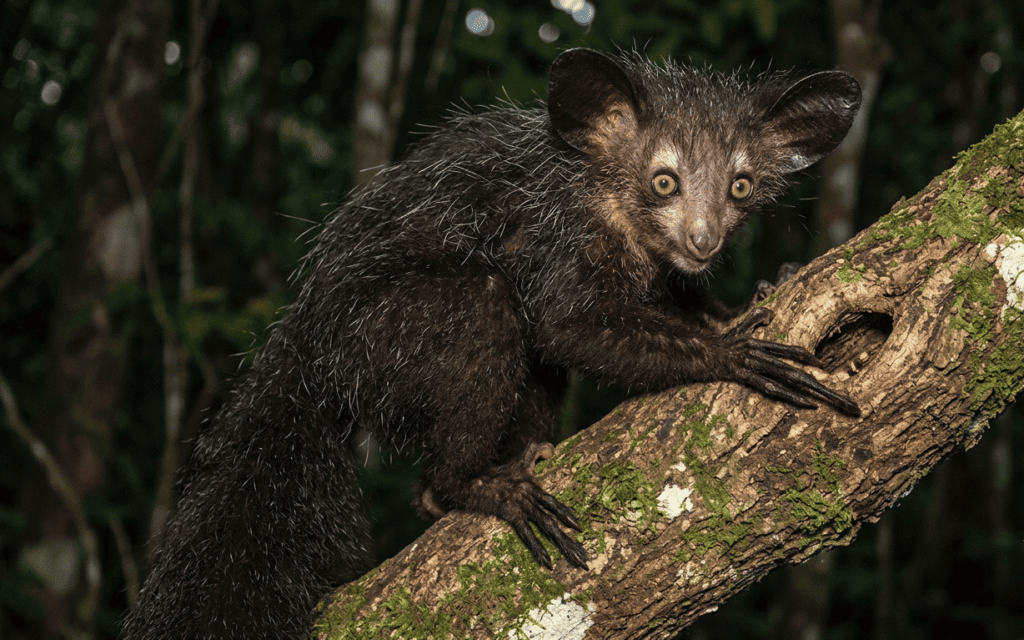
The aye-aye (Daubentonia madagascariensis) is one of the largest, strangest, and most fascinating nocturnal primates in the world. It is a type of lemur found only on the island of Madagascar. These unusual animals are primarily active at night and feed on insects, fruits, seeds, nectar, and fungi. In captivity, they can live for around 20–25 years.
The aye-aye has a truly unique appearance. It has large, bat-like ears, continuously growing rodent-like teeth, and big eyes that help it see in the dark. Its most distinctive feature is an extremely long, thin middle finger that looks almost skeletal. This specialized finger is used for finding food. The aye-aye can also rotate its ears independently, allowing it to pinpoint sounds in the darkness. Its unusual appearance has led many people to consider it one of the world’s weirdest animals.
The aye-aye uses a remarkable hunting technique called percussive foraging, similar to how a woodpecker searches for insects. It taps on tree bark with its fingers, listens for the hollow sounds made by insect tunnels, gnaws through the wood with its sharp teeth, and then uses its long middle finger to pull out insect larvae hidden inside.
Although it is a harmless creature, local folklore in some parts of Madagascar considers the aye-aye a bad omen or a symbol of misfortune. Because of these beliefs, some aye-ayes have unfortunately been killed when encountered. However, many communities now participate in conservation efforts to protect them. The aye-aye is currently listed as Endangered by the International Union for Conservation of Nature (IUCN).
3. Pangolin
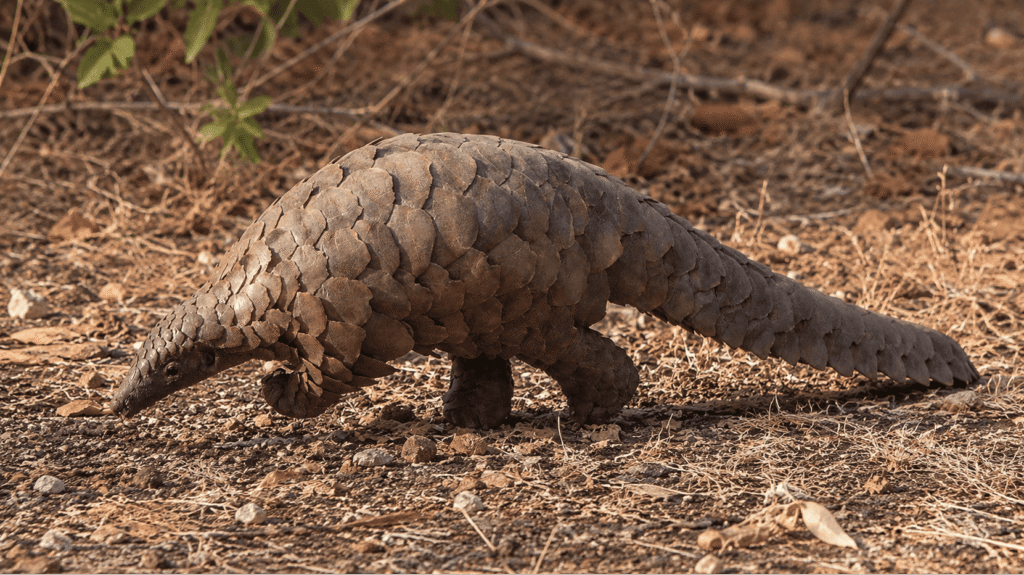
Pangolin is one of the most unique mammals on Earth, covered in protective scales. It is often called a “scaly anteater” because its body is covered with tough keratin scales and it mainly feeds on ants and termites. Pangolins can be found in parts of Asia and Africa.
There are eight recognized pangolin species worldwide, with four species found in Africa and four in Asia. Organizations such as WWF and the Pangolin Specialist Group officially recognize these eight species. Their diet mainly consists of ants, termites, and other insects, and they are mostly active at night. Depending on the species, pangolins can live for around 10–20 years.
The pangolin’s appearance is unlike that of any other mammal. Its body is covered with overlapping protective scales made of keratin, the same material found in human fingernails and hair. Pangolins have an excellent sense of smell but relatively poor eyesight. They possess a long, sticky tongue that can extend farther than their head and body combined, allowing them to catch insects hidden deep inside nests. They also have strong claws for digging into ant and termite colonies, along with a small head and tiny eyes compared to their body size.
Interestingly, pangolins do not have teeth. Instead, they help grind food in their stomachs by swallowing small stones and sand, similar to the way some birds digest food. Mother pangolins are also known for carrying their babies on their tails while moving around.
A pangolin’s strongest defense mechanism comes into play when it feels threatened. It curls into a tight ball, protecting its soft underside with its hard scales. Predators such as lions and leopards often struggle to attack a fully curled pangolin. Even so, their scales provide little protection against humans, making pangolins the most heavily trafficked mammals in the world.
4. Okapi
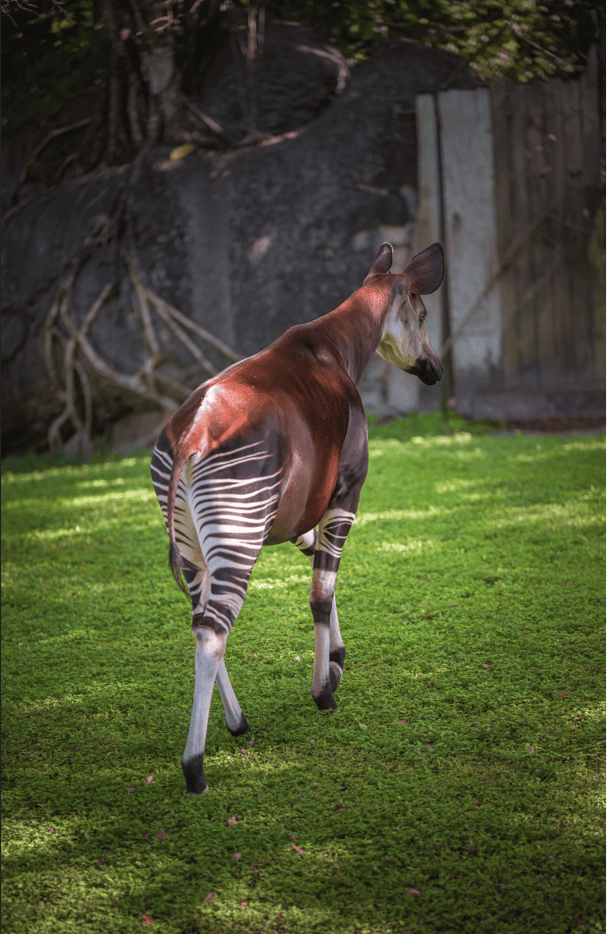
Okapi (Okapia johnstoni) is one of the world’s most unusual and elusive mammals. It looks like a mix of a giraffe, zebra, and deer, but its closest living relative is actually the giraffe. Because of this, it is sometimes called the “Forest Giraffe.” Since it lives deep within the rainforests of the Democratic Republic of the Congo and is extremely shy, it remained unknown to Western science until 1901. Before then, many people outside Africa believed stories about the animal were merely legends.
The okapi has a reddish-brown body similar to that of a deer, black-and-white striped legs resembling those of a zebra, and a long neck, although much shorter than a giraffe’s. It also has large ears that help it detect predators in dense forests. Despite its zebra-like stripes, the okapi is not related to zebras.
An adult okapi stands about 1.5 meters (5 feet) tall at the shoulder and typically weighs between 440 and 770 pounds (200–350 kg). Its diet consists mainly of leaves, fruits, fungi, and young shoots. One of its most remarkable features is its long, prehensile tongue, which can reach 12–14 inches (30–35 cm) in length. Its tongue is so long that it can even clean its own eyes and ears. Like giraffes, okapis have four-chambered stomachs that help them digest tough plant material. Male okapis also possess short horn-like structures known as ossicones.
Both male and female okapis have excellent hearing, which helps them survive in dense rainforest environments. Newborn calves can remain hidden in the same spot for weeks, helping them avoid predators during their most vulnerable stage of life. The okapi is the national animal of the Democratic Republic of the Congo and is currently classified as Endangered by the International Union for Conservation of Nature (IUCN).
5. Red Panda
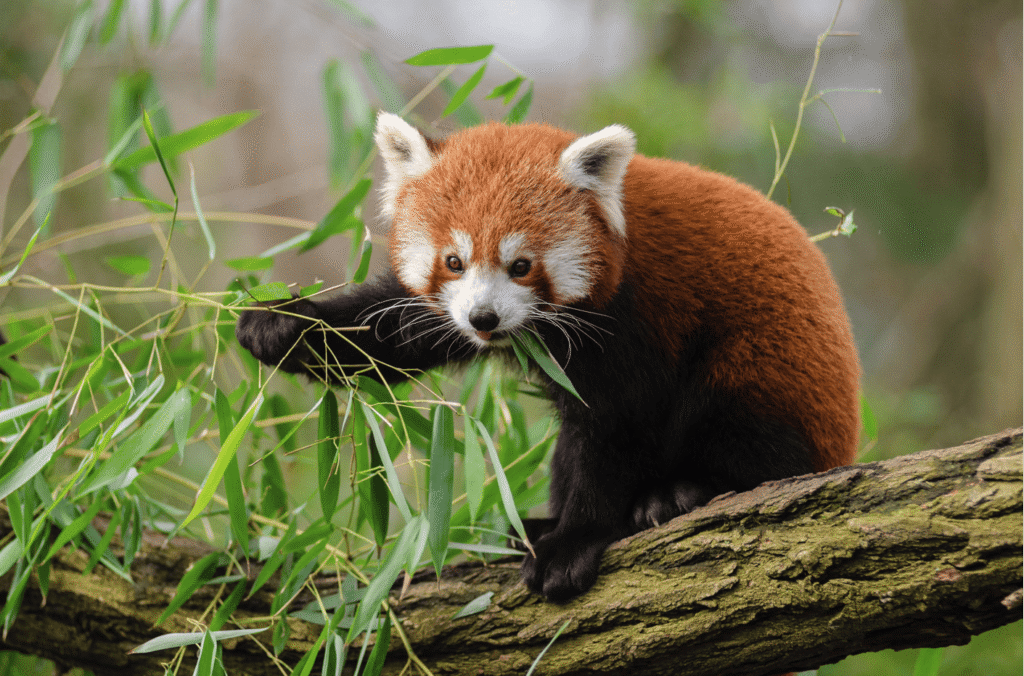
Red panda (Ailurus fulgens) is a small, tree-dwelling mammal known for its reddish-brown fur, bushy ringed tail, and adorable face. Despite its name, it is not closely related to the giant panda. In fact, it belongs to its own unique animal family, Ailuridae, making it one of the world’s most distinctive mammals. Red pandas were scientifically described nearly 50 years before giant pandas. Even though both species eat bamboo, they evolved this adaptation independently.
Red pandas prefer temperate forests with dense bamboo and are mainly found in the eastern Himalayas and parts of southwestern China, Nepal, India, Bhutan, and Myanmar. They spend much of their lives in trees, where they sleep, eat, and escape predators. Adults typically measure about 20–25 inches (50–64 cm) in body length, plus an 11–23 inch (28–59 cm) tail. They weigh around 6.6–13.7 pounds (3–6.2 kg) and usually live for 8–10 years in the wild or up to 15 years in captivity.
Their diet consists mainly of bamboo leaves and shoots, but they also eat fruits, berries, acorns, flowers, eggs, insects, and occasionally small birds. Because bamboo is low in nutrients, red pandas spend many hours each day eating to meet their energy needs.
Red pandas are mostly solitary, except during the breeding season. They are most active at dawn, dusk, and during the night. They communicate through whistles, squeaks, chirps, and scent marking, and they often sleep curled up on tree branches with their fluffy tails covering their faces.
Their thick, bushy tails help them maintain balance while climbing and wrap around their bodies to keep them warm during cold weather. They can rotate their ankles almost 180 degrees, making them exceptional climbers. Their flexible ankles also allow them to climb down trees headfirst. Like giant pandas, red pandas have an enlarged wrist bone that acts like a thumb, helping them grip bamboo. Thick fur even covers the soles of their feet, providing insulation and extra grip on snowy branches.
The red panda is classified as Endangered. Scientists estimate that fewer than 10,000 mature red pandas remain in the wild. With its gentle nature, striking appearance, and important role in Himalayan forests, the red panda is one of the world’s most beloved and threatened mammals.
6. Shoebill
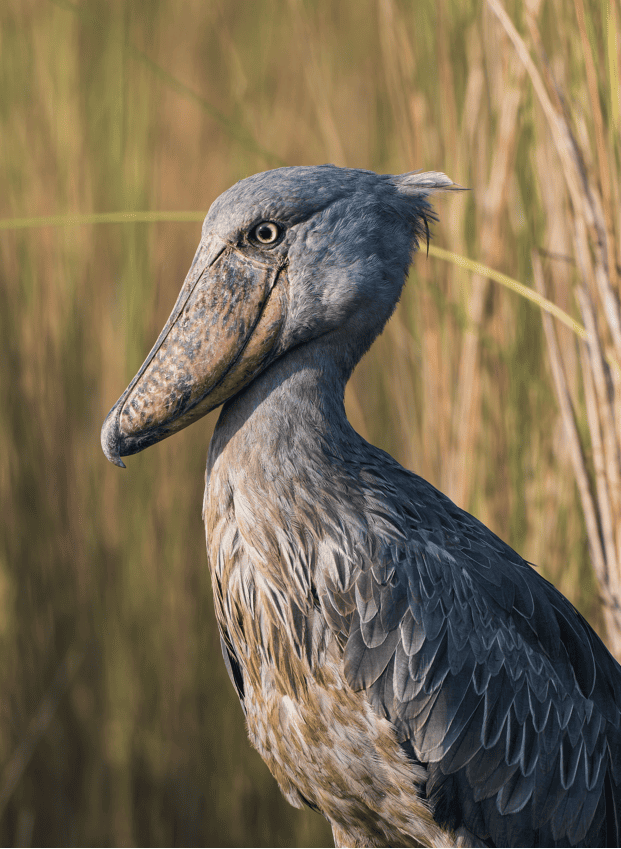
Shoebill (Balaeniceps rex, meaning “king whale-head”) is one of the world’s most extraordinary birds. Famous for its enormous shoe-shaped bill, towering height, and piercing stare, it has existed with little change for millions of years, earning it the nickname “the dinosaur bird.” Despite its intimidating appearance, it is usually quiet, patient, and solitary. It belongs to its own unique family, Balaenicipitidae.
Shoebills live in freshwater swamps and marshes across countries including South Sudan, Uganda, Zambia, Tanzania, Rwanda, and the Democratic Republic of the Congo. They prefer remote wetlands with plenty of fish and dense vegetation. They stand about 3.6–4.6 ft (110–140 cm) tall, have a wingspan of 7.5–8.5 ft (2.3–2.6 m), weigh around 9–15 lbs (4–7 kg), and can live for around 35 years in the wild and even longer in captivity.
Shoebills are powerful predators that mainly eat lungfish, catfish, tilapia, frogs, water snakes, baby crocodiles, small turtles, and occasionally young water birds. Their massive bill, measuring about 8–9.5 in (20–24 cm) long, is specially adapted for grabbing slippery prey. They often stand completely motionless for long periods before striking with incredible speed. They usually hunt at dawn or dusk but may hunt throughout the day. A shoebill can swallow prey nearly half its own size.
They usually live alone but come together during the breeding season. They fly with their necks retracted, similar to herons. Their intense stare often makes them appear intimidating, though they are generally calm around humans who keep a respectful distance. Because of their ancient appearance, shoebills are often called “living dinosaurs,” even though they are modern birds. They sometimes bow to people, a behavior that has made them famous in wildlife videos. However, this is not a greeting—it is a natural movement associated with awareness or nesting behavior.
The shoebill is classified as Vulnerable. Scientists estimate that only around 3,300–5,300 mature individuals remain in the wild.
7. Fossa
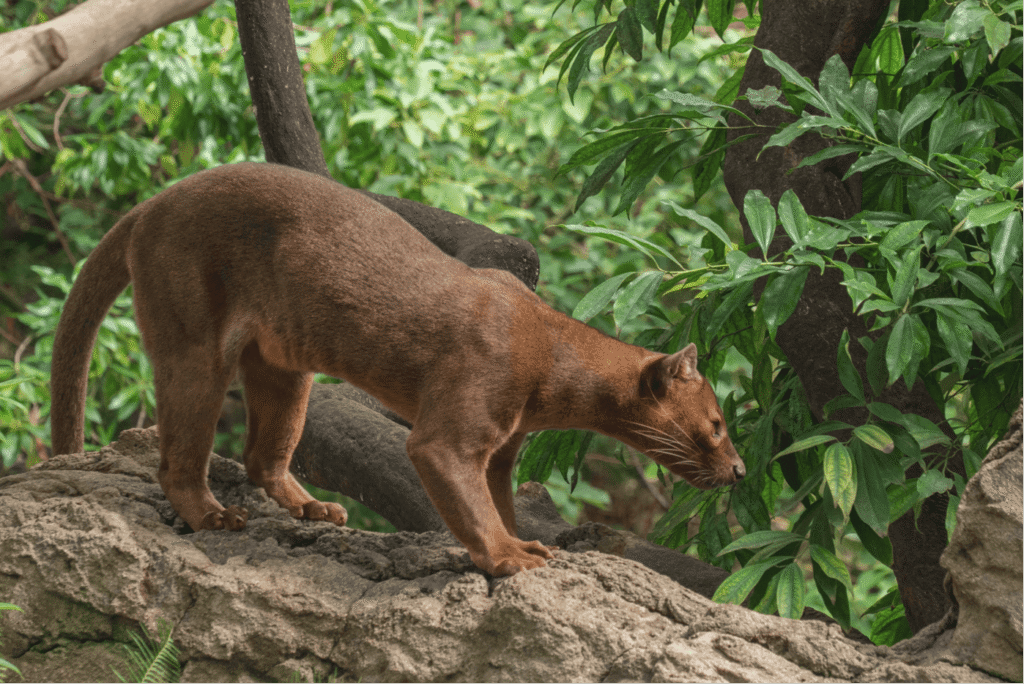
Fossa (Cryptoprocta ferox) is the largest native predator of Madagascar. The name “fossa” comes from the Latin word for “ditch” or “trench.” With the body of a cougar, the agility of a cat, and features resembling a mongoose, it is one of the island’s most remarkable and misunderstood animals. Although it looks like a big cat, the fossa is actually more closely related to mongooses and belongs to the family Eupleridae, a group of carnivores found only in Madagascar. Despite often being called the “Madagascar lion” or “Madagascar cat,” it is not a feline.
Fossas are endemic to Madagascar, meaning they are found nowhere else on Earth. They inhabit forests across the island, from humid eastern rainforests to dry western woodlands. They measure about 28–35 in (70–90 cm) in body length, plus a tail nearly as long as the body that provides balance while leaping through the forest canopy. They weigh about 12–26 lbs (5.5–12 kg), and their lifespan is around 15–20 years in the wild and up to 20 years in captivity.
The fossa is an apex predator that feeds on lemurs (its favorite prey), birds, rodents, reptiles, amphibians, insects, and occasionally small livestock. A single fossa can catch prey both on the ground and high in the trees. Fossas are so agile that they can chase lemurs through the treetops almost as skillfully as their prey. Their flexible ankles allow them to climb up and down trees headfirst. Their sharp, retractable claws help them grip tree trunks and capture prey. Thanks to their cat-like agility, they can leap several meters between branches with ease. As Madagascar’s top predator, the fossa plays a crucial role in keeping lemur and other small animal populations balanced.
They usually live alone, much like tigers, except during the breeding season. They are active during both the day and night, depending on prey availability. Fossas mark their territory using scent glands and are known for silently stalking their prey before launching a rapid attack.
The fossa is classified as Vulnerable. It is hunted in some areas due to conflicts with poultry farmers. Another major threat is the decline of lemur populations, its primary food source. Scientists estimate that fewer than 2,500 mature fossas remain in the wild. Powerful, stealthy, and found nowhere else on Earth, the fossa is one of the world’s most unique carnivores and a key guardian of Madagascar’s forests.
8. Narwhal
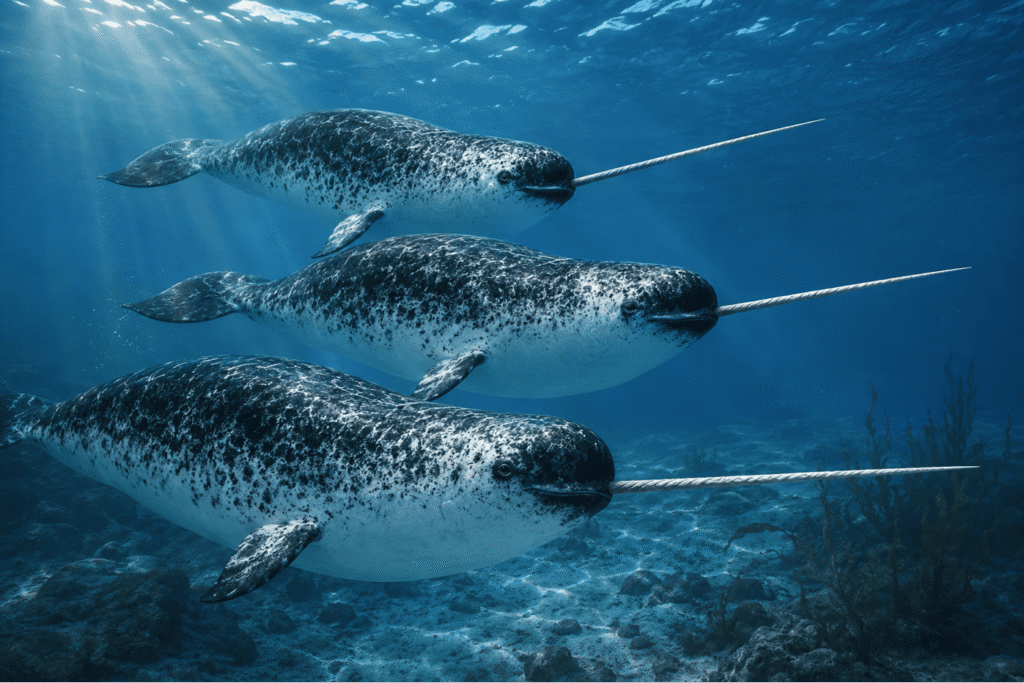
Narwhal (Monodon monoceros) is one of the world’s most unusual marine mammals, often called the “unicorn of the sea” because of its long, spiral tusk. The narwhal’s “horn” is actually an elongated upper left tooth. It can grow over 10 feet (3 meters) long and contains millions of nerve endings, making it a highly sensitive sensory organ. Scientists believe it helps detect changes in water temperature, pressure, and salinity. Males also use their tusks to display dominance and sometimes gently tap or spar with rivals. Interestingly, most males have one tusk, some males grow two tusks, and a small percentage of females also develop a tusk. During the Middle Ages, Europeans believed narwhal tusks were genuine unicorn horns, and they were sold for enormous sums.
Narwhals are medium-sized toothed whales that live exclusively in the icy waters of the Arctic. They belong to the family Monodontidae, and their closest living relative is the beluga whale. The two species have even been known to hybridize. Narwhals inhabit the freezing Arctic waters around Canada, Greenland, and Russia. They migrate seasonally between coastal summer habitats and deep offshore waters during winter, spending much of the year beneath sea ice.
Narwhals are carnivores that mainly feed on Arctic cod, Greenland halibut, squid, and shrimp. They locate prey using echolocation, much like dolphins. Unlike most whales, narwhals have no dorsal fin, an adaptation that helps them swim beneath thick sea ice. They are also among the deepest-diving whales, capable of diving to well over 3,300 feet (1,000 meters). Many of their dives last 20–30 minutes, allowing them to hunt beneath the Arctic ice. Their natural predators include orcas, polar bears, and occasionally walruses.
Narwhals are currently classified as Near Threatened by conservation assessments. Indigenous communities in parts of the Arctic have traditionally hunted them for their meat, skin, and tusks. Today, climate change has become one of the biggest threats to their survival, as shrinking Arctic sea ice alters their habitat. Increased ship traffic and underwater noise also disturb these highly specialized whales. Narwhals remain one of the most mysterious marine mammals because they live in remote Arctic environments and are difficult to study in the wild. Their iconic tusk, incredible deep-diving ability, and life beneath the sea ice make them one of the planet’s most extraordinary marine mammals.
9. Blue Dragon Sea Slug
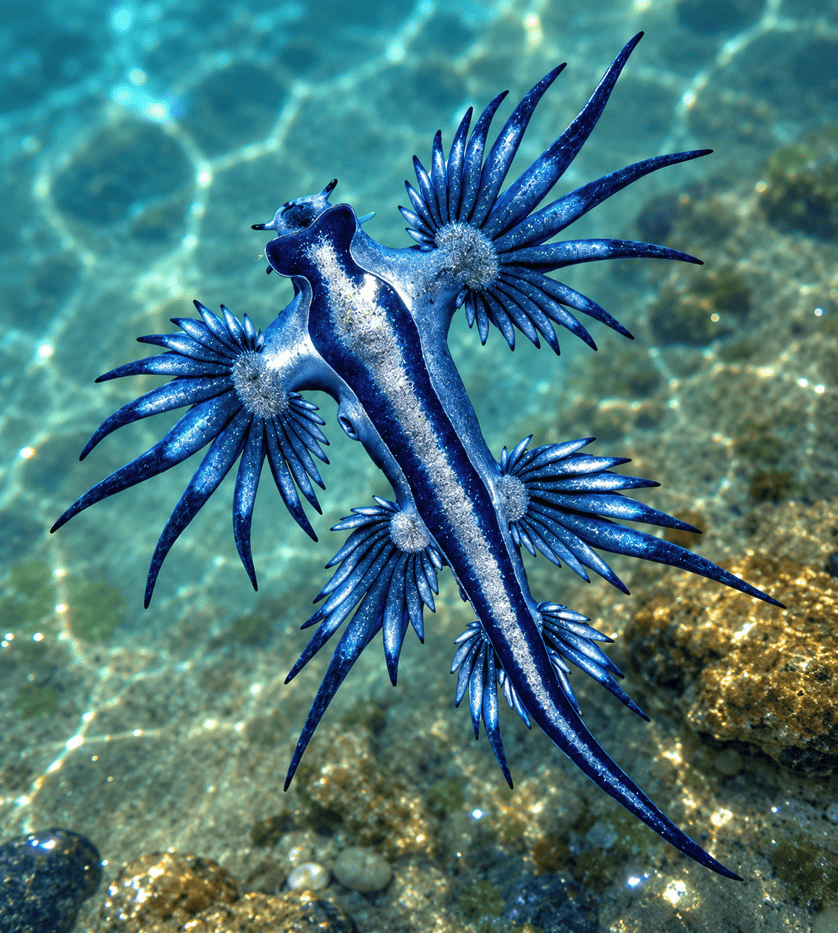
Blue Dragon Sea Slug (Glaucus atlanticus) is one of the most beautiful—and surprisingly dangerous—marine creatures in the world. Despite its dragon-like appearance, it’s actually a tiny species of sea slug (nudibranch) that drifts across the open ocean. Although it looks like a mythical dragon, it’s only about the size of your thumb. It also goes by several other names, including blue dragon, blue glaucus, blue angel, and sea swallow. It belongs to the family Glaucidae.
Blue Dragons are found in the tropical and temperate waters of the Atlantic, Pacific, and Indian Oceans. They typically grow to about 0.8–1.6 inches (2–4 cm) in length and have an estimated lifespan of around one year. Unlike most sea slugs that crawl along the seafloor, Blue Dragons spend their lives floating on the ocean’s surface. A small gas-filled sac in their stomach helps them stay buoyant while winds and ocean currents carry them across the sea. After storms, they are often washed ashore. Groups of Blue Dragons drifting together are known as a “blue fleet.”
Blue Dragons are carnivores that feed on venomous animals, including the Portuguese man o’ war, blue buttons, by-the-wind sailors (Velella), and violet snails. Instead of being harmed by their prey’s venom, they steal the stinging cells (nematocysts) and store them in the finger-like appendages on their bodies, called cerata, for their own defense. Their natural predators include seabirds, sea turtles, and some fish. Their bright colors and stolen venom help discourage many potential predators.
Blue Dragons also have an incredible camouflage strategy. They float upside down, and their coloration helps them stay hidden. Their bright blue side faces upward, blending with the color of the ocean, while their silver-gray side faces downward, blending with sunlight reflecting off the water. This form of camouflage is known as countershading. Despite their appearance, they are neither fish nor jellyfish—they’re shell-less marine snails (nudibranchs).
Can they sting humans? Yes. Although they’re tiny, Blue Dragons can deliver an extremely painful sting because they concentrate the venom they steal from their prey. Their sting may cause intense burning pain, skin irritation, nausea, vomiting, and, in some cases, allergic reactions. Even a dead Blue Dragon can still sting, so you should never touch one if you find it on a beach.
Blue Dragons are hermaphrodites, meaning each individual has both male and female reproductive organs. However, they still need a partner to reproduce. After mating, both individuals can lay strings of eggs on floating objects such as driftwood or the remains of their prey.
The Blue Dragon Sea Slug is a perfect example of how nature combines breathtaking beauty with remarkable survival adaptations. Its vibrant appearance, unique floating lifestyle, and ability to weaponize stolen venom make it one of the ocean’s most fascinating tiny predators.
10. Kakapo
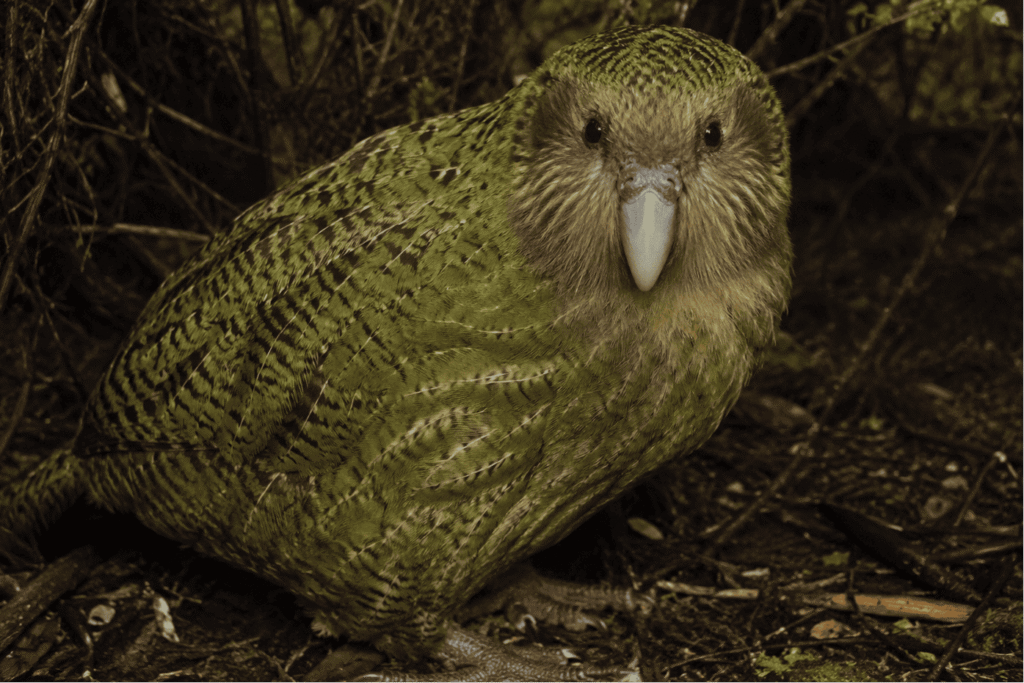
Kākāpō (Strigops habroptilus) is one of the world’s rarest and most extraordinary birds, also known as the owl parrot. Native to New Zealand, it is the world’s only flightless parrot, the heaviest parrot, and one of the longest-living birds on Earth. Once widespread across New Zealand, the species nearly became extinct due to introduced predators, but intensive conservation efforts have brought it back from the brink.
This extraordinary bird is found only in New Zealand. Today, all remaining wild kākāpō live on carefully managed, predator-free offshore islands, where they are closely monitored by conservationists. They belong to the Strigopidae family and measure about 23–25 inches (58–64 cm) in length. They typically weigh around 4.4–8.8 lbs (2–4 kg), with males being significantly heavier than females. Their lifespan is about 60–90 years or even longer—amazing, right?
Kākāpō has a truly unique appearance. Its moss-green feathers, marked with black and yellow patterns, provide excellent camouflage in the forest. It also has a round, owl-like facial disc, a large curved beak for crushing tough plants, strong legs for walking and climbing, and soft feathers that help it move quietly through the forest. It even has a pleasant, sweet, musky scent that some people compare to honey or flowers. Although it cannot fly, it is an excellent climber and can glide short distances back to the ground after climbing trees.
Unlike most parrots, the kākāpō is nocturnal, spending the day hidden among dense vegetation and becoming active after sunset. It relies on camouflage rather than flight to avoid predators. It is a herbivore and feeds on leaves, fruits, seeds, bark, ferns, flowers, and pollen. The bird often chews plant material to extract nutrients, leaving behind distinctive fibrous pellets. Before humans arrived, New Zealand had very few mammalian predators. However, after cats, rats, stoats, and dogs were introduced, kākāpō numbers crashed because the birds had evolved without defenses against these predators.
Kākāpō has one of the most unusual mating systems among birds. Males gather in display areas called leks, where each male digs a bowl-shaped depression in the ground. During the breeding season, they produce deep, booming calls that can travel up to 5 km (3 miles) on still nights to attract females. Females choose a mate based on these displays and raise the chicks alone. Breeding usually occurs only when certain native trees, especially rimu, produce abundant fruit, which may happen only once every few years.
Kākāpō is also one of the world’s greatest conservation success stories. Every living bird has a name and is individually monitored, and many wear radio or GPS transmitters. Eggs and chicks receive intensive protection, while conservationists carefully manage breeding to maintain genetic diversity. The global population has increased from just 51 birds in the mid-1990s to more than 240 individuals today, although it remains one of the world’s rarest parrots.
Did you know? A famous kākāpō named Sirocco became an international celebrity after climbing onto a television presenter during a wildlife documentary. The kākāpō is a remarkable example of evolution in isolation. Its flightlessness, owl-like face, booming courtship calls, and gentle personality make it one of the most unique birds on the planet—and a powerful symbol of successful wildlife conservation.
11. Axolotl
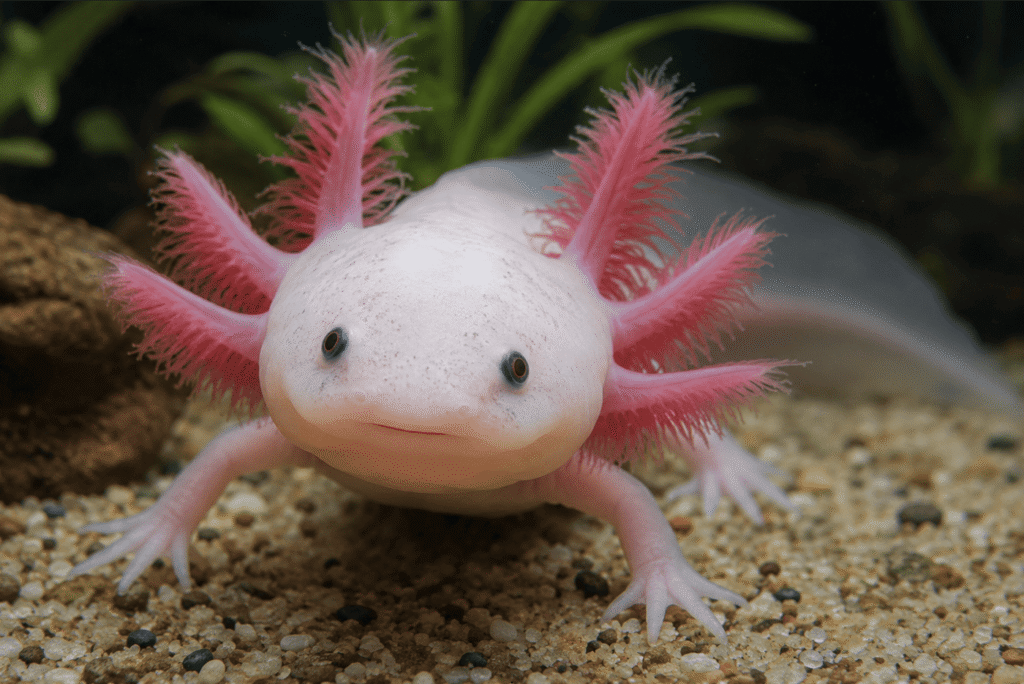
Axolotl (Ambystoma mexicanum) is one of the world’s most extraordinary amphibians. Often called the “Mexican walking fish,” it isn’t a fish at all—it’s a species of salamander that spends its entire life underwater. The name “axolotl” comes from the Nahuatl language and is associated with the Aztec deity Xolotl. Axolotls can breathe using their gills, lungs, and even through their skin. Their unique appearance has also made them popular pets around the world.
Axolotls are native to the ancient lake system around Lake Xochimilco in Mexico City. They once lived in several lakes, but urbanization and drainage have left them surviving mainly in the canals of Xochimilco. The axolotl also inspired the Pokémon Mudkip and appears as one of the adorable mobs in Minecraft.
Axolotls have several distinctive features, including three pairs of feathery external gills used for breathing underwater, a broad, flat head with tiny lidless eyes, a long tail fin that helps them swim, and four short legs with delicate fingers. Wild axolotls are usually dark brown or black with speckles, while captive-bred individuals come in many color varieties, including leucistic (pink body with black eyes), albino (golden or white with red eyes), melanoid (solid black), golden, and copper.
The axolotl is famous for its extraordinary regenerative abilities. It can regrow limbs, parts of the spinal cord, sections of the brain, heart tissue, its jaw, and even its tail. Unlike most animals, it can regenerate these structures repeatedly with little or no scarring. Because of this, axolotls are among the most important animals in regenerative medicine research.
Did you know? If an axolotl loses a limb, it can regenerate a fully functional replacement in just a few weeks to months, depending on its age and environmental conditions. Scientists hope that understanding how axolotls regenerate damaged body parts could one day help improve treatments for human injuries and organ damage.
One of the most unusual things about axolotls is neoteny. Most salamanders undergo metamorphosis, developing lungs and moving onto land as adults. Axolotls don’t. They retain their larval features—including their external gills—and remain aquatic throughout their lives while still becoming sexually mature. Although they can be induced to metamorphose under certain conditions, this rarely happens in the wild.
Axolotls are carnivores that hunt mainly by suction feeding. They rapidly open their mouths, creating a powerful vacuum that pulls both water and prey inside. Their diet includes worms, insect larvae, small crustaceans, snails, and small fish.
The axolotl is listed as Critically Endangered by the International Union for Conservation of Nature (IUCN). The main threats to wild populations include habitat loss caused by urban expansion around Mexico City and invasive fish such as carp and tilapia, which prey on axolotl eggs and young. Although millions of axolotls exist in laboratories and as pets worldwide, wild populations have declined dramatically. Despite their popularity as pets, they require cool, clean water and specialized care.
12. Golden Snub-Nosed Monkey
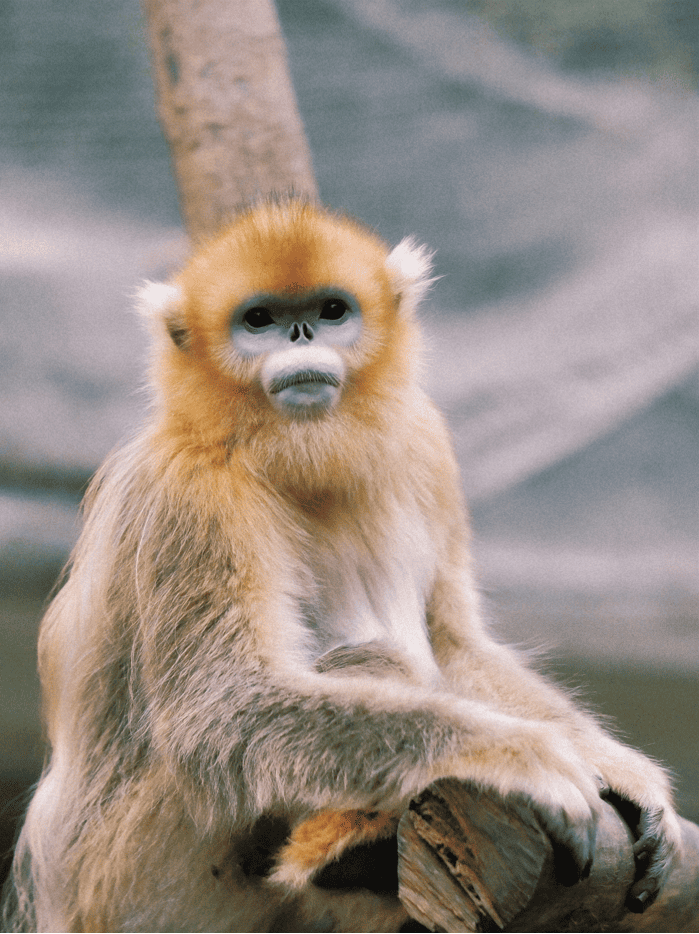
Golden Snub-Nosed Monkey (Rhinopithecus roxellana), named in honor of Roxelana, who was said to have had an upturned nose, is one of the world’s most striking and rare primates. With its brilliant golden-orange fur, bright blue face, and distinctive upturned nose, it is often considered one of the most beautiful monkeys on Earth. These highly social animals live in large groups high in the cold mountain forests of central China. Their striking blue face is caused by the structure of their skin rather than blue pigment.
Unlike most monkeys, golden snub-nosed monkeys are found only in the temperate mountain forests of central and southwestern China. They inhabit elevations between 1,500 and 3,400 meters (4,900–11,200 feet), where winters are long, snowy, and freezing. Their best-known populations live in the Qinling Mountains, as well as the Min and Shennongjia mountain ranges. They survive these harsh winters thanks to their extremely dense insulating fur and large social groups, which help conserve body heat by huddling together. They are among the few non-human primates regularly seen living in snowy environments.
These monkeys measure about 22–30 inches (57–76 cm) in body length and have tails that are around 20–28 inches (51–72 cm) long. They typically weigh between 22–44 lbs (10–20 kg) and live for about 20–25 years in the wild or up to 30 years in captivity.
Golden snub-nosed monkeys are easy to recognize because of their thick golden-orange fur that keeps them warm in freezing temperatures, bright blue face with almost no hair, small upturned nose that gives the species its common name, and long tail used for balance while moving through trees. Males are significantly larger and more colorful than females.
These monkeys are among the most social primates in the world. They often live in enormous communities of 100 to more than 600 individuals, although they split into smaller family groups for their daily activities. They communicate through vocal calls, facial expressions, grooming, and body posture. During winter, they huddle closely together to conserve body heat.
Golden snub-nosed monkeys are mainly herbivores. Their diet changes with the seasons and includes leaves, lichens (especially during winter), tree bark, buds, fruits, seeds, flowers, and occasionally insects. Lichens become especially important because they remain available even when snow covers most other food sources.
The golden snub-nosed monkey is classified as Endangered by the International Union for Conservation of Nature (IUCN). Its biggest threats include habitat loss from logging and development, forest fragmentation, historical illegal hunting, and increasing human disturbance. Conservation efforts, including protected reserves and forest restoration, have helped stabilize some populations, but the species remains endangered.
13. Maned Wolf
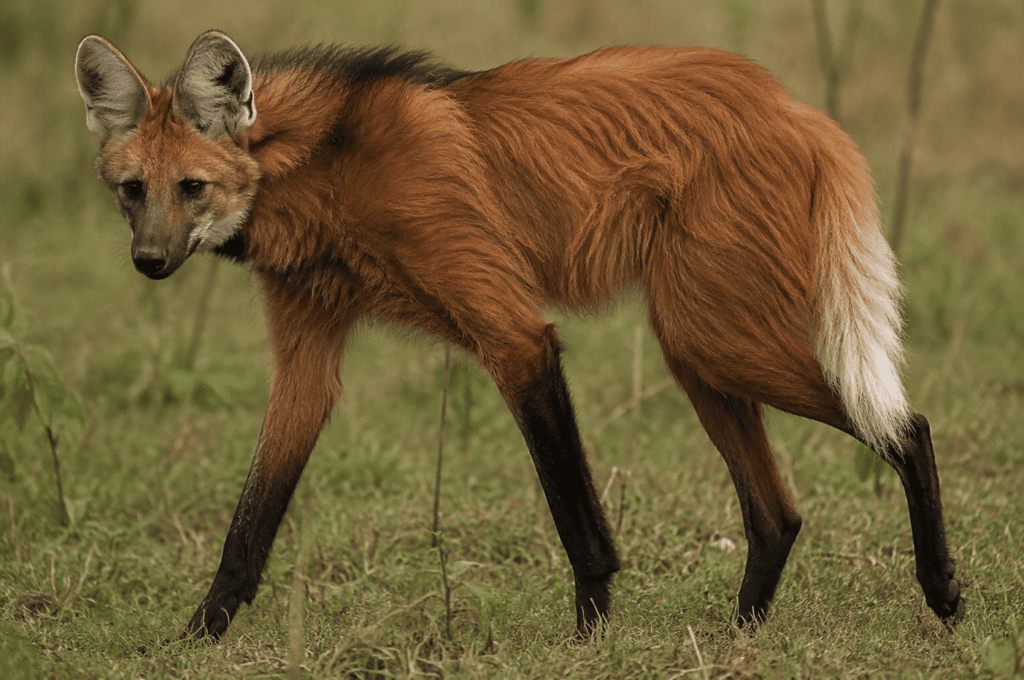
Maned Wolf (Chrysocyon brachyurus) is the largest wild canid in South America and one of the world’s most unusual-looking mammals. With its long, slender legs, reddish-orange coat, black mane, and fox-like face, it resembles a cross between a wolf and a fox. Despite its name, however, it is neither a true wolf nor a fox and belongs to its own unique genus. It is a member of the Canidae family. Maned wolves are found across the grasslands, shrublands, and open woodlands of central South America, especially in Brazil. They also occur in parts of Paraguay, Bolivia, Argentina, and Peru. Their stronghold is the vast tropical savanna known as the Cerrado.
The maned wolf is easy to recognize because of its extremely long, slender legs, reddish-orange fur, black mane running from its neck down its back, large ears for excellent hearing, and a white-tipped tail with white markings on its throat. Its unusually long legs help it see over the tall grasses of the South American savannas.
The maned wolf stands about 29–35 inches (74–90 cm) tall at the shoulder and measures around 37–49 inches (95–125 cm) in body length, with an additional 11–18 inch (28–45 cm) tail. It typically weighs between 44–66 lbs (20–30 kg) and lives for about 12–15 years in the wild or up to 17 years in captivity.
Why Does It Look So Tall? Unlike wolves that evolved for forests or snowy regions, the maned wolf lives in open grasslands, especially the Cerrado. Its long legs are an adaptation that allows it to:
- Spot prey above tall vegetation.
- Move efficiently through long grasses.
- Detect danger from a distance.
Its long black mane stands upright when the animal feels threatened, making it appear larger.
Did you know? A maned wolf’s legs are so long that, from a distance, it can look like a fox walking on stilts. These unusual proportions are a perfect adaptation for spotting prey while moving through the tall grasses of the South American savanna.
The maned wolf is an omnivore, eating both animals and plants. Its diet includes small mammals, birds, reptiles, insects, and fruits. One of its favorite foods is the wolf apple (Solanum lycocarpum), a fruit that can make up a large portion of its diet and may even help reduce intestinal parasites.
Maned wolves are mostly solitary except during the breeding season. They are most active at dawn, dusk, and night, and use strong-smelling urine to mark their territory. Instead of howling like true wolves, they produce a deep, booming “roar-bark” that can carry over long distances. Despite their appearance, they do not live or hunt in packs like true wolves.
The maned wolf is classified as Near Threatened by the International Union for Conservation of Nature (IUCN). Its biggest threats include habitat loss caused by agriculture, road collisions, diseases transmitted by domestic dogs, and human-wildlife conflict.
14. Leafy Seadragon
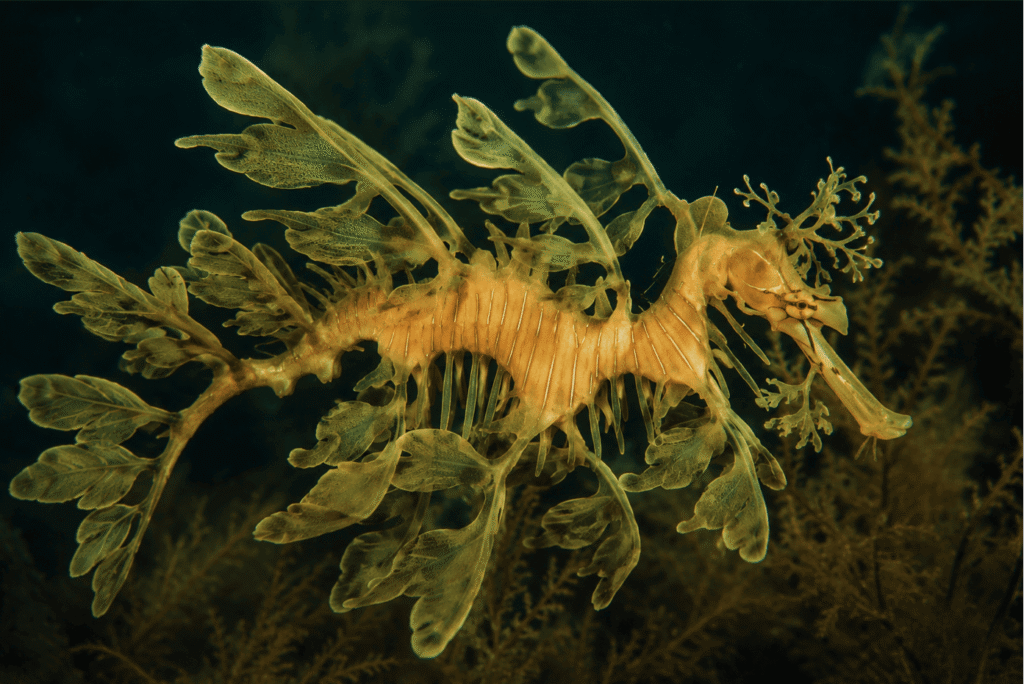
Leafy Seadragon (Phycodurus eques) is one of the most extraordinary marine creatures on Earth. Closely related to seahorses and pipefish, it is famous for its elaborate leaf-like appendages that resemble drifting seaweed. This remarkable camouflage helps it blend almost perfectly into underwater vegetation, making it one of the ocean’s greatest masters of disguise.
Leafy seadragons are found only along the southern and western coasts of Australia. It is also the official marine emblem of South Australia. They inhabit rocky reefs, kelp forests, seagrass meadows, and areas rich in seaweed, usually in shallow coastal waters. They typically grow to about 8–14 inches (20–35 cm) in length, weigh up to around 3.5 oz (100 g), and have a lifespan of about 5–10 years.
Leafy seadragons are instantly recognizable because of their long, slender bodies covered with leaf-like appendages, yellow, green, and brown coloration that mimics seaweed, long tubular snout used to suck up prey, and small transparent fins that gently propel them through the water. Despite looking like leaves, these appendages are not used for swimming—they serve almost entirely as camouflage.
Leafy seadragons are poor swimmers and rely on camouflage rather than speed to avoid predators. Their greatest defense is their incredible disguise. They survive by resembling floating seaweed, drifting gently with ocean currents, and remaining nearly motionless when predators are nearby. This camouflage makes them extremely difficult for both predators and divers to spot. Their tiny fins beat so rapidly that they are almost invisible to the human eye.
Did you know? Because its leaf-like appendages sway naturally with ocean currents, a leafy seadragon often looks exactly like a drifting piece of seaweed. Even experienced divers can swim right past one without realizing it’s actually a fish.
Leafy seadragons have no teeth or stomach. Instead, they feed continuously throughout the day by sucking prey into their long snouts. Their diet includes mysid shrimp, tiny crustaceans, plankton, and fish larvae. An adult may consume thousands of small shrimp each day. Unlike many fish, they have no prehensile tail and cannot grasp seaweed like seahorses can.
Like seahorses, it is the male leafy seadragon that carries the eggs. During breeding, the female transfers around 100–250 eggs onto a special brood patch beneath the male’s tail. He then fertilizes and carries the eggs for about 4–9 weeks. Once fully developed, the young hatch and are immediately independent.
Leafy seadragons face several threats, including habitat degradation, coastal pollution, climate change, storm damage to kelp forests and seagrass habitats, and illegal collection for aquariums, although this is now heavily regulated. They are protected under Australian law, and collecting them from the wild without permission is prohibited.
15. Pink Fairy Armadillo
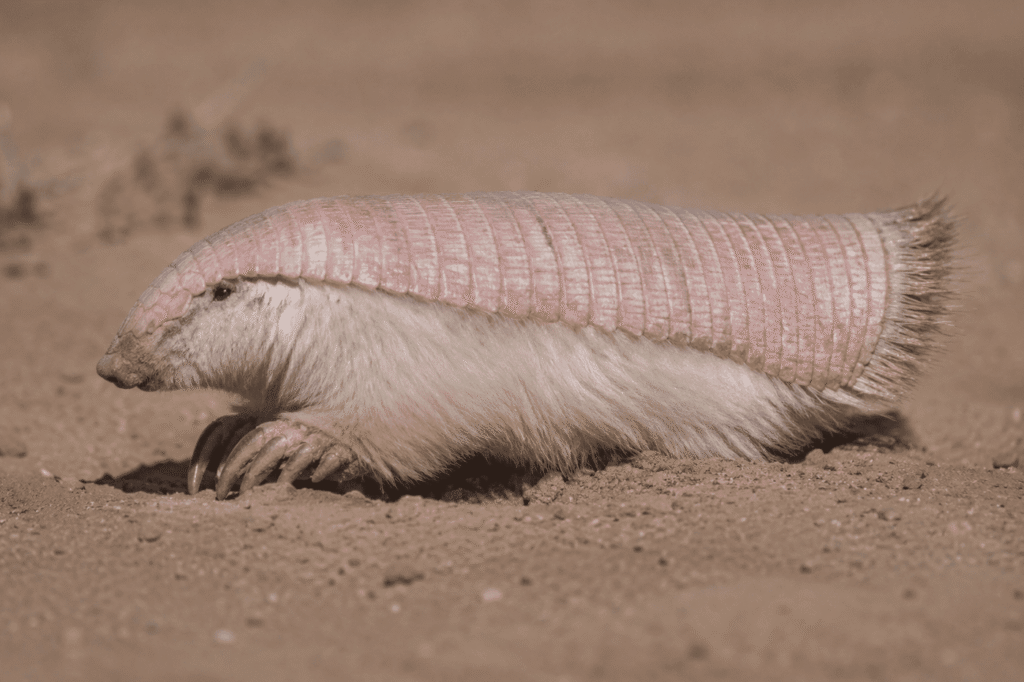
Pink Fairy Armadillo (Chlamyphorus truncatus) is the smallest and one of the rarest armadillo species in the world. Famous for its soft pink shell, fluffy white underside, and remarkable digging abilities, this tiny mammal spends most of its life hidden beneath the sandy soils of central Argentina. It belongs to the Chlamyphoridae family.
The pink fairy armadillo is instantly recognizable by its soft pink armored shell, which is supplied with blood vessels that may help regulate body temperature, and its silky white fur covering the underside. It also has a short, pointed snout, large front claws designed for digging, and a flattened tail that helps support its body while burrowing. Its shell is attached to its body by a flexible membrane, allowing it to move more freely than other armadillos.
It measures about 4–6 inches (10–15 cm) in body length, excluding the tail, and weighs around 3.5–4.2 oz (100–120 g). Its lifespan in the wild is unknown, although it usually survives only a few years in captivity because of its extreme sensitivity to stress and temperature changes.
The pink fairy armadillo is often called the “sand swimmer” because it can rapidly tunnel through loose, sandy soil. It spends most of its life underground, where it searches for food and stays protected from predators and extreme temperatures. It is nocturnal, emerging at night to forage, lives a mostly solitary life except during the breeding season, and creates complex underground burrows. Because it spends so much time underground, scientists still know relatively little about its natural behavior. Sightings are so uncommon that many people living within its range have never seen one.
The pink fairy armadillo is classified as Near Threatened by the International Union for Conservation of Nature (IUCN), although some researchers believe its populations may be declining more rapidly than current data suggest. The main threats include habitat loss caused by agriculture and land development, climate change, predation by domestic cats and dogs, and its highly specialized habitat requirements.
Final Thoughts
The world is filled with remarkable animals that many people never get the chance to see. Whether it’s the unicorn-like saola hidden in the forests of Southeast Asia, the dragon-shaped blue dragon sea slug drifting across tropical oceans, or the mysterious narwhal swimming beneath Arctic ice, these rare species remind us just how diverse and extraordinary life on Earth truly is. Protecting these incredible animals and their habitats is essential to ensuring that future generations can continue to marvel at nature’s rarest wonders.