North and South America are home to some of the world’s most diverse and flavorful cuisines. From Mexico’s street tacos and Canada’s comforting poutine to Brazil’s rich feijoada and Peru’s fresh ceviche, the traditional foods of the Americas reflect centuries of Indigenous, European, African, and Asian influences.
Food traditions can vary a lot from one region to another, with ingredients like corn, beans, potatoes, seafood, rice, chili peppers, tropical fruits, and locally raised meats playing an important role for generations. In this guide, we’ll explore 25 traditional foods of North and South America, including their origins, key ingredients, and what makes each dish special.
1. Poutine

Poutine is one of Canada’s most famous comfort foods. At its simplest, it is made with French fries, cheese curds, and hot brown gravy. The hot gravy softens the fries and partly melts the cheese curds, while they still keep their slightly squeaky and chewy texture.
Poutine originated in Quebec, Canada, and what started as a simple regional dish eventually became a well-known Canadian favorite. Today, you can find many different versions of poutine across Canada.
History of Poutine
Poutine is closely connected to Quebec’s food culture, but its exact origin is still debated. Several towns and restaurants in Quebec have been linked to the creation of poutine during the late 1950s.
One of the most popular stories comes from Warwick, Quebec, where a customer reportedly asked for cheese curds to be added to his fries. Another well-known claim comes from Drummondville, where fries, cheese curds, and gravy were brought together to create a dish similar to the poutine we know today.
Because there are several different stories, no single person or place is universally accepted as the true inventor of poutine.
When did the name “poutine” appear?
The word poutine was already being used in Quebec before the modern dish became popular. The exact origin of the name is still uncertain. By the 1960s and 1970s, poutine had become popular across Quebec. It later spread to other parts of Canada and eventually became known around the world.
2. Jerk Chicken
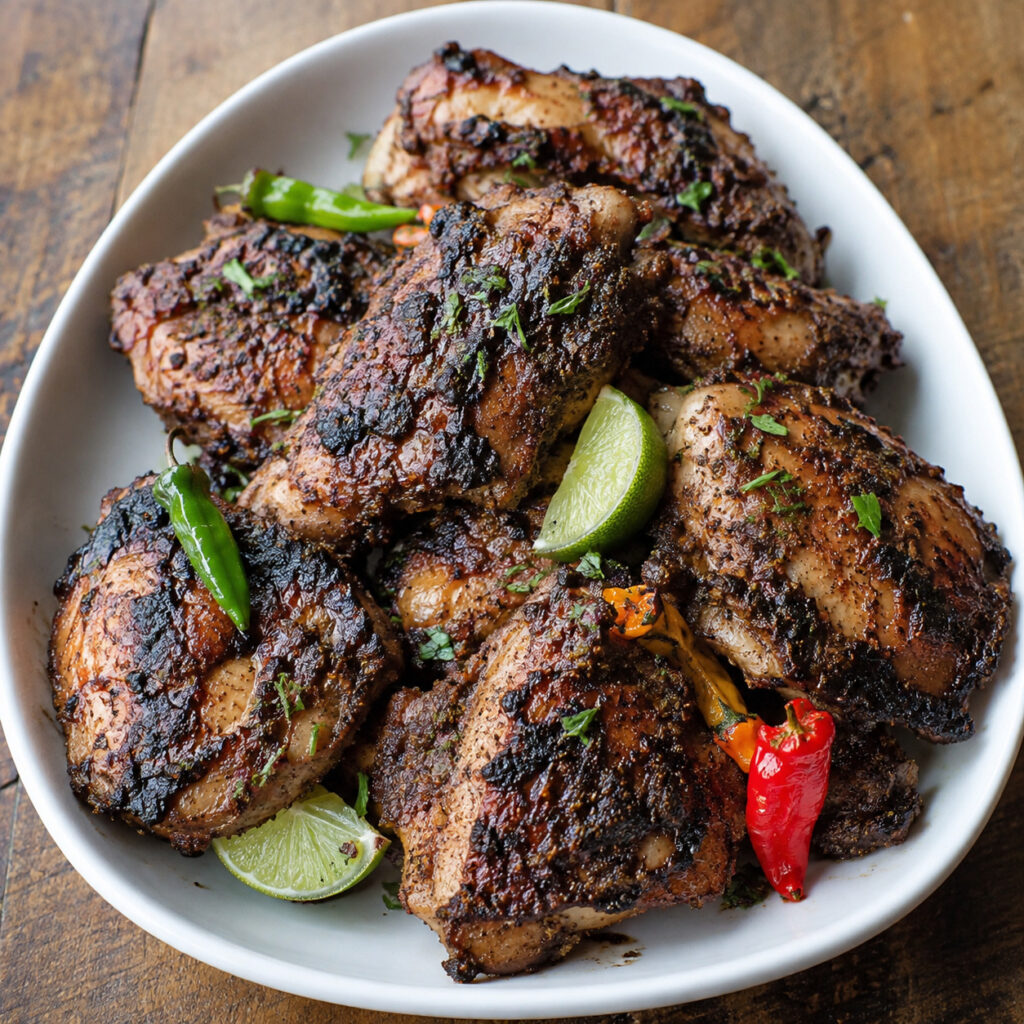
Jerk chicken is one of Jamaica’s most famous dishes. It is made by coating chicken with a spicy and aromatic jerk marinade or dry rub, then traditionally cooking it slowly over a wood fire or grill.
It is known for its smoky, spicy, savory, slightly sweet, and aromatic flavor.
History of Jerk Chicken
Jerk cooking is deeply connected to Jamaica’s history, especially the island’s Indigenous and African food traditions. Its origins are commonly linked to the Maroon communities of Jamaica, descendants of Africans who escaped slavery and formed independent communities on the island.
The Maroons developed ways to preserve and cook meat that made it easier to store and prepare while also helping them avoid detection by colonial authorities. Over time, these cooking methods developed into the jerk tradition.
Jerk cooking also reflects the mix of different cultures that shaped Jamaican food, including Indigenous Taíno traditions, African cooking techniques, European ingredients, and later influences from other immigrant communities. Together, these influences helped make jerk one of Jamaica’s most famous and recognizable culinary traditions.
3. Rice and Peas
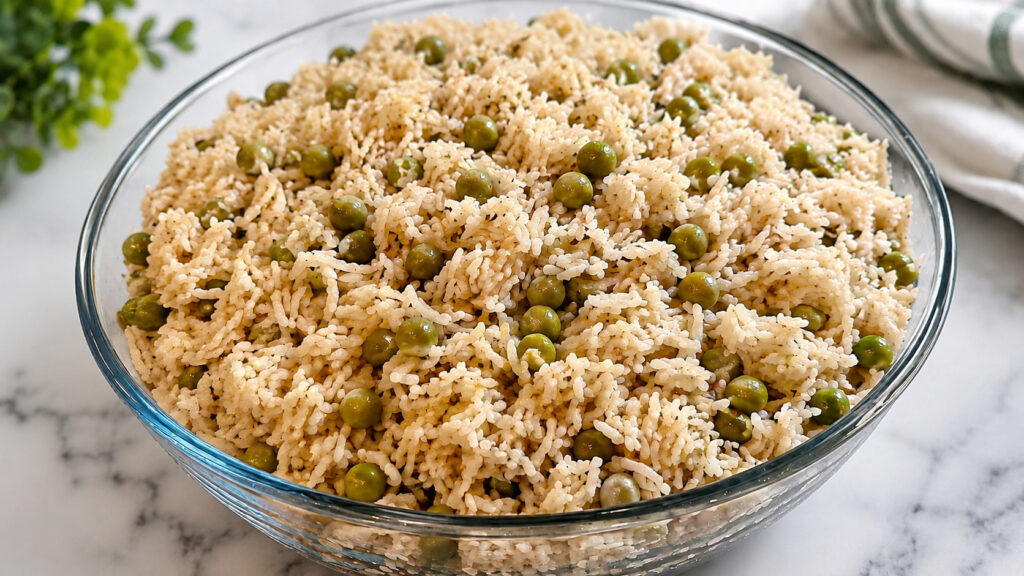
Rice and peas is one of the most popular side dishes in Caribbean cuisine, especially in Jamaica and other English-speaking Caribbean countries. Despite its simple name, the dish is creamy, flavorful, and packed with aroma.
It is traditionally made by cooking rice with peas or beans, coconut milk, herbs, and spices. In Jamaica, the “peas” usually mean kidney beans or pigeon peas, rather than green peas. Rice and peas is especially popular as a classic side dish served with Jamaican jerk chicken.
History and Cultural Background
Rice and peas has deep roots in Caribbean food culture, especially in Jamaica. Its history reflects the many cultures that have influenced Caribbean cuisine, including African, European, Indigenous Caribbean, and Asian traditions.
Rice became an important staple across the Caribbean, while beans and other legumes provided an affordable and nutritious source of protein. Over time, coconut milk, local herbs, and spices helped give Caribbean rice and peas its distinctive taste.
In Jamaica, rice and peas became especially popular for Sunday meals and family gatherings, where it is often served alongside dishes such as jerk chicken, curry goat, and stewed meats.
4. Pupusas
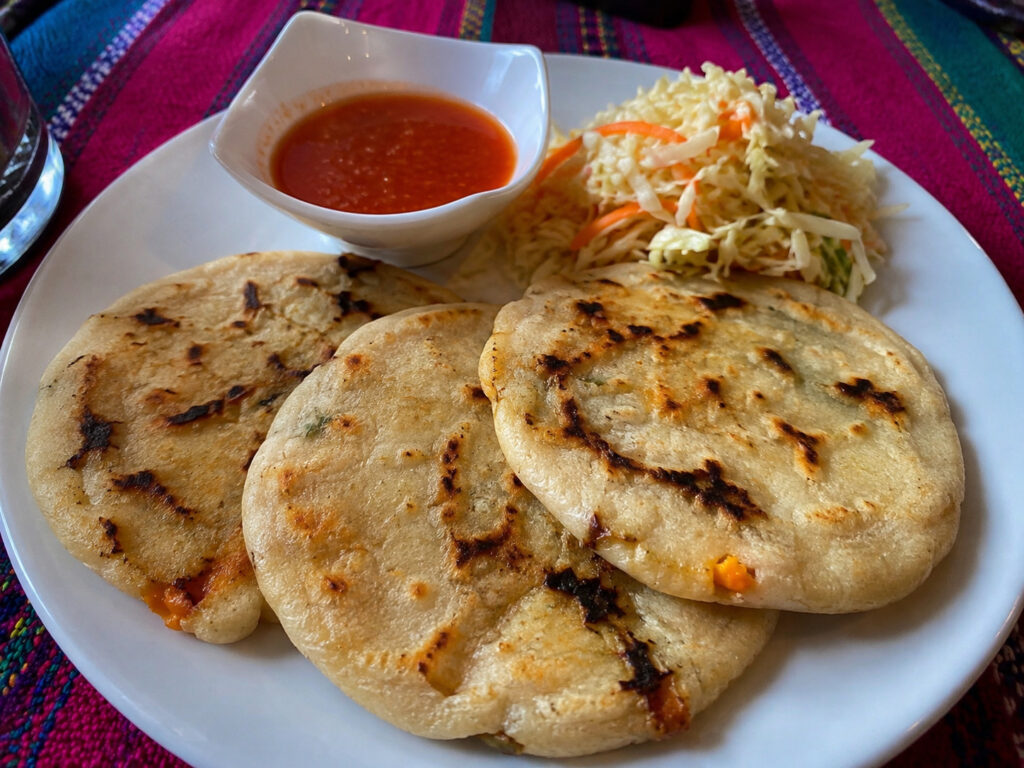
Pupusas are one of the most famous traditional foods of El Salvador. They are thick, round, handmade flatbreads made from corn masa and usually filled with ingredients like cheese, refried beans, or seasoned pork before being cooked on a hot griddle.
They are usually served with two classic sides: curtido, a lightly fermented cabbage slaw, and a thin tomato-based salsa. Pupusas are simple, filling, affordable, and an important part of Salvadoran culture and everyday food traditions.
History of Pupusas
Pupusas have Indigenous roots in the region of present-day El Salvador, although their exact origins are still debated. Corn has been an important part of Mesoamerican diets for thousands of years, and Indigenous communities developed many different foods using corn.
Over time, pupusas became closely connected with Salvadoran cuisine and national identity. Today, they are enjoyed throughout El Salvador and are also popular among Salvadoran communities around the world.
5. Gallo Pinto
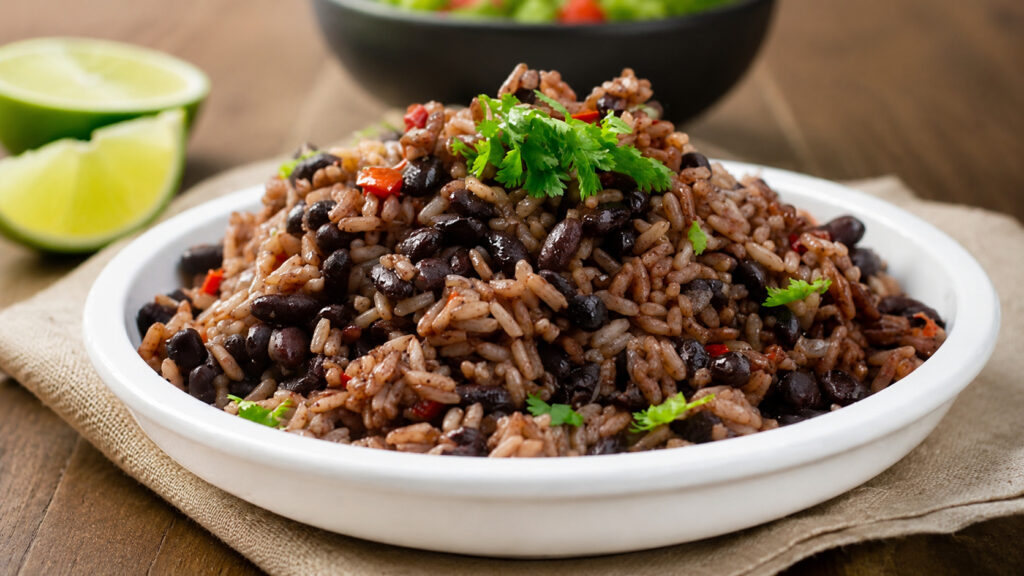
Gallo pinto is a traditional Central American rice-and-beans dish, especially associated with Costa Rica and Nicaragua. Its name roughly translates to “spotted rooster,” referring to the speckled look created when the beans are mixed with rice.
It is a simple but flavorful dish made mainly with rice, beans, onions, peppers, and herbs or seasonings. In both Costa Rica and Nicaragua, gallo pinto is commonly eaten for breakfast, although it can be enjoyed at any time of day.
Costa Rican Gallo Pinto
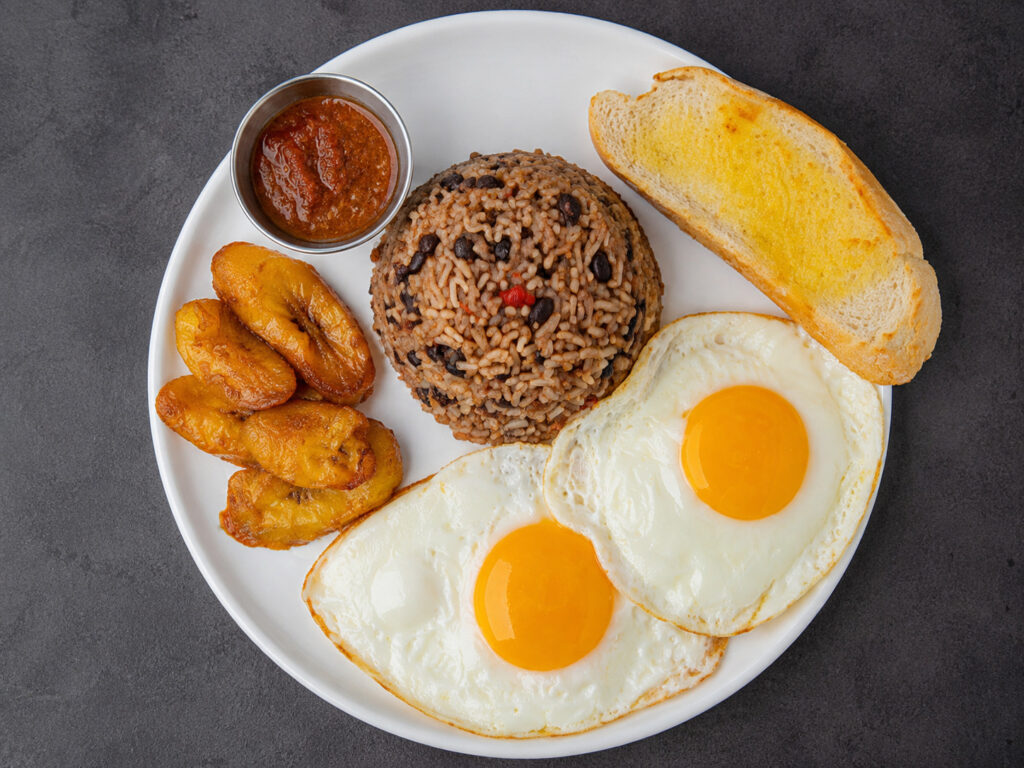
In Costa Rica, gallo pinto is one of the country’s best-known traditional foods. The Costa Rican version is commonly made with black beans, which give the dish its dark, speckled appearance.
One of its most recognizable ingredients is Salsa Lizano, a mildly sweet and savory Costa Rican condiment. A typical Costa Rican gallo pinto may include black beans, rice, onion, bell pepper or sweet pepper, cilantro, Salsa Lizano, salt, and oil.
Costa Rican gallo pinto is especially popular as a breakfast dish and is often served with eggs, cheese, plantains, or other breakfast foods.
Nicaraguan Gallo Pinto
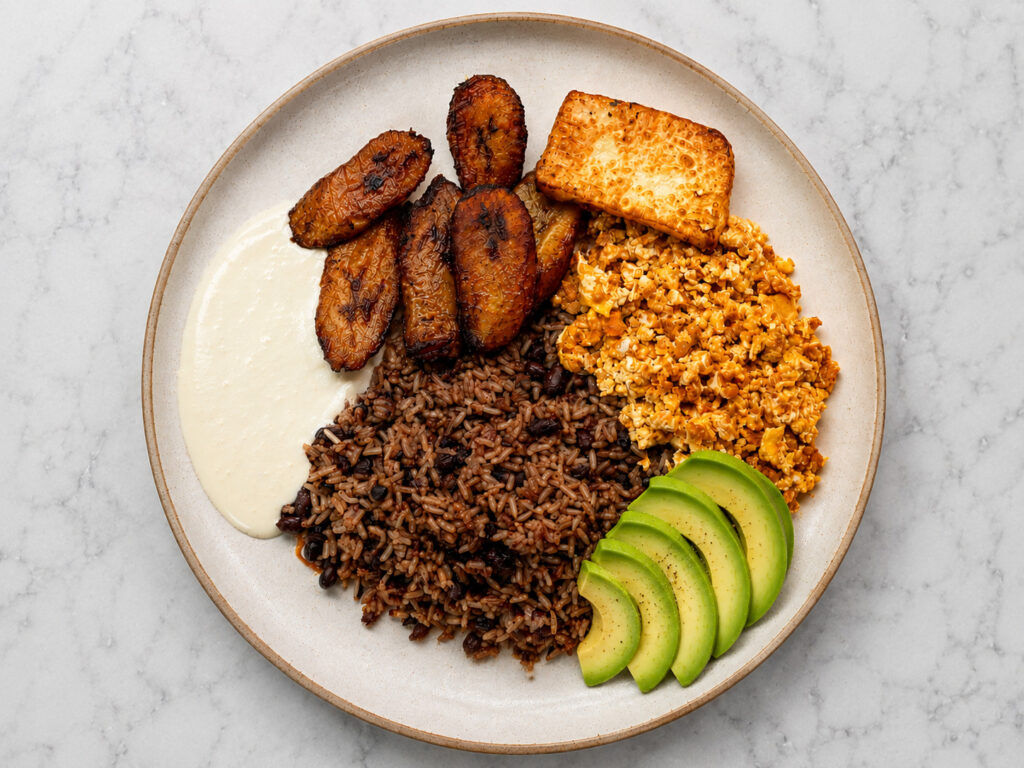
In Nicaragua, gallo pinto is also an important part of everyday cuisine. The Nicaraguan version commonly uses red beans, which give the dish a different color and flavor compared with the Costa Rican version.
The beans are often cooked separately before being mixed with the rice, allowing both ingredients to keep much of their own flavor. Nicaraguan gallo pinto is often served with eggs, cheese, fried plantains, meat, avocado, and sour cream or other dairy products.
History and Origins
The exact origin of gallo pinto is disputed between Costa Rica and Nicaragua. Both countries have long traditions of cooking rice and beans, and both consider gallo pinto an important part of their national food culture.
Instead of having one universally accepted inventor or birthplace, gallo pinto is better understood as part of the broader Central American tradition of combining rice and beans.
Its history reflects the region’s diverse culinary influences and the importance of rice and beans as affordable and filling staple foods.
6. Tacos
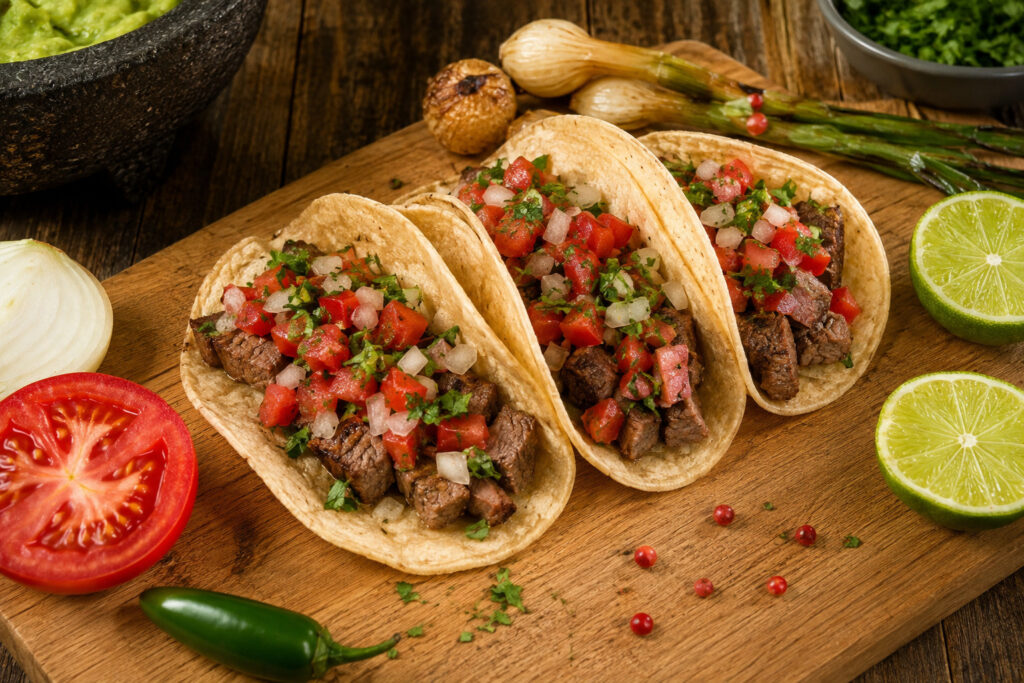
Tacos are one of Mexico’s most famous and beloved foods. At their simplest, a taco is made with a corn or flour tortilla folded around a filling, often topped with ingredients such as onion, cilantro, salsa, and lime.
But tacos aren’t just one dish. There are hundreds of regional styles and fillings across Mexico, with each region having its own traditions and flavors.
History of Tacos
The exact origin of the taco is uncertain. However, tacos grew out of Mexico’s long-standing Mesoamerican tradition of using tortillas as an everyday staple. Corn has been grown and eaten in Mesoamerica for thousands of years, and tortillas became an important part of Indigenous Mexican cuisine.
Over time, people began using tortillas to hold different types of fillings, eventually leading to the taco as we know it today. The word “taco” itself has a more complicated history. Its exact connection to the food is still uncertain, and historians have suggested several possible explanations.
By the 19th and early 20th centuries, tacos were becoming increasingly popular and recognizable as the food we know today.
7. Hamburger
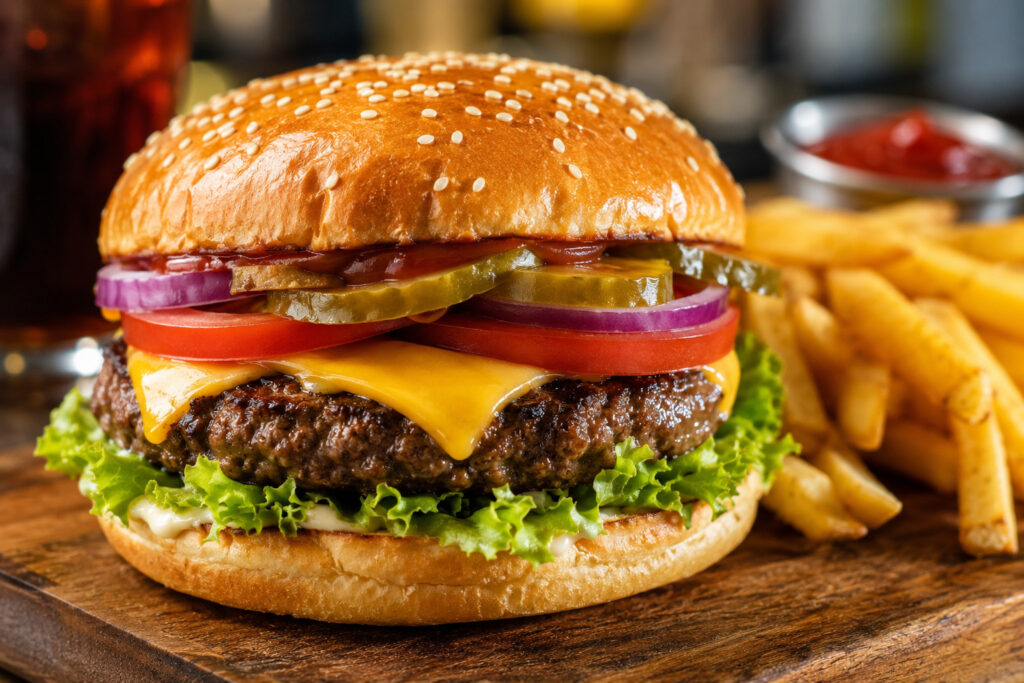
The hamburger is one of the most iconic foods in the United States and one of the most recognizable foods in the world. It is made with a ground beef patty placed inside a sliced bun, usually with toppings such as lettuce, tomato, onion, pickles, ketchup, mustard, or mayonnaise.
Although the hamburger has connections to Hamburg, Germany, the modern hamburger as we know it developed in the United States during the late 19th and early 20th centuries.
History of the Hamburger
The history of the hamburger is surprisingly complicated. The name “hamburger” comes from Hamburg, Germany, where a dish called Hamburg steak, made from minced or chopped beef, became popular in the 19th century.
When German immigrants brought their food traditions to the United States, Hamburg steak became known in American restaurants and food markets. Over time, American cooks began serving ground beef between slices of bread or inside a bun, creating something much closer to the modern hamburger.
Several American cities and individuals have claimed to have invented the hamburger, so there is no universally accepted single inventor.
8. Tamales
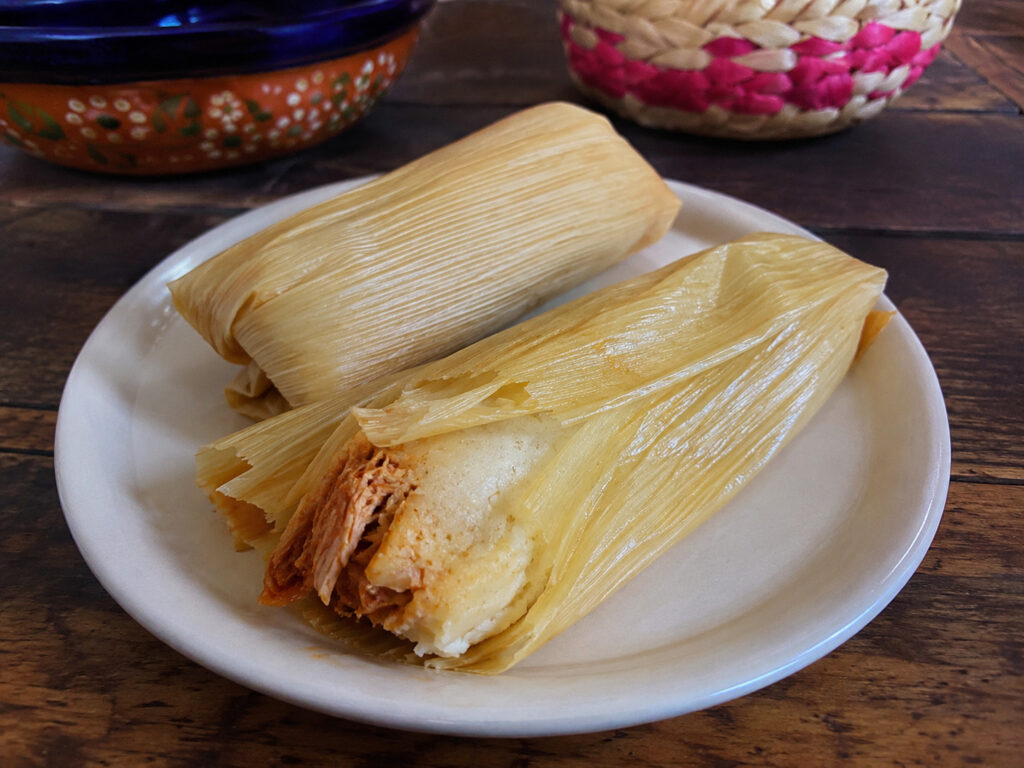
Tamales are one of the oldest and most important traditional foods in Mexico and Central America. They are made from corn masa, filled with savory or sweet ingredients, wrapped in a leaf, and then steamed until cooked.
They come in a huge variety of shapes, sizes, fillings, and wrappings. In Mexico alone, there are hundreds of different types, along with thousands of regional and family recipes.
History of Tamales
Tamales have pre-Hispanic roots in Mesoamerica and are much older than modern Mexican cuisine. Corn was a major part of Indigenous cultures in the region, and tamales offered a convenient way to prepare, carry, and eat corn-based food.
Historical sources show that tamales were used for festivals, religious ceremonies, agricultural traditions, social gatherings, and offerings. The word “tamale” comes from the Nahuatl word tamalli, which roughly means “wrapped”.
After the Spanish conquest, ingredients such as pork and lard became part of many tamal recipes. These new ingredients changed some of the fillings and flavors, while the basic tradition of making tamales with corn masa and steaming them remained.
9. Barbecue
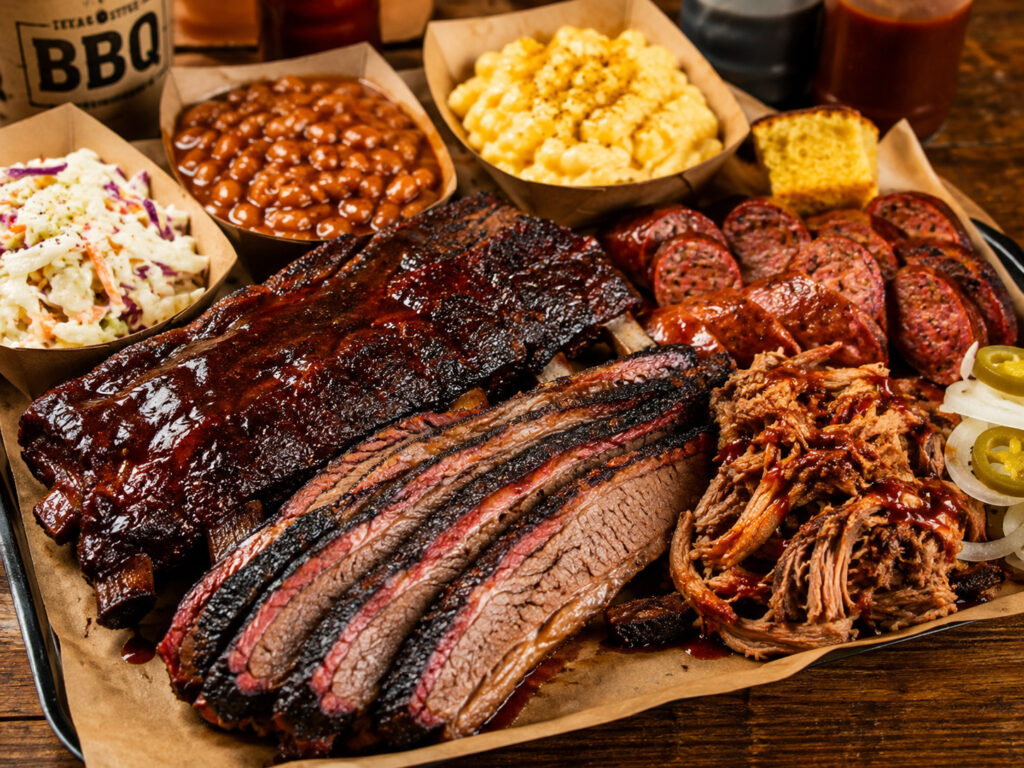
American barbecue is one of the most important food traditions in the United States. It usually involves cooking meat slowly over low heat, smoke, or both, often for several hours. The result is tender, flavorful meat with a smoky aroma and, depending on the style, a crispy outer layer known as bark.
But American barbecue isn’t just one dish or one cooking method. Different parts of the United States have developed their own barbecue traditions, especially in the South and Texas. The main regional styles are usually associated with Texas, Kansas City, Memphis, and the Carolinas.
History of American Barbecue
American barbecue has a long and complicated history shaped by Indigenous, African, European, and Caribbean culinary traditions. Indigenous peoples in the Americas had long traditions of cooking meat over fire and smoke.
European colonists encountered these cooking methods and developed their own versions.
African and Caribbean influences also became important, especially in the American South. Enslaved Africans and their descendants played a major role in shaping and preserving Southern barbecue traditions. Over time, different communities developed their own approaches to the types of meat they cooked, the wood they used, cooking temperatures, sauces, seasonings, and serving styles. These traditions eventually developed into the regional barbecue styles we know today.
10. Pemmican
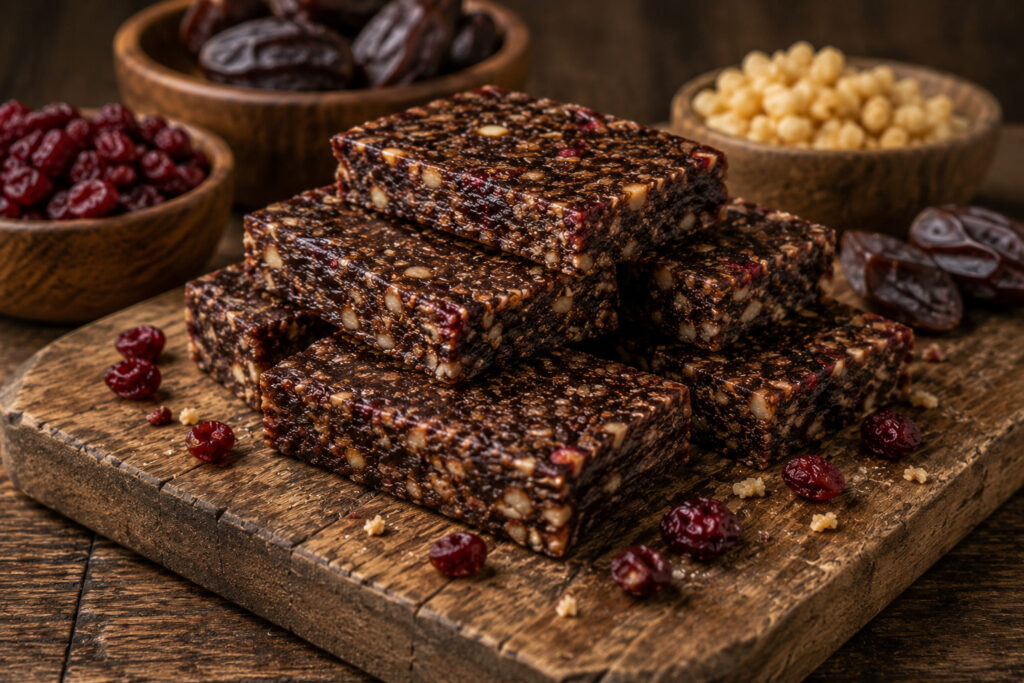
Pemmican is a traditional, highly concentrated food developed by Indigenous peoples of North America, especially communities from the Great Plains and subarctic regions. It is traditionally made from dried, finely pounded meat mixed with rendered animal fat, often with dried berries added.
Because it was lightweight, nutritious, and could be stored for long periods, pemmican became an important travel, hunting, and winter food.
Indigenous Origins
Pemmican is an Indigenous North American food tradition, but it is important not to connect it to just one tribe or nation. Different Indigenous peoples developed their own versions and ways of making it.
Pemmican became especially useful in regions where winters were long, fresh food was sometimes difficult to find, and people needed to carry food over long distances. Hunting could also provide large amounts of meat that could be preserved for later use. It was particularly associated with Indigenous communities of the Great Plains, Prairie regions, and subarctic areas.
11. Feijoada
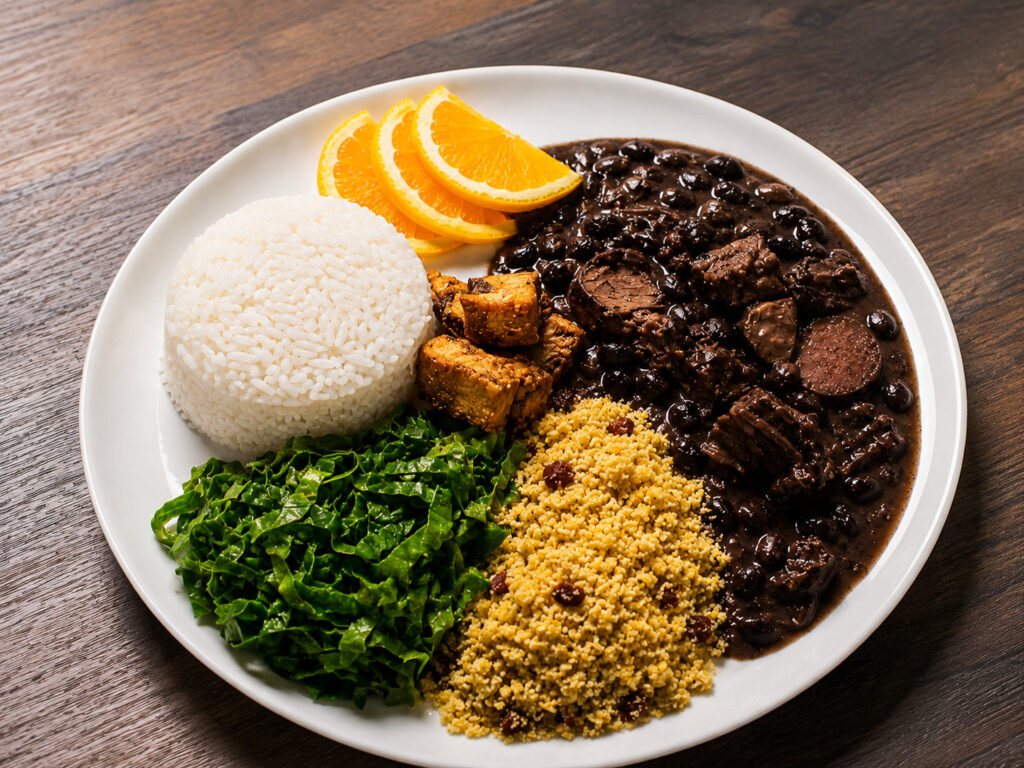
Feijoada is one of the most famous traditional dishes of Brazil. It is a rich, slow-cooked black bean and pork stew, usually served with white rice, farofa, sautéed collard greens, and orange slices.
It is hearty, savory, smoky, and deeply connected to Brazilian food culture. Feijoada is especially popular at weekend family meals, restaurants, and social gatherings.
History of Feijoada
The history of feijoada is sometimes told as a simple story about enslaved Africans in Brazil creating the dish from leftover or discarded pieces of pork. However, the real history is more complicated than this popular story suggests.
Bean-and-meat stews were already common in Europe before feijoada developed, while African and Indigenous Brazilian food traditions also influenced Brazilian cuisine. The modern dish likely developed through the mixing of these different culinary traditions in Brazil.
Over time, feijoada became strongly associated with Brazilian national cuisine and is now considered one of the country’s signature dishes. Rather than having one simple inventor, feijoada is better understood as a dish that developed from different culinary traditions in colonial and postcolonial Brazil.
12. Ceviche
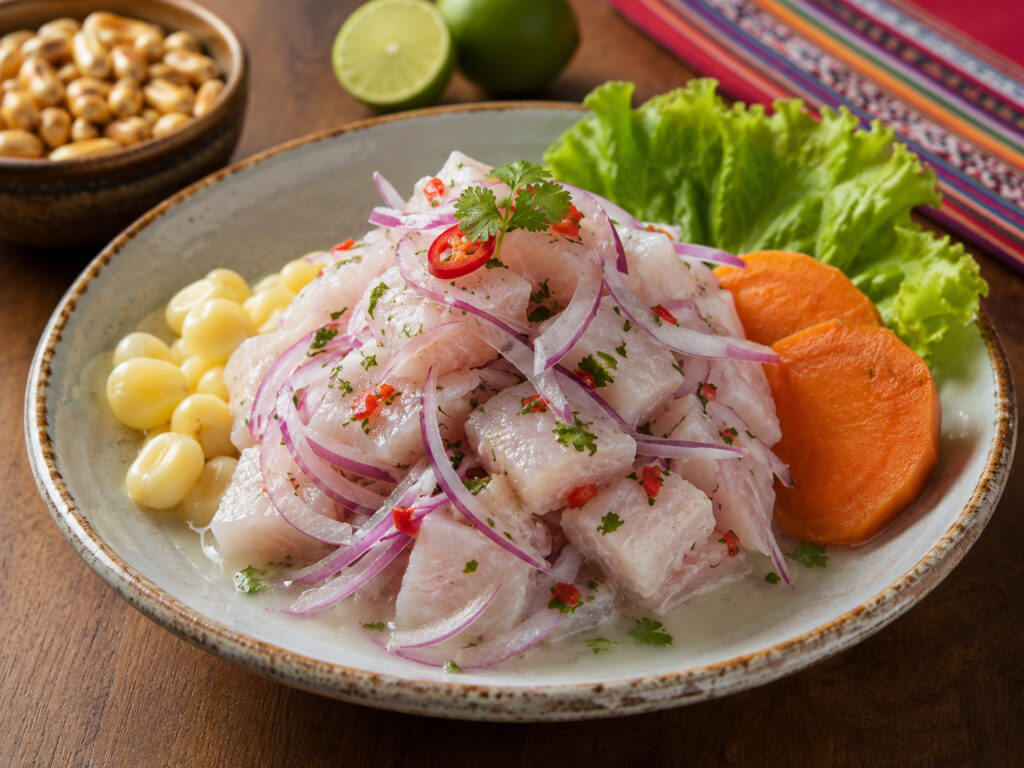
Ceviche is one of the most famous dishes of Peru and an important part of Peruvian cuisine. It is traditionally made with fresh raw fish marinated in citrus juice, usually mixed with red onion, chili peppers, and herbs.
Unlike cooked fish, ceviche is prepared through acidic marination, which changes the fish’s texture and appearance. Traditional Peruvian ceviche is often served with sides such as sweet potato, corn, and lettuce.
History of Peruvian Ceviche
Ceviche has very old roots in the coastal regions of Peru. Long before Europeans arrived, Indigenous coastal communities ate fish with acidic ingredients and local seasonings. The exact way ceviche developed into the dish we know today is still debated and more complicated than a single origin story.
After the Spanish arrived, ingredients such as citrus fruits and onions were introduced to the Americas. Over time, these ingredients became important parts of Peruvian ceviche.
Modern Peruvian ceviche reflects a mix of ancient Indigenous seafood traditions, local ingredients, foods introduced during Spanish colonization, and Peru’s distinctive native peppers and seasonings.
13. Empanadas
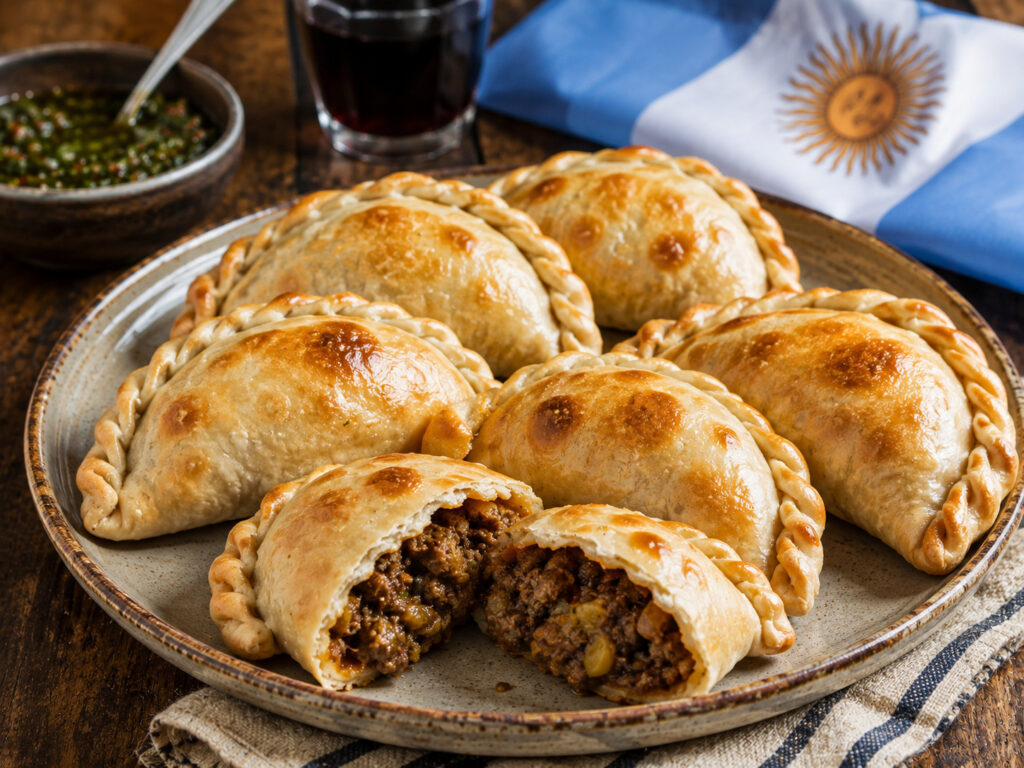
Empanadas are one of the most beloved foods in Argentina and an important part of Argentine food culture. They are small pastry pockets filled with meat, vegetables, cheese, or other ingredients, then baked or fried until golden and crisp.
Argentine empanadas are especially famous for their regional varieties, with different provinces using different fillings, seasonings, doughs, and cooking methods.
History of Empanadas
Empanadas are not uniquely Argentine in origin. Similar filled pastries have been made in different parts of the world for centuries.
The tradition reached South America through Spanish colonial influence, while the Argentine version developed its own style using local ingredients and regional cooking traditions.
Over time, empanadas became deeply connected to Argentine cuisine. Today, they are enjoyed everywhere from family kitchens, bakeries, restaurants, and neighborhood food shops to football gatherings and celebrations.
14. Asado
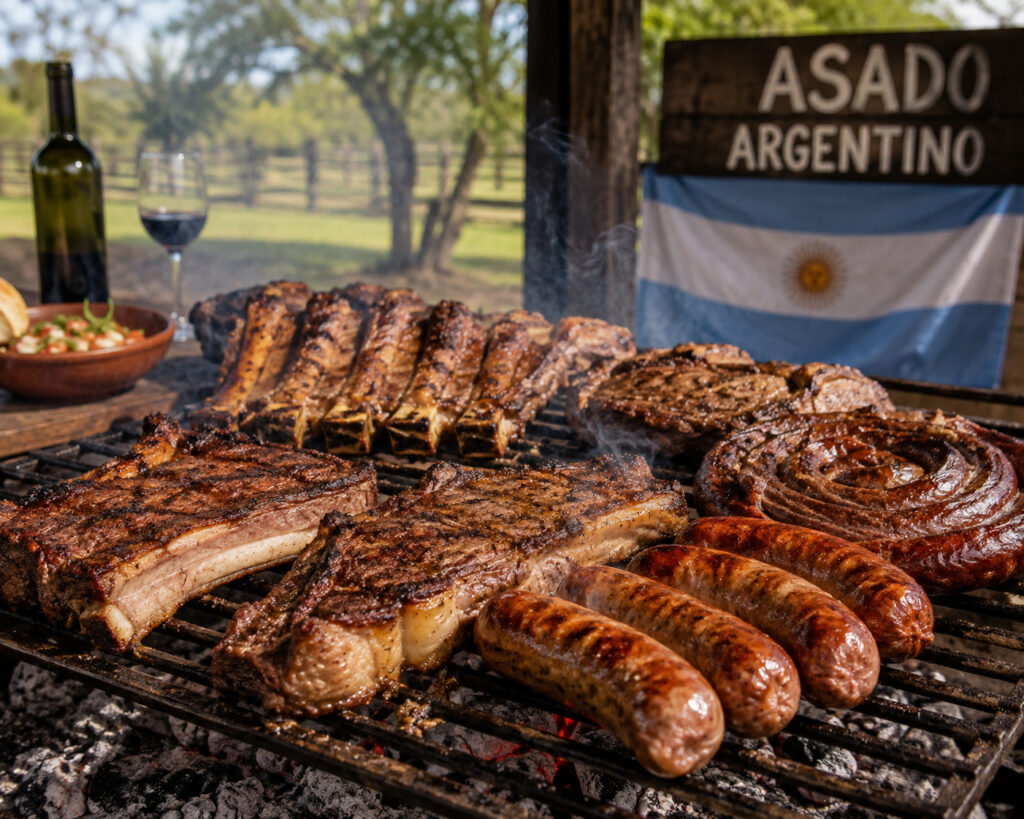
Asado is Argentina’s iconic barbecue tradition and one of the most important parts of Argentine food culture. More than just grilled meat, asado refers to both the way meat is cooked over wood or charcoal and the social gathering built around the meal.
Argentine asado is famous for its high-quality beef, simple seasoning, wood or charcoal fire, and slow, careful cooking over a parrilla (grill).
History of Argentine Asado
Argentina’s asado tradition is strongly connected to the gauchos, the cattle-herding people of the Pampas. During the colonial and early national periods, cattle became abundant across the Argentine grasslands.
Gauchos developed practical ways to cook beef over open fires while living and working in the countryside. Over time, these cooking methods became part of the parrilla culture found throughout Argentina today.
The tradition also reflects the influence of European immigrants, Indigenous food traditions, and Argentina’s large cattle industry.
15. Lomo Saltado
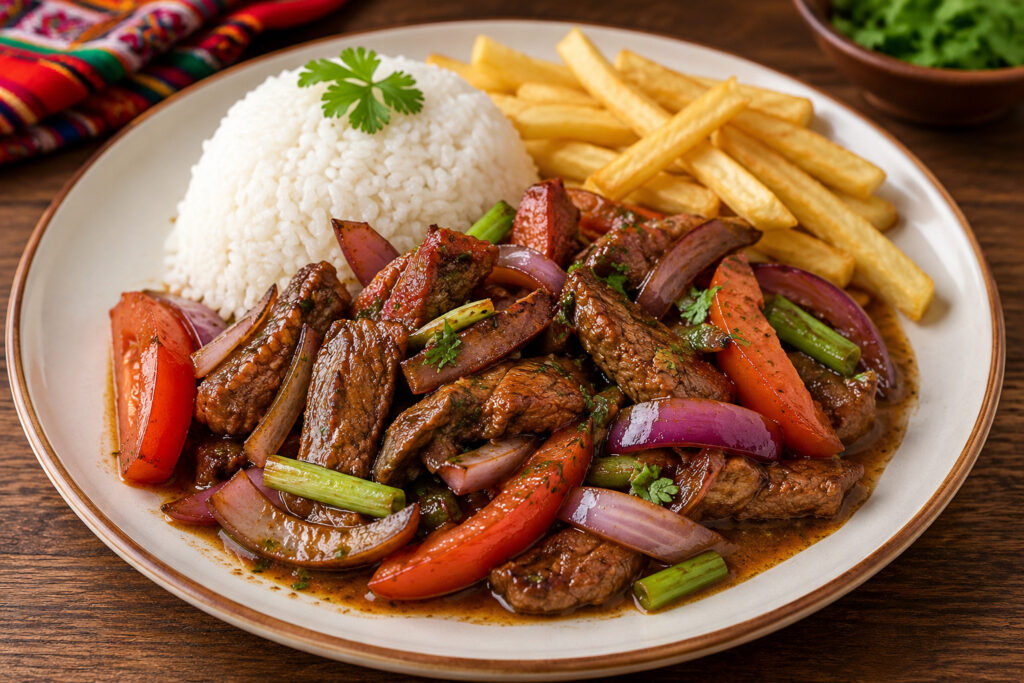
Lomo saltado is one of Peru’s most famous dishes and a great example of the country’s fusion cuisine. It combines Chinese cooking techniques with Peruvian ingredients, creating a stir-fry made with beef, onions, tomatoes, soy sauce, and vinegar, usually served with French fries and white rice.
It is a hearty and savory dish with a slightly tangy flavor and a smoky taste that comes from quickly cooking the ingredients over high heat.
The History of Lomo Saltado
Lomo saltado is closely connected to Chinese immigration to Peru, especially the arrival of Chinese workers and communities during the 19th century. Chinese immigrants, particularly those from southern China, brought cooking techniques and ingredients that gradually became part of Peruvian cuisine.
Chinese-style stir-frying was combined with local Peruvian ingredients and cooking traditions, creating a unique style of food. This fusion became an important part of Chifa, the Peruvian-Chinese food tradition.
Lomo saltado is now one of the best-known examples of this culinary fusion and an important part of Peruvian cuisine.
16. Arepas
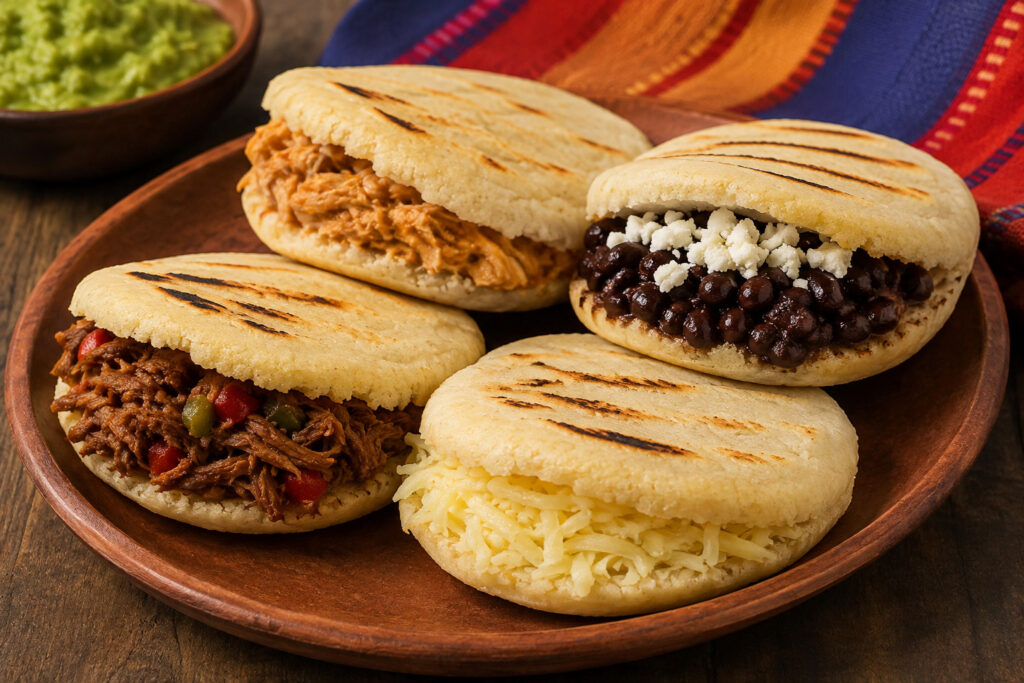
Arepas are one of the most important traditional foods of Colombia and Venezuela. They are round, flat or slightly thick corn cakes made from ground maize. They can be cooked on a griddle, skillet, or grill and eaten plain or stuffed with a wide variety of fillings.
Although Colombia and Venezuela both consider arepas an important part of their national cuisines, arepas have much older Indigenous roots that go back to a time before the modern borders of these countries existed.
Indigenous Origins
Arepas have pre-Columbian Indigenous roots in northern South America. Long before Spanish colonization, Indigenous peoples in the region cultivated and processed maize to make different kinds of foods.
The exact origin of the modern arepa is difficult to connect to one specific Indigenous group because maize-based flatbreads were made across a large area of northern South America.
The modern countries of Colombia and Venezuela did not yet exist as political nations when these food traditions developed. Because of this, arepas are best understood as part of the shared Indigenous culinary heritage of northern South America.
17. Bandeja Paisa
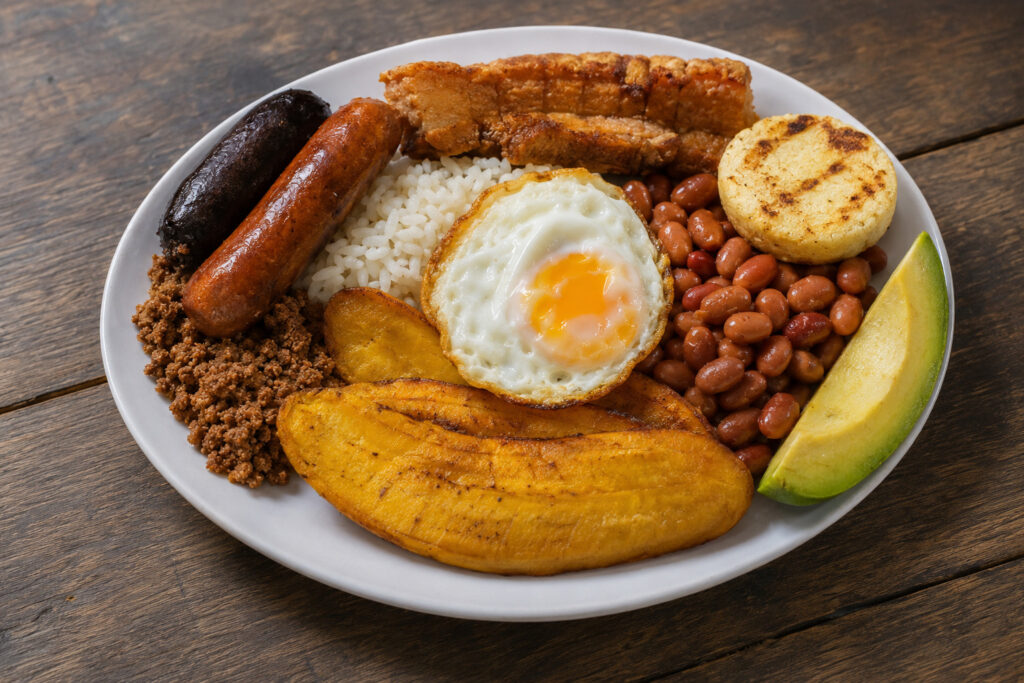
Bandeja Paisa is one of Colombia’s most famous and recognizable traditional dishes. It comes from the Antioquia region and is a huge platter filled with hearty foods such as beans, white rice, ground beef, chicharrón, fried egg, plantain, avocado, and arepa.
The word bandeja means tray, while paisa refers to the people and culture of the Paisa region of Colombia. Rather than being just one dish, Bandeja Paisa is more like a complete Colombian meal served on one large platter.
Where Did Bandeja Paisa Come From?
Bandeja Paisa is strongly associated with Antioquia, a mountainous region in northwestern Colombia. It is particularly associated with Medellín, although the dish is now enjoyed in many parts of Colombia.
Its development is linked to the traditional food culture of rural Paisa communities, where meals needed to be filling and provide plenty of energy for people doing physically demanding work. The modern dish developed from several foods that were already common in the region and were traditionally eaten together as hearty meals.
18. Ajiaco
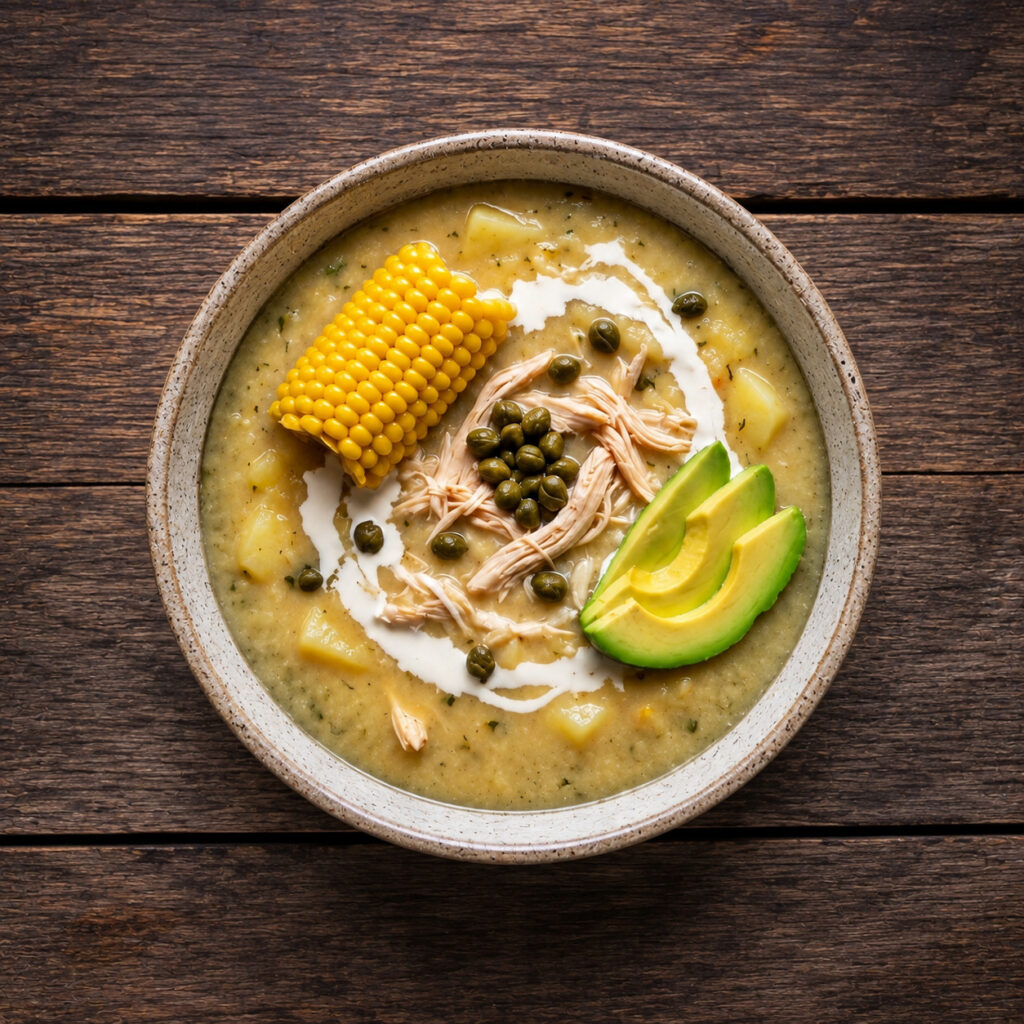
Ajiaco, especially Ajiaco Santafereño or Ajiaco Bogotano, is one of Colombia’s most famous traditional dishes. It is a thick and comforting chicken and potato soup made with several varieties of potatoes, corn on the cob, guascas, and chicken.
It is especially associated with Bogotá and the Andean region of Colombia. The soup is usually served with cream, capers, avocado, and white rice, making it a hearty and flavorful Colombian meal.
History of Ajiaco
The history of ajiaco is a little complicated because similar dishes, as well as the name ajiaco, have existed in different parts of Latin America. The Colombian version developed over time through a mix of different culinary traditions.
A. Indigenous Influence
Potatoes and maize were important crops for Indigenous peoples of the Andes and became key ingredients in Colombian cooking.
B. Spanish Influence
Chicken and other ingredients brought from Europe became part of Colombian cuisine after Spanish colonization.
C. Local Colombian Ingredients
Guascas, an herb native to the Americas, became an important ingredient in the Bogotá-style version of ajiaco.
Over time, these ingredients came together to create the dish now known as Ajiaco Santafereño.
19. Salteñas
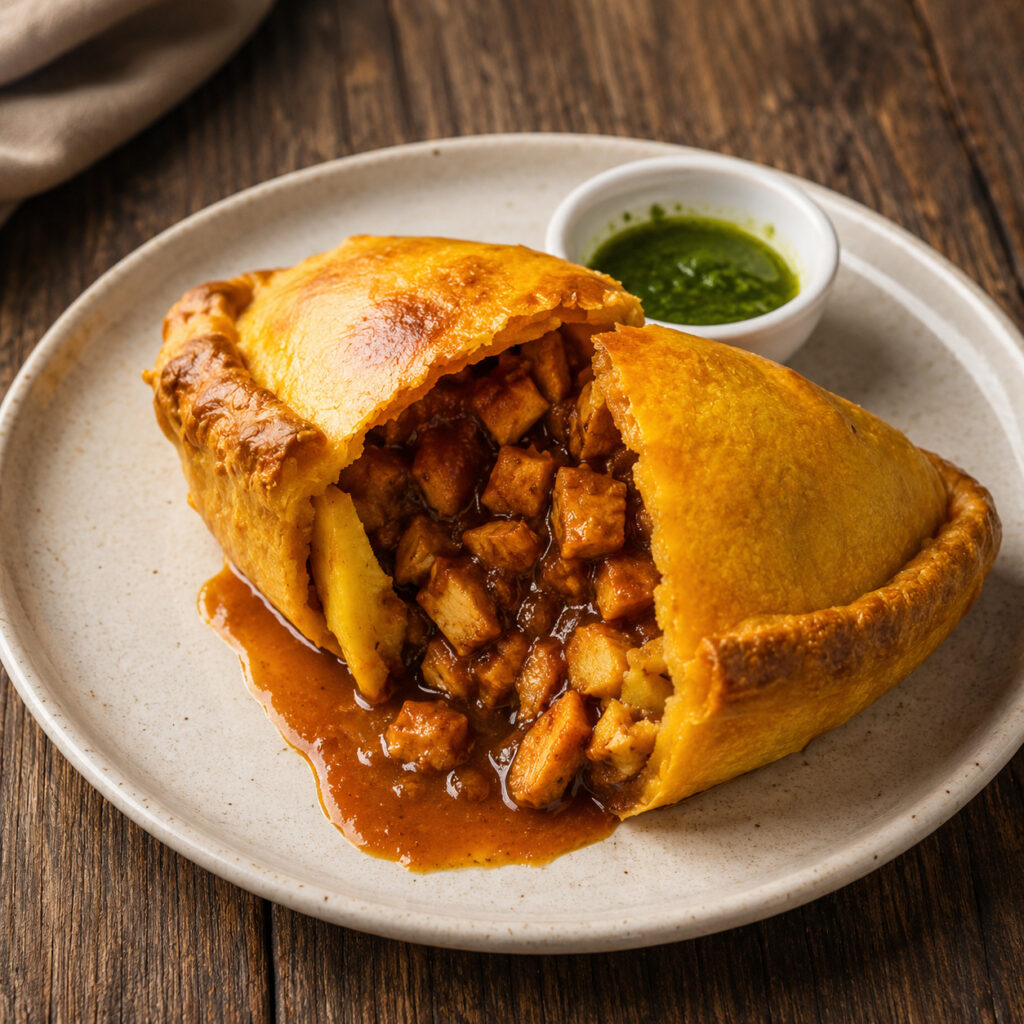
Salteñas are one of Bolivia’s most beloved traditional foods. They are baked, crescent-shaped pastries filled with a juicy, savory stew, usually made with beef or chicken, vegetables, potatoes, peas, spices, and a flavorful broth.
What makes salteñas special is their juicy filling. Unlike many empanadas, a well-made salteña contains enough rich broth to make eating one neatly a little tricky. They are especially popular as a morning snack or breakfast food in Bolivia.
History of Salteñas
The history of the salteña is closely linked to Juana Manuela Gorriti, an Argentine-born writer who lived in Bolivia during the 19th century. According to a popular story, Gorriti sold or prepared meat-filled pastries in Bolivia after leaving Argentina.
The pastries became associated with her hometown of Salta, Argentina, which is believed to have influenced the name salteña. However, the exact history and development of the modern salteña are more complicated than this popular story suggests.
Whatever its precise origins, salteñas eventually became firmly established as a distinctly Bolivian food tradition.
20. Chivito
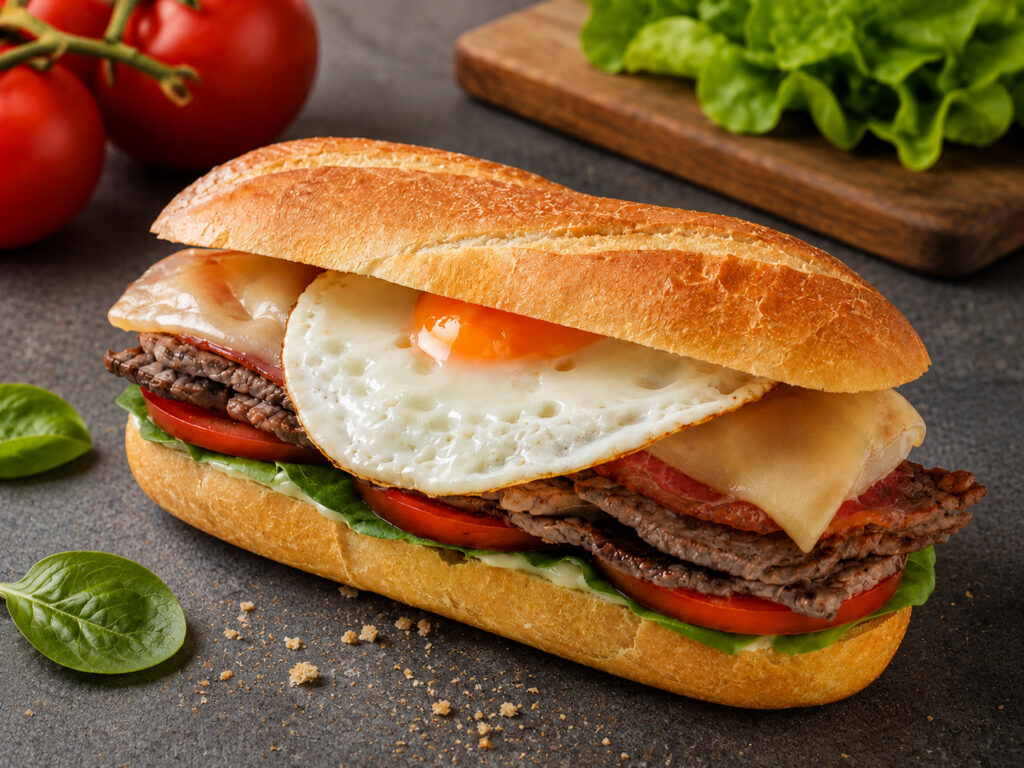
Chivito is Uruguay’s iconic steak sandwich and one of the country’s most famous comfort foods. Despite its name, which literally means “little goat,” a traditional chivito is not made with goat meat. It is usually made with a thin, tender slice of beef steak and topped with ingredients such as ham, melted cheese, lettuce, tomato, mayonnaise, and a fried egg.
It is a huge, filling sandwich that is a big part of Uruguay’s casual food culture.
The Story Behind the Chivito
The chivito has a surprisingly specific origin story. It is traditionally said to have been created in Montevideo in the 1940s, at a restaurant called El Mejillón. According to the popular story, an Argentine customer asked for goat meat (chivito), but the restaurant did not have any goat available.
Instead, the cook prepared a sandwich using a tender piece of beef with butter, ham, and other ingredients. The customer enjoyed it, and the sandwich eventually developed into the much more elaborate chivito we know today.
The exact details of the story have been told in different ways over the years, but the dish is firmly associated with Uruguay.
21. Pastel de Choclo
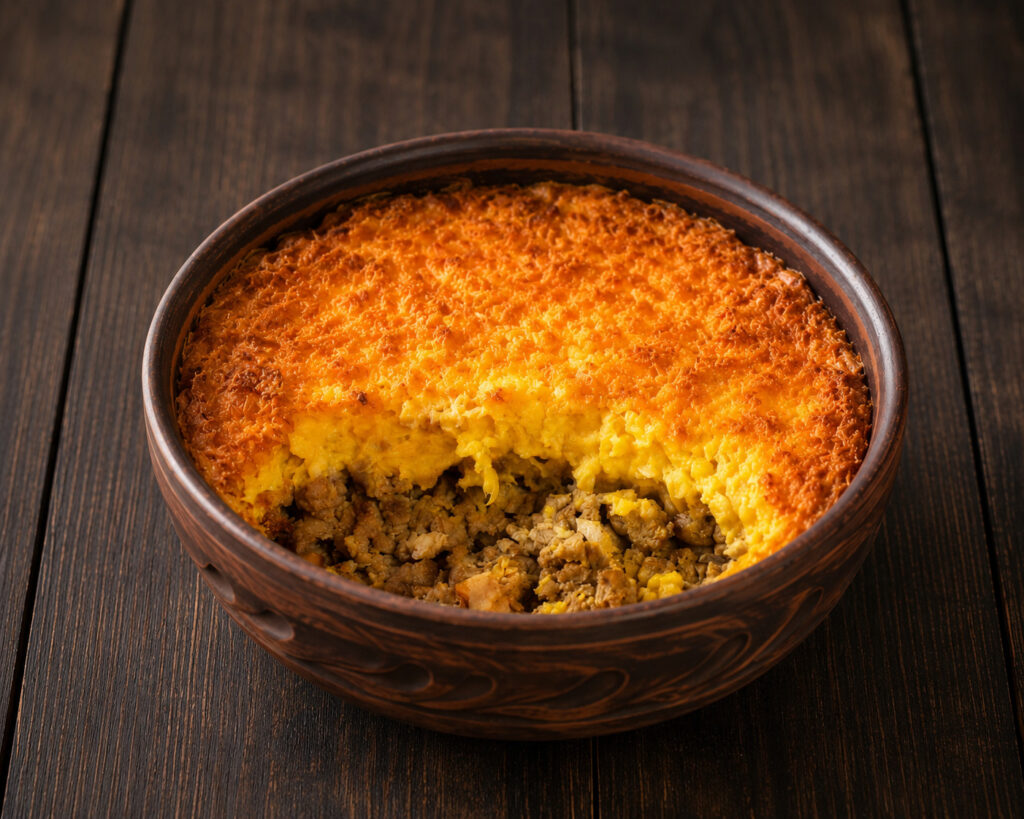
Pastel de choclo is one of Chile’s most beloved traditional dishes. It is a baked corn casserole with a creamy, slightly sweet layer of ground or puréed fresh corn covering a savory filling of beef, chicken, onion, and spices.
It is often baked in an individual clay dish, which helps the corn topping develop a beautifully browned and slightly caramelized crust. The dish combines sweet corn with savory meat, creating one of the most distinctive flavors in Chilean cuisine.
History of Pastel de Choclo
Pastel de choclo reflects the mixed culinary heritage of Chile. Its roots are strongly connected to Indigenous food traditions in central Chile and the Andes, especially the use of maize. After Spanish colonization, European ingredients and cooking methods became part of local cuisine.
The dish brings together several influences:
A. Indigenous Influence
Corn and other native American ingredients formed the foundation of the dish.
B. Spanish Influence
Ingredients such as beef, chicken, olives, raisins, and onions, along with European-style cooking methods, became part of the recipe.
Over time, these ingredients and traditions came together to create the distinctly Chilean dish known today as pastel de choclo.
22. Cazuela
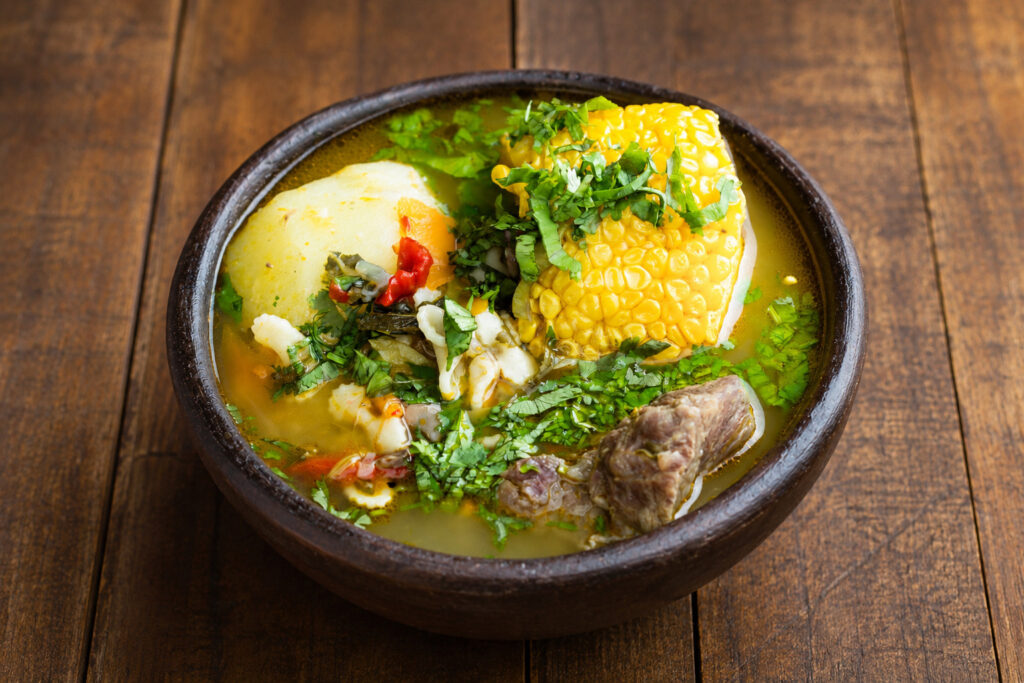
Cazuela is one of Chile’s most traditional and comforting home-cooked dishes. It is a hearty broth-based stew or soup made with meat, potatoes, pumpkin, corn, and other vegetables.
The most common versions are cazuela de vacuno (beef cazuela) and cazuela de ave (chicken cazuela). Instead of finely chopped ingredients, the vegetables and meat are usually served in large, recognizable pieces, which gives cazuela its rustic look and homemade feel.
History of Chilean Cazuela
The origins of Chilean cazuela reflect a mix of Indigenous and Spanish culinary influences.
A. Indigenous Influence
Ingredients such as corn, pumpkin, and potatoes were grown and eaten by Indigenous peoples of the Americas long before Europeans arrived.
B. Spanish Influence
The Spanish introduced livestock and ingredients such as cattle, chickens, onions, herbs, and various seasonings. These gradually became part of local cooking.
Over time, these ingredients and cooking traditions came together to create the traditional Chilean cazuela enjoyed today.
23. Pabellón Criollo
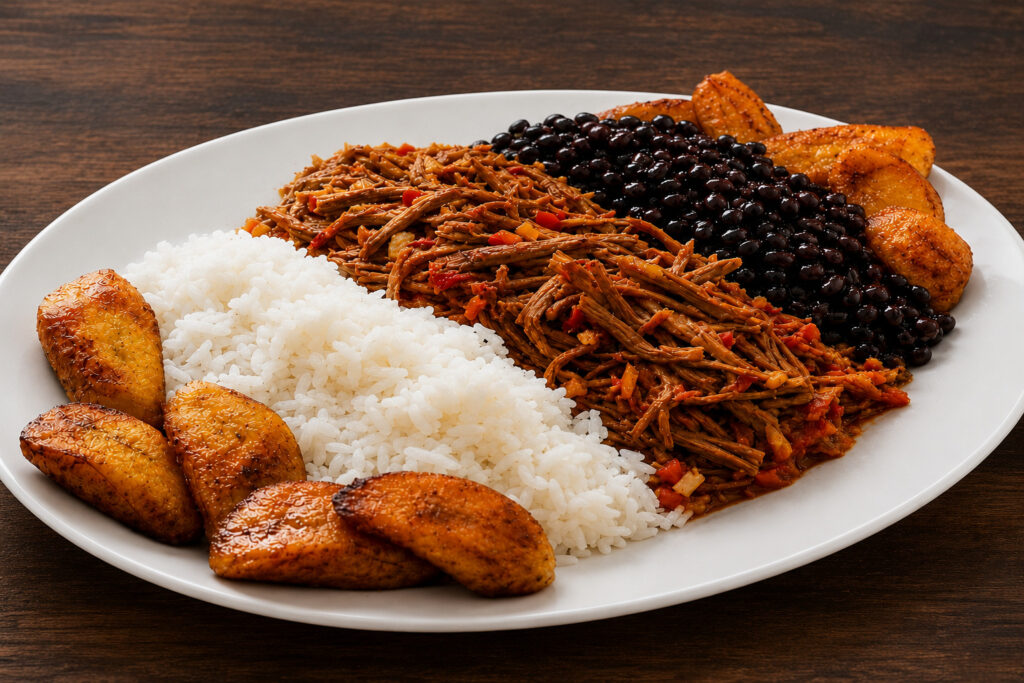
Pabellón Criollo is widely regarded as one of Venezuela’s most iconic traditional dishes. It is a hearty plate made up of shredded beef, black beans, white rice, and fried ripe plantains.
The dish is easy to recognize because its four main components are usually served separately on the plate. Together, they create a great mix of savory beef, creamy beans, fluffy rice, and sweet plantains.
History of Pabellón Criollo
The exact origins of Pabellón Criollo are difficult to trace, but the dish developed as part of Venezuela’s creole food tradition. Its main ingredients reflect the different cultures that helped shape Venezuelan cuisine.
A. Indigenous Influence
Indigenous food traditions contributed crops and cooking practices that became part of Venezuelan cuisine.
B. Spanish Influence
Spanish colonial cuisine introduced ingredients and cooking methods that influenced local food, including the widespread use of beef and rice.
C. African Influence
African culinary traditions also played an important role in Venezuelan cuisine, particularly in the use and preparation of beans, plantains, and other staple foods.
Pabellón Criollo is therefore a good example of how Indigenous, European, and African influences came together to shape Venezuelan food and culture.
24. Mote con Huesillo
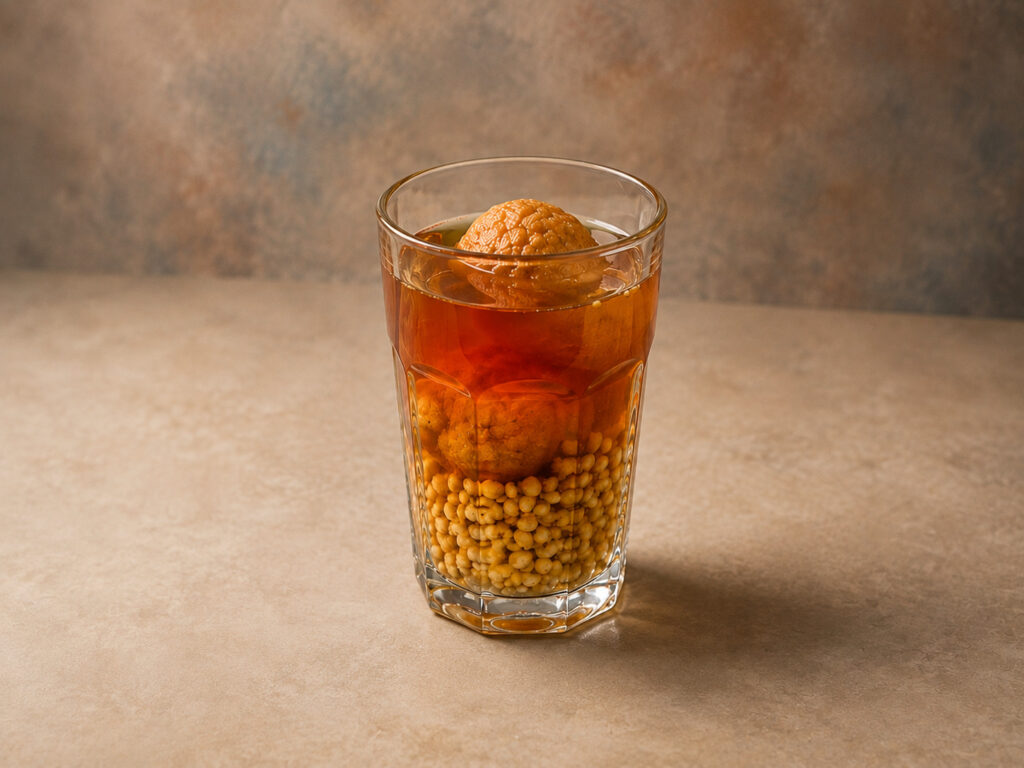
Mote con Huesillo is one of Chile’s most beloved traditional drinks and desserts. It is a refreshing combination of cooked wheat (mote) and sweet dried peaches (huesillos) served in a chilled, golden-colored peach syrup.
Although it is technically a drink, it is filling enough to be enjoyed almost like a dessert. It is especially popular during Chile’s hot summer months and is commonly sold by street vendors, markets, festivals, and roadside stands.
History of Mote con Huesillo
The exact origin of the modern preparation is difficult to pinpoint, but both of its main ingredients have long histories in Chilean food culture.
A. Wheat
Wheat became an important crop in Chile after European contact.
B. Peaches
Peaches were introduced to the Americas by Europeans and eventually became common in many parts of the continent.
Over time, these ingredients became part of Chilean food traditions and came together to create the preparation now known as Mote con Huesillo.
It eventually became closely associated with Chilean street food and summer culture.
25. Sancocho
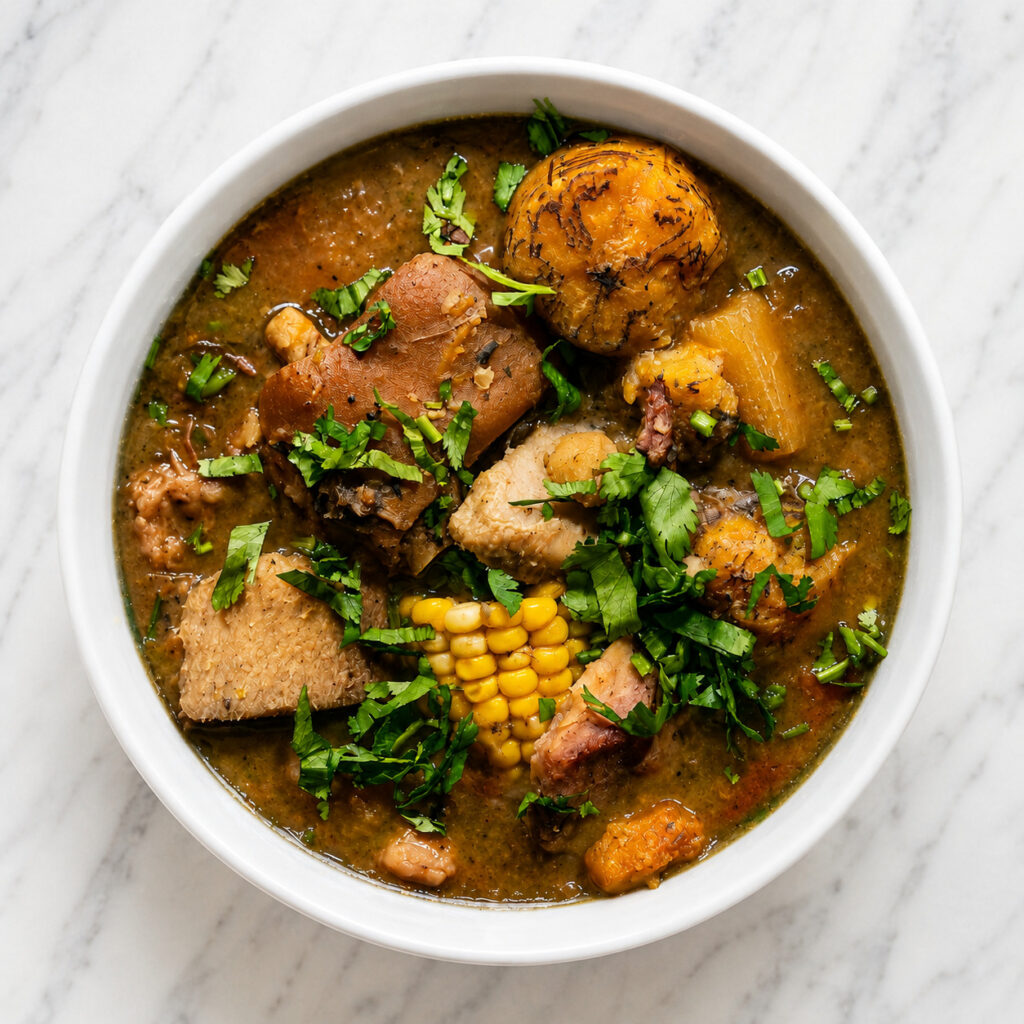
Sancocho is a traditional family of hearty soups and stews found across Latin America and the Caribbean. It is usually made by slowly cooking meat, plantains, yuca (cassava), corn, potatoes, and other root vegetables in a flavorful broth.
There isn’t just one recipe for sancocho. Almost every country and region has developed its own version using local ingredients and cooking traditions. It is especially popular at family gatherings, celebrations, weekends, and other communal meals.
History of Sancocho
The history of sancocho is complex because the dish developed across many regions rather than coming from one specific modern country.
Its development reflects the influence of several different food traditions.
A. Indigenous Influence
Indigenous peoples of the Americas cultivated and ate staples such as maize, cassava, potatoes, peppers, and squash. These ingredients became important in many versions of sancocho.
B. Spanish Influence
Spanish colonial cooking introduced livestock and ingredients such as cattle, pigs, chickens, onions, and garlic, which became part of many local versions.
C. African Influence
African culinary traditions also had a major influence on Caribbean and Latin American cooking, particularly through the use of plantains, root vegetables, communal cooking, and hearty one-pot meals.
Sancocho developed over time through the mixing of these different culinary traditions, with each region giving the dish its own ingredients and character.
Final Thoughts
The traditional foods of North and South America take you on an incredible culinary journey through mountains, deserts, tropical forests, coastlines, and vast plains. From the ancient corn-based foods of Mexico and Central America to the meat-focused traditions of Argentina and Uruguay, every region has its own unique flavors, ingredients, and stories.
These foods are more than just meals. They reflect history, migration, Indigenous traditions, local ingredients, and cultural identity passed down through generations.
Whether you’re enjoying tacos in Mexico, ceviche in Peru, feijoada in Brazil, or asado in Argentina, exploring traditional food is a great way to learn more about the people, cultures, and places behind each dish.
So, which of these 25 traditional foods of North and South America would you try first?