Introduction: Where Reality Feels Like a Dream
Surprisingly, some of the most surreal places on Earth are not products of Photoshop or imagination—they exist, untouched, raw, and breathtaking. From glowing oceans to mirror-like deserts and rainbow mountains, our planet is filled with unreal destinations that feel like scenes from another world.
These unique travel spots blur the line between reality and fantasy. They challenge what we believe is possible in nature. They make you question whether you’re dreaming… or truly standing on Earth.
In this detailed travel guide, you’ll explore 10 of the most dreamlike places across the globe. Each destination includes:
- What makes it surreal
- Best time to visit
- Top things to do
- Practical travel tips
Let’s dive into the world’s most unbelievable landscapes.
1. Salar de Uyuni, Bolivia – The World’s Largest Mirror
A. Overview
Located in southwest Bolivia, near the small town of Uyuni, Salar de Uyuni is the largest salt flat in the world, stretching over 10,000 square kilometers. Formed from prehistoric lakes that evaporated thousands of years ago, it left behind a vast, white crust of salt that looks like an endless frozen ocean.
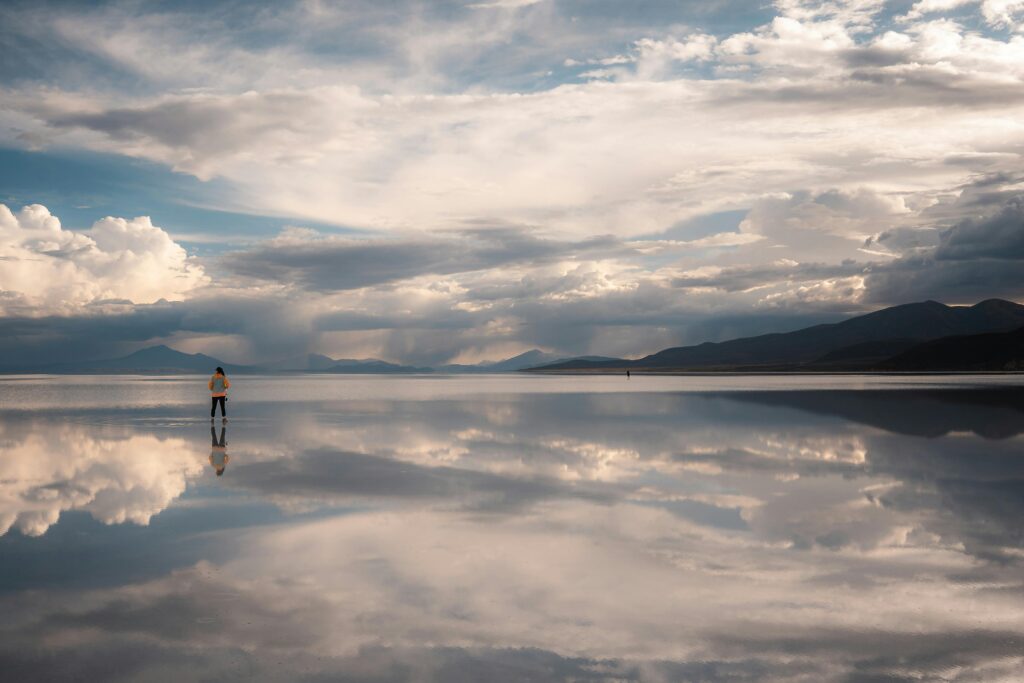
What makes this place truly unique is its perfectly flat surface. During the rainy season, a thin layer of water covers the salt crust, turning the entire landscape into a gigantic natural mirror. The sky reflects flawlessly on the ground, creating an optical illusion where it becomes nearly impossible to distinguish between heaven and earth.
B. Why It Doesn’t Feel Real
There are few places on Earth that challenge your perception of reality quite like Salar de Uyuni. During the wet season, this vast salt flat transforms into a reflective surface so perfect that it looks like a portal to another dimension.
As you walk across it, your reflection follows you with crystal clarity. Clouds drift beneath your feet. Sunsets stretch infinitely in every direction, painting both the sky and the ground in identical hues of orange, pink, and gold. It feels like standing inside a painting—or floating in a dream.
This surreal mirror effect creates a sense of isolation and wonder. There are no landmarks, no boundaries, just an endless expanse that makes you feel both small and incredibly connected to the universe. It’s not just visually stunning—it’s emotionally overwhelming in the best way possible.
C. Best Time to Visit
Choosing the right time to visit Salar de Uyuni depends on the experience you’re seeking.
1. Wet Season (December to April)
This is when the famous mirror effect happens.
- Pros:
- Stunning reflections create the “world’s largest mirror” illusion
- Perfect for photography and surreal visuals
- Cons:
- Some areas may be inaccessible due to water
- Tours can be limited depending on conditions
2. Dry Season (May to November)
The salt flats dry up, revealing geometric hexagonal patterns.
- Pros:
- Easier to explore the entire area
- Unique cracked salt formations
- Cons:
- No mirror effect
- Slightly less visually dramatic
For most travelers following a Salar de Uyuni travel guide, the wet season is the top choice for that iconic, otherworldly experience.
D. Top Things to Do
1. Perspective Photography
The endless flatness creates a perfect playground for optical illusion photography. You can make objects appear giant, tiny, or floating—your creativity is the only limit.
2. Visit the Train Cemetery
Just outside Uyuni lies an eerie collection of rusted locomotives, often called the “train graveyard.” These abandoned trains add a haunting, cinematic vibe to your trip.
3. Explore Incahuasi Island
In the middle of the salt flats, this island rises unexpectedly, covered in giant cacti. Climbing to the top gives you a panoramic view of the endless white landscape.
4. Watch Sunrise and Sunset
Few experiences compare to watching the sun rise or set over Salar de Uyuni. The colors double in intensity as they reflect on the surface, creating a magical atmosphere.
5. Stargazing at Night
With minimal light pollution, the night sky here is extraordinary. During the wet season, stars reflect on the ground, making it feel like you’re standing in the middle of the galaxy.
E. Travel Tips
- Dress in Layers: Temperatures can fluctuate drastically between day and night.
- Prepare for Altitude: Salar de Uyuni sits at over 3,600 meters. Take time to acclimatize and stay hydrated.
- Wear Sunglasses & Sunscreen: The white salt reflects sunlight intensely, which can be harsh on your eyes and skin.
- Book a Reliable Tour: Most visits are done via guided tours from Uyuni. Choose operators with good reviews for safety and comfort.
- Protect Your Electronics: Salt and water can damage devices—carry protective covers.
F. How to Reach
The easiest way to reach Salar de Uyuni is by flying to the nearest airport in Uyuni. There are regular flights from major cities like La Paz.
Alternatively, you can take a bus or train from La Paz or other parts of Bolivia. Once you arrive in Uyuni, guided tours will take you deep into the salt flats for a full experience.
2. Antelope Canyon, USA – Nature’s Sculpted Waves
A. Overview
Located in the American Southwest near Page in Arizona, Antelope Canyon is one of the most famous slot canyons in the world. It lies within the lands of the Navajo Nation and is divided into two main sections: Upper Antelope Canyon and Lower Antelope Canyon.
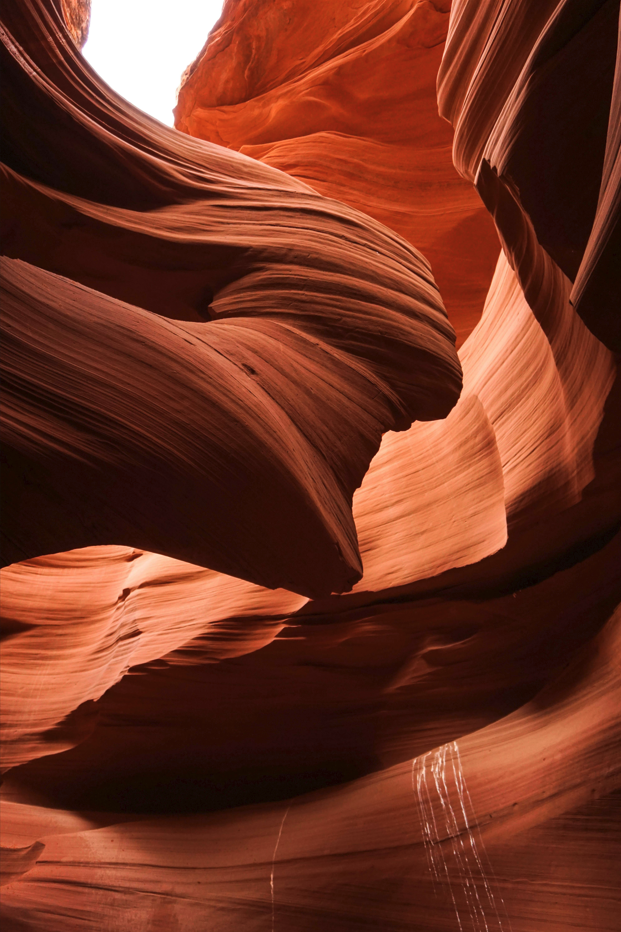
This canyon was formed over centuries by flash floods and erosion, which sculpted the sandstone into smooth, wave-like patterns. What makes it extraordinary is how light interacts with the narrow passageways, creating glowing beams and shifting colors throughout the day.
B. Why It Doesn’t Feel Real
Antelope Canyon feels unreal because it plays tricks on your senses. The walls appear soft, almost fluid, as if they’re still moving. Light filters through narrow openings above, forming beams that look like spotlights from another world.
As sunlight hits the sandstone, it reflects in warm tones—deep reds, fiery oranges, and even purples. Shadows bend and stretch, creating abstract patterns that constantly change. No two moments here look the same.
Standing inside, you feel enclosed yet connected to something vast. It’s quiet, almost sacred, and the natural design is so perfect it feels intentional—like nature spent centuries crafting a masterpiece hidden from the world.
C. Best Time to Visit
1. Spring & Summer (March to October)
This is the most popular time to visit.
- Pros:
- Famous light beams are visible, especially in Upper Antelope Canyon
- Vibrant colors and strong contrasts for photography
- Cons:
- Crowded and requires advance booking
- Higher temperatures
2. Fall & Winter (November to February)
A quieter, more peaceful experience.
- Pros:
- Fewer tourists
- Softer lighting for photography
- Cons:
- No dramatic light beams
- Cooler weather
For those following an Antelope Canyon travel guide, visiting between late morning and early afternoon in summer offers the most iconic views.
D. Top Things to Do
1. Witness the Light Beams
In Upper Antelope Canyon, sunlight streams down through narrow openings, creating breathtaking beams that look almost spiritual.
2. Explore Both Upper & Lower Canyon
Upper Canyon is easier to walk through, while Lower Canyon involves ladders and narrow passages, offering a more adventurous experience.
3. Photography Tours
Professional photography tours allow extra time and tripod use, helping you capture the canyon’s surreal beauty.
4. Guided Navajo Tours
Since the canyon is on Navajo land, all visits must be guided. These tours also provide cultural insights and stories about the area.
5. Visit Nearby Horseshoe Bend
Just a short drive away, this dramatic bend in the Colorado River offers another stunning and surreal landscape.
E. Travel Tips
- Book in Advance: Slots fill quickly, especially during peak season.
- Follow Safety Rules: Flash floods can occur, so always go with authorized guides.
- Wear Comfortable Shoes: The terrain can be sandy and uneven.
- Travel Light: Bags are often restricted, especially on photography tours.
- Timing Matters: Midday visits offer the best lighting conditions.
F. How to Reach
The nearest major access point is Page, which has a small airport with connections to larger cities like Phoenix.
Alternatively, you can drive from major hubs such as Las Vegas or Phoenix. From Page, Antelope Canyon is just a short drive away, and all visits are organized through licensed tour operators.
3. Zhangjiajie National Forest Park, China – Avatar Mountains
A. Overview
Located in Zhangjiajie in China, this national park is part of the larger Wulingyuan Scenic Area, a UNESCO World Heritage Site.
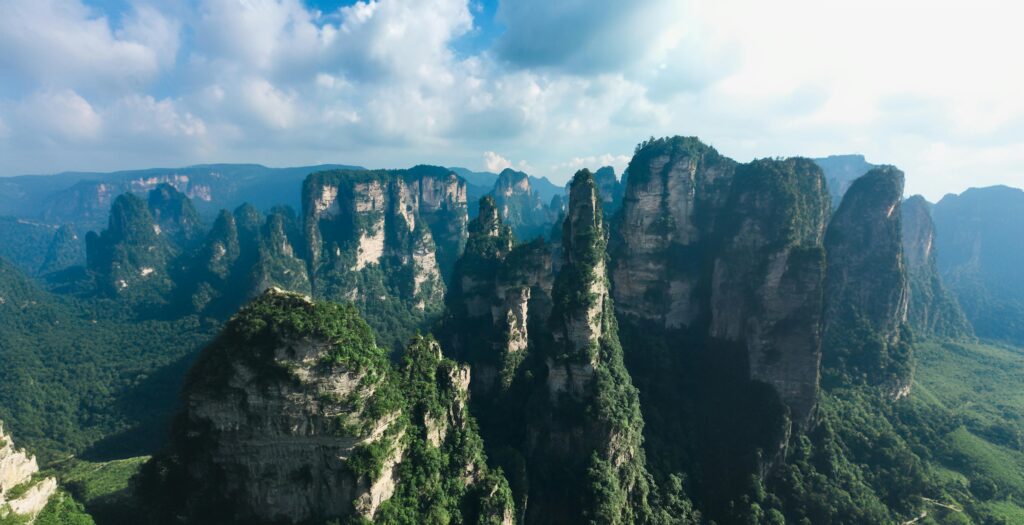
The park is famous for its thousands of tall, narrow sandstone pillars, some reaching over 200 meters in height. These formations were created over millions of years through erosion, weathering, and geological uplift. Dense forests, deep ravines, and frequent mist add to its mystical appearance, making it one of the most unique landscapes on Earth.
B. Why It Doesn’t Feel Real
Zhangjiajie doesn’t feel real because it defies how landscapes are supposed to look. Mountains are usually wide and grounded—but here, they rise like thin towers, almost defying gravity.
When fog rolls in, the peaks appear to float independently, creating the illusion of suspended islands in the sky. The constantly shifting mist changes the scenery every minute—one moment you see a dense forest of pillars, and the next, only a few peaks remain visible, emerging from a sea of clouds.
The silence, the scale, and the surreal shapes create a dreamlike atmosphere. It feels less like a national park and more like a hidden world untouched by time.
C. Best Time to Visit
Spring (March to May)
- Pros:
- Lush greenery and fresh air
- Frequent mist enhances the “floating mountains” effect
- Cons:
- Occasional rain
Autumn (September to November)
- Pros:
- Clear skies with colorful foliage
- Comfortable temperatures
- Cons:
- Less mist compared to spring
Summer (June to August)
- Pros:
- Vibrant landscapes
- Cons:
- Crowded and humid
Winter (December to February)
- Pros:
- Snow-covered pillars create a magical view
- Cons:
- Cold and some areas may be closed
For those following a Zhangjiajie travel guide, spring and autumn offer the perfect balance between visibility and surreal atmosphere.
D. Top Things to Do
1. Walk on the Zhangjiajie Glass Bridge
Suspended high above a canyon, this transparent bridge offers breathtaking—and slightly terrifying—views straight down.
2. Ride the Bailong Elevator
Known as the world’s tallest outdoor elevator, it takes you up the cliffs for panoramic views of the stone pillars.
3. Explore Avatar Hallelujah Mountain
One of the most famous peaks, renamed after the movie Avatar, is a must-see for fans and photographers.
4. Hike Through Golden Whip Stream
A peaceful trail at the base of the pillars, surrounded by greenery and flowing water.
5. Take the Tianzi Mountain Cable Car
Enjoy sweeping aerial views of the entire landscape as mist drifts between the peaks.
E. Travel Tips
- Arrive Early: Popular viewpoints can get crowded quickly.
- Wear Comfortable Shoes: Expect a lot of walking and stairs.
- Carry Light Snacks & Water: Exploring the park can take a full day or more.
- Check Weather Conditions: Mist enhances the experience, but too much can reduce visibility.
- Use Park Transportation: Shuttle buses and cable cars save time and energy.
F. How to Reach
The nearest access point is Zhangjiajie, which has an airport with connections to major Chinese cities like Beijing, Shanghai, and Guangzhou.
From the city, buses and taxis can take you directly to the park entrance. Most travelers stay in Zhangjiajie or nearby Wulingyuan for easy access.
4. Vaadhoo Island, Maldives – The Sea of Stars
A. Overview
Located in the Raa Atoll of the Maldives, Vaadhoo Island is a small, quiet island that has gained global fame for its glowing shores.
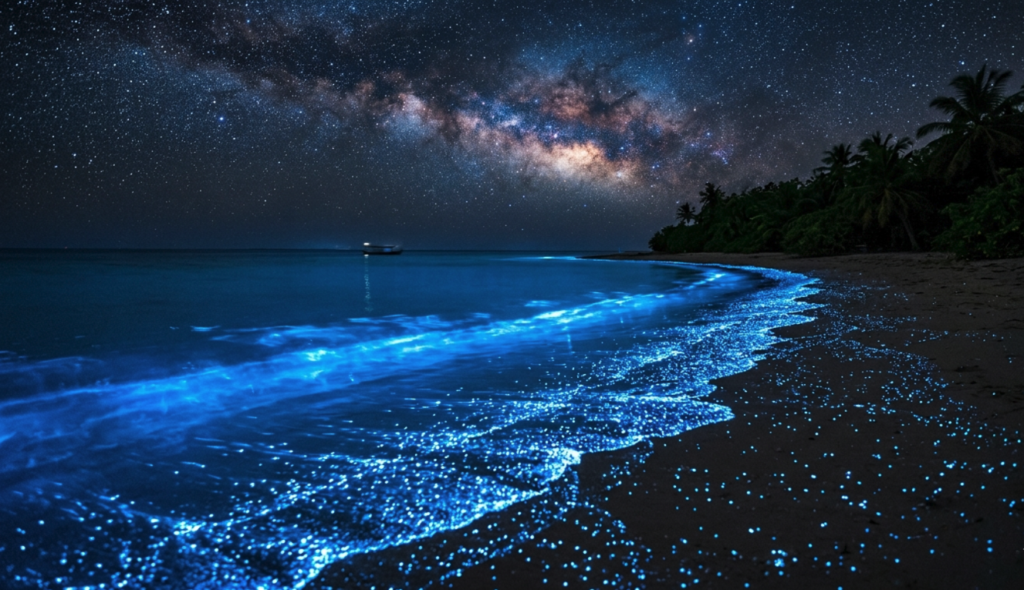
The phenomenon that makes this place extraordinary is caused by bioluminescent phytoplankton—microscopic marine organisms that emit light when disturbed. When waves roll in or your footsteps touch the water, these organisms light up, creating a sparkling blue glow that looks like a reflection of the night sky.
B. Why It Doesn’t Feel Real
Vaadhoo Island feels unreal because it transforms the ocean into something otherworldly. The glowing blue waves shimmer like liquid stars, stretching endlessly along the shoreline.
Every movement—whether it’s the tide, a fish swimming, or your own footsteps—creates bursts of light. It’s as if the sea is responding to your presence. The contrast between the dark night sky above and the glowing water below creates a surreal illusion: you’re standing between two galaxies.
There’s also something deeply calming about it. The gentle glow, the quiet waves, and the soft ocean breeze create a peaceful yet magical atmosphere that feels almost too perfect to exist in reality.
C. Best Time to Visit
Peak Season for Bioluminescence (June to October)
- Pros:
- Higher chances of witnessing the glowing “Sea of Stars”
- Warmer nights and clearer skies
- Cons:
- Weather can be slightly unpredictable due to monsoon season
Dry Season (November to April)
- Pros:
- Ideal beach weather and clear days
- Cons:
- Lower chances of bioluminescence
For those following a Vaadhoo Island travel guide, visiting during the monsoon months increases your chances of experiencing this magical glow.
D. Top Things to Do
1. Witness the Sea of Stars at Night
The main highlight—walk along the beach after sunset and watch the glowing waves come alive.
2. Night Photography
Capture the magical blue glow with long-exposure photography for unforgettable images.
3. Beach Walks Under the Stars
Enjoy peaceful nighttime strolls as the ocean lights up with every step.
4. Snorkeling & Marine Exploration
During the day, explore the rich marine life and coral reefs surrounding the island.
5. Island Hopping in the Maldives
Visit nearby islands and resorts to experience the diverse beauty of the Maldives.
E. Travel Tips
- Check Conditions Before Visiting: Bioluminescence is natural and unpredictable.
- Avoid Bright Lights: Let your eyes adjust to the dark for the best experience.
- Bring a Tripod: Essential for capturing clear photos at night.
- Respect Nature: Avoid disturbing marine life excessively.
- Stay Overnight: The glow is best seen late at night, so plan accordingly.
F. How to Reach
To reach Vaadhoo Island, first fly into Malé, the capital of the Maldives.
From Malé, you can take a domestic flight or speedboat transfer to Raa Atoll, followed by a local boat ride to Vaadhoo Island. Many resorts and tour operators arrange transfers as part of travel packages.
5. Pamukkale, Turkey – The Cotton Castle
A. Overview
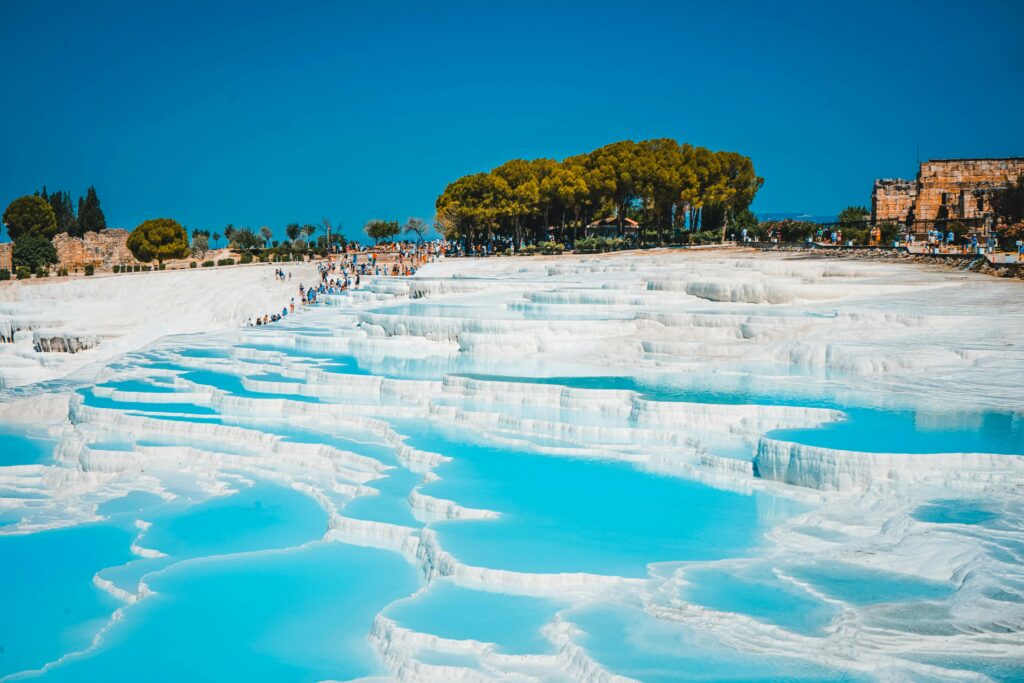
Located in southwestern Turkey near the town of Denizli, Pamukkale is famous for its dazzling white terraces made of travertine—a type of limestone formed by mineral-rich thermal waters.
Over thousands of years, hot springs flowing down the hillside deposited calcium carbonate, gradually building these stepped pools. The result is a series of natural terraces filled with turquoise water, creating a striking contrast against the bright white formations.
Pamukkale is also home to the ancient city of Hierapolis, adding historical depth to its already mesmerizing beauty.
B. Why It Doesn’t Feel Real
Pamukkale feels unreal because it looks like something that shouldn’t exist in nature. The terraces appear soft and fluffy, like cotton or snow, yet they are solid rock formed over centuries.
As sunlight reflects off the white surface, the entire landscape glows, almost blinding in its brightness. The pools shimmer in shades of blue and green, creating a dreamlike contrast that feels almost artificial.
Walking barefoot through the warm water, you feel a strange mix of sensations—cool air, warm water, and smooth mineral surfaces beneath your feet. It’s a sensory experience that makes you question whether you’re still on Earth or somewhere far more magical.
C. Best Time to Visit
Spring (April to June)
- Pros:
- Pleasant temperatures
- Fewer crowds than peak summer
- Cons:
- Occasional rain
Autumn (September to October)
- Pros:
- Comfortable weather
- Beautiful lighting for photography
- Cons:
- Slightly busier than spring
Summer (July to August)
- Pros:
- Clear skies and vibrant colors
- Cons:
- Very hot and crowded
Winter (November to March)
- Pros:
- Fewer tourists
- Unique experience with cooler surroundings and warm pools
- Cons:
- Cooler weather overall
For those following a Pamukkale travel guide, spring and autumn offer the best balance of weather and crowd levels.
D. Top Things to Do
1. Walk Barefoot on the Travertine Terraces
Visitors are required to remove their shoes to protect the formations. Walking through the warm, mineral-rich water is both relaxing and surreal.
2. Swim in Cleopatra’s Pool
Also known as the Antique Pool, this thermal pool is filled with ancient submerged columns, offering a unique historical bathing experience.
3. Explore Hierapolis
Wander through ruins of this ancient Roman spa city, including a well-preserved theater and necropolis.
4. Watch Sunset Over the Terraces
As the sun sets, the white formations take on golden hues, creating a magical and peaceful atmosphere.
5. Take a Hot Air Balloon Ride
Experience a breathtaking aerial view of Pamukkale and its surroundings at sunrise.
E. Travel Tips
- Visit Early or Late: Avoid crowds and harsh sunlight.
- Bring Sunglasses: The white surface reflects sunlight intensely.
- Carry Water: It can get hot, especially in summer.
- Follow Rules: Stick to designated areas to protect the terraces.
- Wear Easy-to-Remove Footwear: You’ll need to walk barefoot on the terraces.
F. How to Reach
The nearest city is Denizli, which has an airport with connections to major cities like Istanbul.
From Denizli, you can take a short drive or local transport to reach Pamukkale. Many travelers also visit as part of guided tours from nearby tourist hubs.
6. Rainbow Mountains, Peru – Nature’s Color Palette
A. Overview
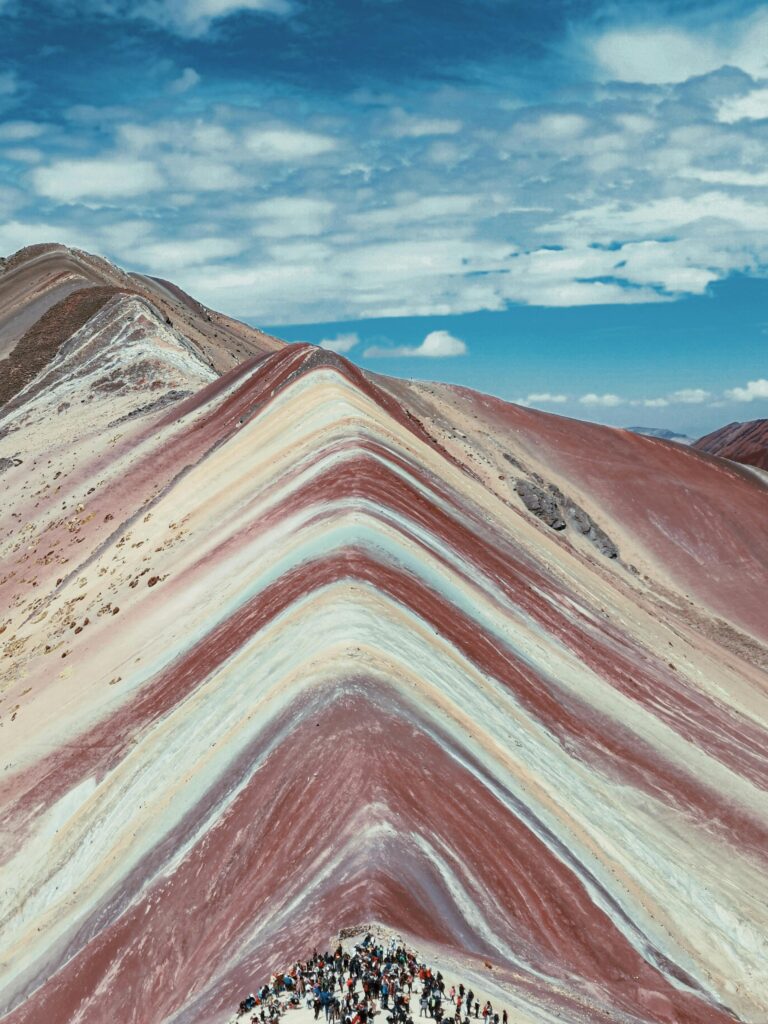
The most famous Rainbow Mountains are located in Peru, near the historic city of Cusco. Known locally as Vinicunca or Montaña de Siete Colores (Mountain of Seven Colors), this natural wonder sits at an altitude of over 5,000 meters above sea level.
The vibrant colors are the result of mineral deposits layered over millions of years. Iron oxide creates reds, copper produces greens, sulfur adds yellows, and other minerals contribute to the full spectrum of shades seen across the mountain.
B. Why It Doesn’t Feel Real
The Rainbow Mountains feel unreal because they look like they’ve been painted by hand. The colors are so bold and perfectly layered that it’s hard to believe they’re natural.
As sunlight shifts throughout the day, the intensity of the colors changes, making the mountains appear alive. Clouds drift across the peaks, sometimes hiding and revealing different sections, adding to the illusion.
Standing there, surrounded by endless ridges of color, you feel like you’ve stepped into a surreal painting. The high altitude, crisp air, and vast open space create a sense of isolation that makes the experience even more dreamlike.
C. Best Time to Visit
Dry Season (May to September)
- Pros:
- Clear skies and vibrant colors
- Better visibility for photography
- Cons:
- Cold temperatures, especially in the morning
Wet Season (October to April)
- Pros:
- Fewer tourists
- Cons:
- Rain can make trails slippery
- Clouds may hide the colors
For those following a Rainbow Mountains travel guide, the dry season is the best time to witness the full brilliance of this surreal place on Earth.
D. Top Things to Do
1. Hike to Vinicunca Summit
The main activity is a scenic hike that rewards you with breathtaking panoramic views of the colorful ridges.
2. Visit the Red Valley
A nearby lesser-known attraction with deep red landscapes that look equally surreal but less crowded.
3. Capture Stunning Photography
The natural color patterns make this one of the most photogenic locations in the world.
4. Experience Local Andean Culture
Interact with local communities and see traditional clothing, alpacas, and llamas.
5. Horse Riding Option
If hiking at high altitude is challenging, you can rent a horse for part of the journey.
E. Travel Tips
- Acclimatize First: Spend a few days in Cusco to adjust to the high altitude.
- Start Early: Early morning hikes offer clearer views and fewer crowds.
- Dress Warmly: Temperatures can be freezing, even during the day.
- Stay Hydrated: High altitude can cause dehydration quickly.
- Carry Snacks & Energy Boosters: The hike can be physically demanding.
F. How to Reach
The journey starts from Cusco, which is accessible by flights from major cities in Peru.
From Cusco, most travelers take guided tours that include transportation to the trailhead, followed by a hike or horse ride to the mountain.
7. The Great Blue Hole, Belize – Ocean’s Perfect Circle
A. Overview
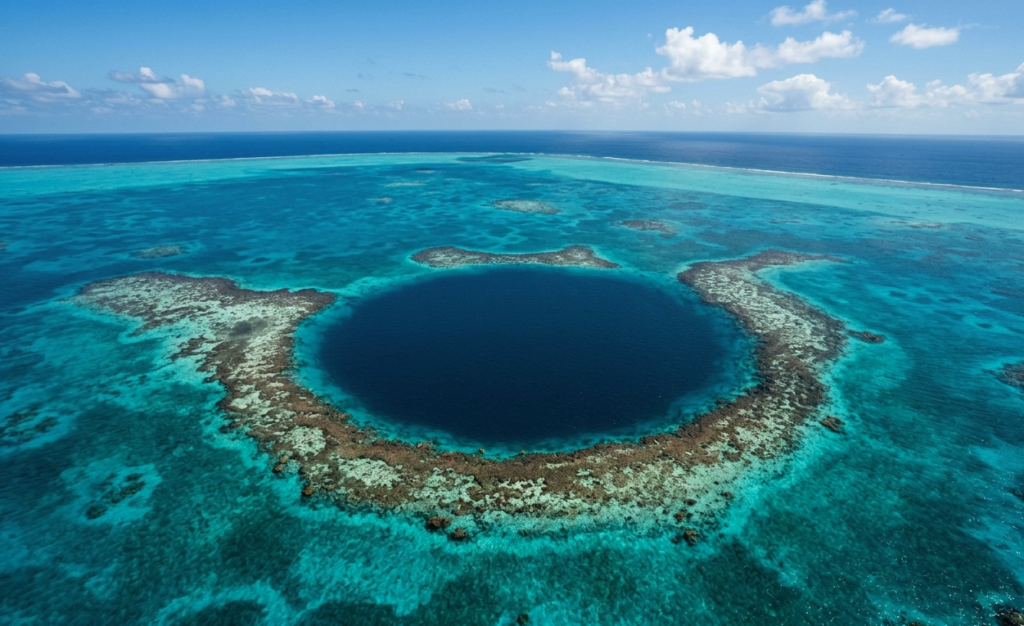
Located off the coast of Belize in the Belize Barrier Reef, the Great Blue Hole is a giant marine sinkhole measuring about 300 meters (984 feet) across and over 120 meters (400 feet) deep.
This formation was created thousands of years ago during the last Ice Age, when sea levels were much lower. It originally formed as a limestone cave system, which later collapsed and flooded, leaving behind the perfectly circular hole we see today.
Its dark blue color contrasts sharply with the lighter surrounding waters, making it visible even from space.
B. Why It Doesn’t Feel Real
The Great Blue Hole feels unreal because it looks too perfect to exist naturally. Its near-perfect circular shape and deep, dark center create an almost hypnotic visual.
From the air, the contrast between the bright reef and the deep navy hole is so striking that it resembles a digital image rather than a real place. Beneath the surface, things get even more surreal—massive stalactites hang underwater, remnants of ancient caves now submerged in silence.
Diving into the Blue Hole feels like descending into another world. Light fades quickly, temperatures drop, and the environment becomes still and mysterious. It’s not just beautiful—it’s hauntingly fascinating.
C. Best Time to Visit
Dry Season (November to May)
- Pros:
- Calm seas and clear visibility
- Ideal for diving and aerial tours
- Cons:
- Peak tourist season
Wet Season (June to October)
- Pros:
- Fewer crowds
- Cons:
- Rough seas and reduced visibility
- Risk of storms
For those following a Great Blue Hole travel guide, the dry season offers the best conditions to fully experience this surreal destination.
D. Top Things to Do
1. Scuba Diving into the Blue Hole
Explore underwater caves, stalactites, and marine life in one of the world’s most famous dive sites.
2. Aerial Tours
Take a helicopter or small plane ride to witness the perfect circular shape from above—arguably the best view.
3. Snorkeling Around the Reef
While the hole itself is deep, the surrounding reef is rich with colorful fish, corals, and marine life.
4. Visit Nearby Atolls
Explore nearby coral atolls like Lighthouse Reef for pristine beaches and clear waters.
5. Marine Wildlife Spotting
Look out for reef sharks, groupers, and other fascinating sea creatures.
E. Travel Tips
- Certification Required for Diving: Advanced diving experience is recommended due to depth.
- Book Tours in Advance: Limited operators run trips to the Blue Hole.
- Check Weather Conditions: Calm seas are crucial for a safe experience.
- Carry Motion Sickness Medication: Boat rides can be long and choppy.
- Bring Underwater Gear: A good camera can help capture this once-in-a-lifetime experience.
F. How to Reach
Start your journey by flying into Belize City, the main international gateway.
From there, travelers typically take a boat or join guided tours that depart to the Belize Barrier Reef. Some also opt for aerial tours directly from Belize City for a breathtaking top-down view.
8. Deadvlei, Namibia – Trees Frozen in Time
A. Overview
Deadvlei is located in the heart of the Namib Desert within Namib-Naukluft National Park in Namibia.
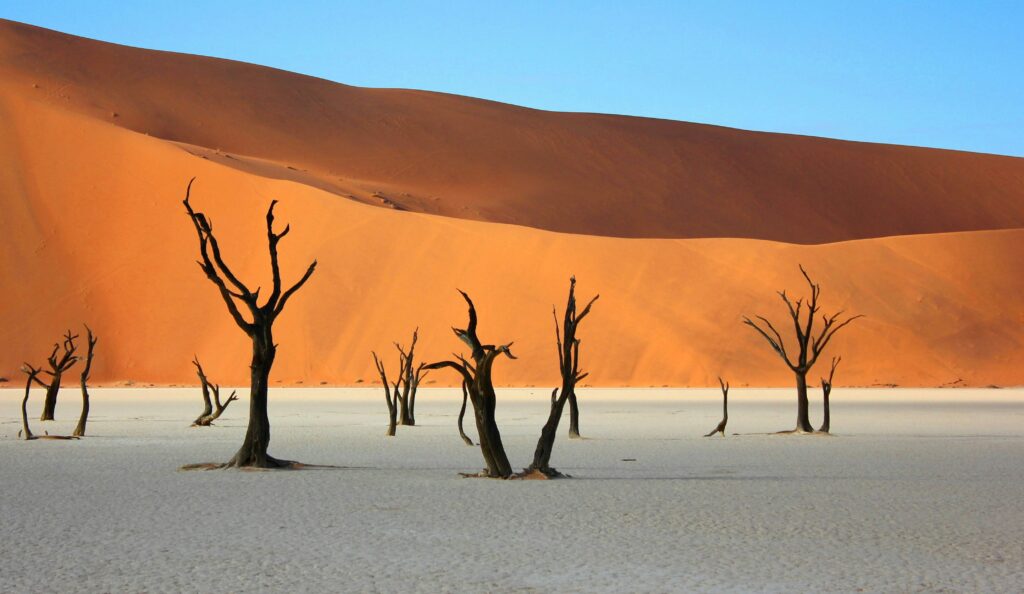
This white clay pan was once a thriving oasis fed by a river. However, shifting sand dunes eventually blocked the water source, causing the area to dry up. The trees that once lived here died—but instead of decomposing, they were preserved by the extreme arid climate. Today, these 900-year-old camel thorn trees stand as dark silhouettes against the bright white ground and fiery dunes.
B. Why It Doesn’t Feel Real
Deadvlei feels unreal because it looks like a perfectly staged photograph rather than a natural landscape. The contrast is almost too sharp to believe—jet-black trees, glowing white ground, and vivid orange dunes under a deep blue sky.
Nothing moves here. There’s no rustling leaves, no flowing water—just complete stillness. The trees appear frozen in time, like sculptures placed deliberately in a vast open gallery.
The heat shimmers in the distance, creating a mirage-like effect that adds to the dreamlike atmosphere. It feels less like visiting a place on Earth and more like stepping into a moment that has been paused for centuries.
C. Best Time to Visit
Winter (May to September)
- Pros:
- Cooler temperatures, ideal for exploring
- Clear skies for photography
- Cons:
- Cold mornings
Summer (October to April)
- Pros:
- Dramatic lighting and intense colors
- Cons:
- Extremely hot, especially midday
For those following a Deadvlei travel guide, early mornings during winter are the best time to capture the iconic contrast and avoid the intense heat.
D. Top Things to Do
1. Walk Through the Clay Pan
Explore the cracked white ground and get up close to the ancient, preserved trees.
2. Climb Big Daddy
One of the tallest sand dunes in the world, offering breathtaking views of Deadvlei from above.
3. Photography at Sunrise & Sunset
The changing light creates dramatic shadows and enhances the surreal color contrasts.
4. Visit Nearby Sossusvlei
Another iconic location with stunning dunes and landscapes.
5. Experience the Silence
Take a moment to simply stand still and absorb the quiet, almost eerie atmosphere.
E. Travel Tips
- Start Early: Temperatures rise quickly after sunrise.
- Carry Plenty of Water: The desert heat can be intense.
- Wear Sun Protection: Hats, sunglasses, and sunscreen are essential.
- Use a 4×4 Vehicle: The last stretch to Deadvlei requires off-road driving or a shuttle.
- Respect the Environment: Avoid climbing on the ancient trees.
F. How to Reach
The nearest major access point is Windhoek, which has an international airport.
From Windhoek, travelers typically drive or take guided tours to Namib-Naukluft National Park. From there, a combination of vehicle travel and a short walk will take you into Deadvlei.
9. Fly Geyser, USA – A Colorful Alien Landscape
A. Overview
Fly Geyser is located in the Black Rock Desert in Nevada, on private land known as the Fly Ranch.
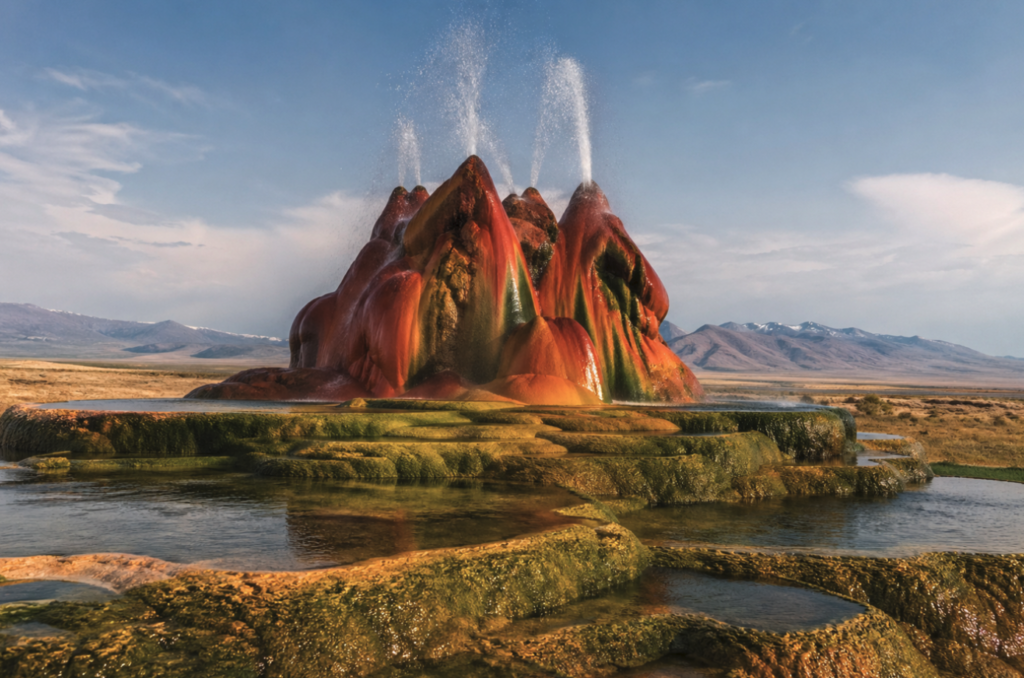
Interestingly, this geyser isn’t entirely natural—it was accidentally created in 1964 during geothermal drilling. When the well was improperly sealed, hot water began to escape, and over time, minerals built up to form the colorful mound we see today.
The vibrant colors come from thermophilic algae that thrive in the hot, mineral-rich water, giving the geyser its striking, otherworldly appearance.
B. Why It Doesn’t Feel Real
Fly Geyser feels unreal because it breaks every expectation of what a desert landscape should look like. Instead of dry, dusty terrain, you find a vivid explosion of color and life.
The constant flow of water creates terraces that resemble melting wax or dripping paint. The bright greens, reds, and yellows stand in sharp contrast to the barren surroundings, making it look almost artificially designed.
Steam rises into the air, adding a mystical touch, while the gentle sound of flowing water creates a peaceful yet surreal atmosphere. It’s the kind of place that makes you question whether you’re still on Earth—or somewhere far more imaginative.
C. Best Time to Visit
Spring (March to May)
- Pros:
- Pleasant temperatures
- Beautiful desert surroundings
- Cons:
- Limited access requires booking
Fall (September to November)
- Pros:
- Comfortable weather
- Fewer crowds
- Cons:
- Still requires advance planning
Summer (June to August)
- Pros:
- Clear skies
- Cons:
- Extremely hot desert temperatures
Winter (December to February)
- Pros:
- Unique contrast with cooler weather
- Cons:
- Cold and limited availability
For those following a Fly Geyser travel guide, spring and fall are the best times for a comfortable and enjoyable visit.
D. Top Things to Do
1. Guided Nature Walks
Since Fly Geyser is on private land, visits are only allowed through guided tours organized by the Friends of Black Rock-High Rock.
2. Photography
Capture the vibrant colors and unique textures of the geyser—especially during sunrise or sunset for dramatic lighting.
3. Explore Fly Ranch
Discover the surrounding desert ecosystem and learn about conservation efforts in the area.
4. Observe Geothermal Activity
Watch the continuous flow of hot water and mineral deposits shaping the geyser over time.
5. Visit During Burning Man (Nearby Region)
While not directly at the geyser, the nearby Black Rock Desert hosts this famous event, adding another layer of uniqueness to the region.
E. Travel Tips
- Book in Advance: Access is restricted and requires guided tours.
- Respect Private Property: Do not attempt unauthorized entry.
- Wear Comfortable Shoes: You’ll be walking on uneven desert terrain.
- Stay Hydrated: Desert conditions can be harsh.
- Follow Environmental Guidelines: Help preserve this unique ecosystem.
F. How to Reach
The nearest major city is Reno, which has an international airport.
From Reno, it’s about a 2-hour drive to the Black Rock Desert area. Visitors must join pre-arranged tours to access Fly Ranch and see the geyser up close.
10. Mount Roraima, South America – The Lost World
A. Overview
Mount Roraima is a massive tabletop mountain, known as a tepui, located at the intersection of three countries: Venezuela, Brazil, and Guyana.
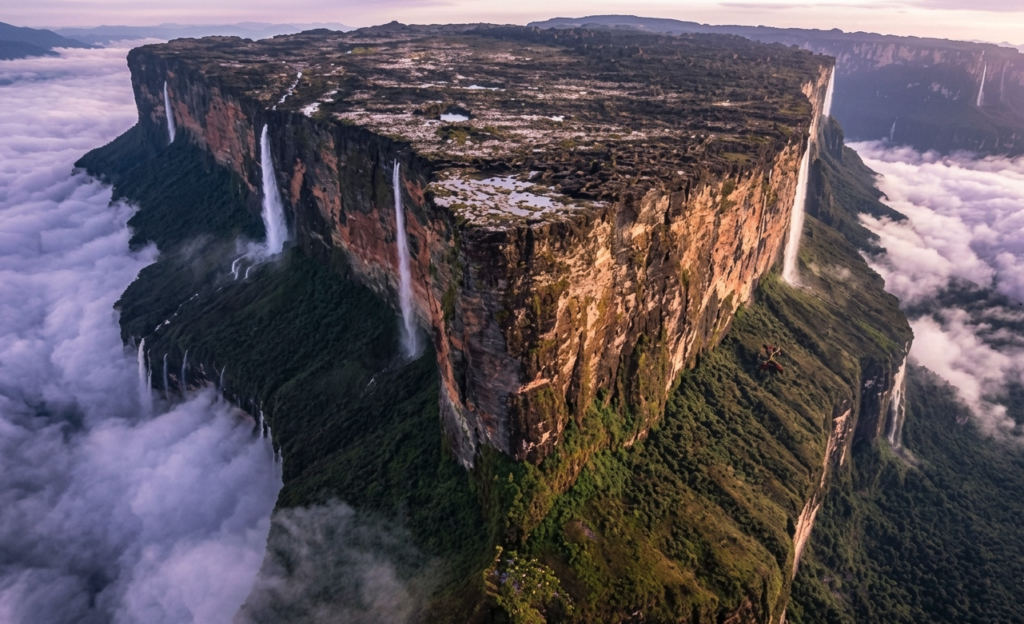
Rising over 2,800 meters (9,200 feet) above sea level, its flat summit spans about 31 square kilometers. These tepuis are among the oldest geological formations on Earth, dating back nearly two billion years.
The mountain is surrounded by vertical cliffs that drop dramatically into the rainforest below, making it appear like a giant island floating above the clouds.
B. Why It Doesn’t Feel Real
Mount Roraima feels unreal because it looks completely isolated from the rest of the world. Its sheer cliffs create a natural barrier, giving the impression that everything on top belongs to a different planet.
The summit is covered with unusual rock formations shaped by wind and water into bizarre, almost alien designs. Pools of crystal-clear water reflect the sky, while rare plants and unique ecosystems thrive in this isolated environment.
Frequent clouds roll across the plateau, sometimes covering everything in mist, then suddenly clearing to reveal endless views. It’s this constant shift between visibility and mystery that makes the experience feel dreamlike—like stepping into a world that few have ever seen.
C. Best Time to Visit
Dry Season (December to April)
- Pros:
- Better hiking conditions
- Clearer views from the summit
- Cons:
- Still occasional rain, as the region is naturally wet
Wet Season (May to November)
- Pros:
- Waterfalls are more powerful and dramatic
- Cons:
- Slippery trails and heavy rain
- Reduced visibility
For those following a Mount Roraima travel guide, the dry season offers the safest and most enjoyable trekking experience.
D. Top Things to Do
1. Trek to the Summit
The multi-day hike to the top is the main adventure, offering breathtaking views and a sense of true exploration.
2. Explore the Plateau
Discover unique rock formations, hidden pools, and rare plant life found nowhere else on Earth.
3. Visit the Triple Border Point
Stand at the exact point where Venezuela, Brazil, and Guyana meet—a rare geographical experience.
4. Discover Natural Jacuzzis
Small crystal-clear pools formed in the rock create natural “jacuzzis” perfect for relaxing after a long trek.
5. Witness Endless Waterfalls
Water constantly flows off the edges of the plateau, creating countless waterfalls cascading into the jungle below.
E. Travel Tips
- Prepare for a Multi-Day Trek: The journey typically takes 6–8 days.
- Hire Experienced Guides: Required for safety and navigation.
- Pack Waterproof Gear: Weather can change quickly.
- Stay Physically Prepared: The trek can be challenging.
- Respect the Environment: This is a fragile and unique ecosystem.
F. How to Reach
The journey usually begins in Santa Elena de Uairén, a small town in southeastern Venezuela.
Travelers typically fly to larger cities like Caracas and then continue by domestic flights or road to Santa Elena. From there, guided trekking tours take you to the base and up to the summit of Mount Roraima.
Conclusion: Why These Dreamlike Places Matter
Travel is not just about visiting places—it’s about experiencing emotions you never knew existed.
These surreal places on Earth remind us that reality can be stranger—and more beautiful—than imagination. Whether it’s walking on a mirror in Bolivia or witnessing glowing oceans in the Maldives, these unreal destinations redefine what travel means.
If you’re someone who wants more than just a vacation—if you want awe, wonder, and unforgettable moments—these unique travel spots belong on your bucket list.
Because sometimes… the most magical places aren’t in dreams. They’re right here on Earth.
FAQs About Surreal Places on Earth
1. What are the most surreal places on Earth?
Some of the most surreal places include Salar de Uyuni, Antelope Canyon, Zhangjiajie, and Pamukkale due to their unique landscapes and natural formations.
2. When is the best time to visit surreal destinations?
It depends on the location. For example, Salar de Uyuni is best during the rainy season, while Rainbow Mountains are best in dry months.
3. Are surreal destinations safe to visit?
Yes, most are safe with proper planning, guided tours, and weather awareness.
4. Which surreal place is best for beginners?
Pamukkale and Antelope Canyon are beginner-friendly with easy access.
5. Why do these places look unreal?
They are formed by rare natural processes like erosion, mineral deposits, and climatic conditions, creating dreamlike visuals.