Asia is the world’s largest and most culturally diverse continent, and its food is just as varied. From delicate Japanese sushi and flavorful Indian biryani to spicy Korean kimchi and comforting Vietnamese pho, Asian cuisine is full of different flavors, ingredients, and cooking styles.
Traditional foods across Asia reflect thousands of years of history, local ingredients, religion, climate, trade, and cultural exchange. Rice, noodles, spices, seafood, vegetables, fermented foods, and fresh herbs are used in countless ways, giving each country its own unique and delicious cuisine.
In this ultimate guide, we’ll explore 25 traditional foods of Asia, featuring popular dishes from East Asia, South Asia, Southeast Asia, and the Middle East.
If you enjoyed exploring global food traditions, you can also check out our other guide, “Ultimate Guide to Traditional Foods of Oceania,” for more delicious dishes, fascinating food traditions, and the stories behind them.
1. Sushi
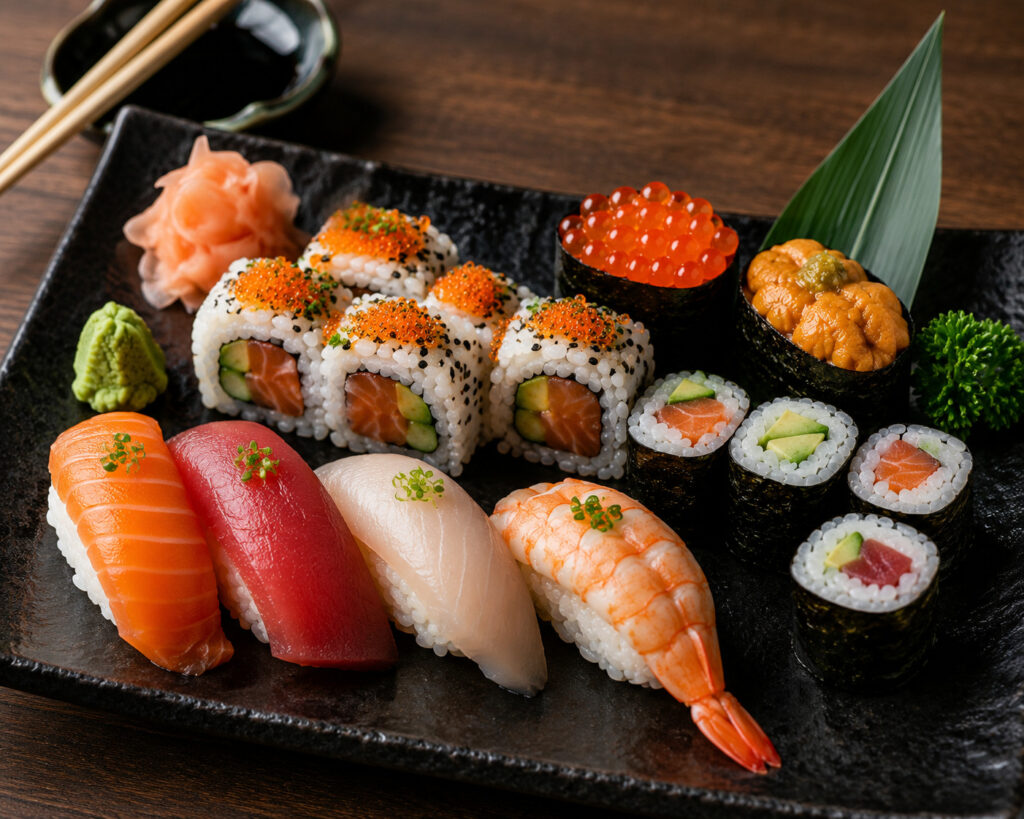
Sushi is one of Japan’s most famous foods, but there’s much more to it than raw fish and rice. Sushi is a traditional Japanese dish built around seasoned vinegared rice, combined with ingredients such as seafood, vegetables, eggs, and seaweed.
Today, sushi is enjoyed all over the world, with hundreds of regional and modern variations.
What Exactly Is Sushi?
The word sushi mainly refers to the vinegared rice, called shari or sushi-meshi. The other ingredients can vary widely. This means something important: sushi does not necessarily contain raw fish. It can include cooked shrimp, grilled eel, vegetables, egg, tofu, or even no seafood at all.
Sashimi, on the other hand, is sliced raw fish or seafood served without sushi rice. So, sashimi is not sushi.
Where Did Sushi Come From?
Although sushi is strongly associated with Japan, its earliest ancestor wasn’t actually created there. Ancient forms of fermented fish preserved with rice developed in Southeast Asia and later spread to other parts of Asia, including China and Japan.
Early versions were very different from the sushi we know today. Fish was packed with fermented rice to help preserve it, and the rice was often thrown away after the fermentation process.
Over time, Japanese cooks developed new and faster ways of making sushi, eventually leading to the many styles we enjoy today.
Important Stages:
Narezushi
An ancient type of fermented sushi in which fish was preserved with fermented rice.
Hayazushi
A newer style that used vinegar-seasoned rice instead of relying mainly on long fermentation.
Edo-style Sushi
During the Edo period, sushi became quicker to prepare and started to look more like the sushi we recognize today.
Modern Sushi
Sushi eventually spread throughout Japan and, especially during the 20th century, became popular around the world. Today, it has countless traditional, regional, and modern variations.
2. Peking Duck
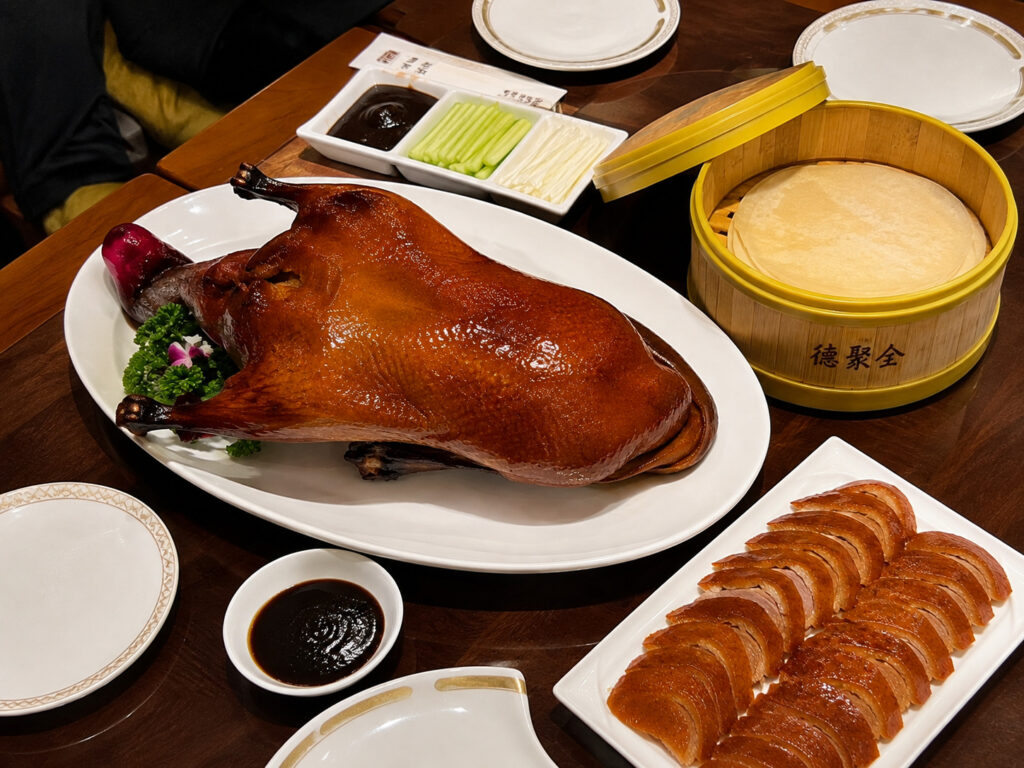
Peking Duck (北京烤鸭, Běijīng kǎoyā) is one of China’s most famous traditional dishes and a culinary symbol of Beijing. It is best known for its thin, incredibly crispy skin, tender meat, and beautiful presentation.
Traditionally, the roasted duck is carved tableside and served with thin pancakes, sweet bean sauce, and fresh garnishes. You then wrap everything together into a small, flavorful bite.
What Is Peking Duck?
Peking Duck is a whole duck that is specially prepared and roasted until the skin becomes deep golden, glossy, and very crisp, while the meat stays tender and juicy.
A classic serving usually includes:
- Roasted duck
- Thin wheat-flour pancakes
- Sweet bean sauce
- Thinly sliced scallions
- Cucumber
- Sometimes other vegetables or condiments
To eat it, you place a slice of duck, a little sauce, and some garnishes on a pancake, then fold it into a small wrap.
History of Peking Duck
Peking Duck has a long history connected to China’s imperial and culinary traditions.
Roasted duck dishes have been enjoyed in China for centuries, and over time, this particular style became closely associated with Beijing, which was historically known as Peking.
One important part of its history is its connection to the imperial court. During the Ming dynasty (1368–1644), roasted duck became associated with the imperial cuisine of Beijing. Later, specialized restaurants helped bring the dish beyond elite dining and made it available to a wider public.
By the Qing dynasty (1644–1912), Peking Duck had become a well-established Beijing specialty.
Today, it remains one of Beijing’s signature dishes and one of the best-known Chinese foods around the world.
3. Kimchi
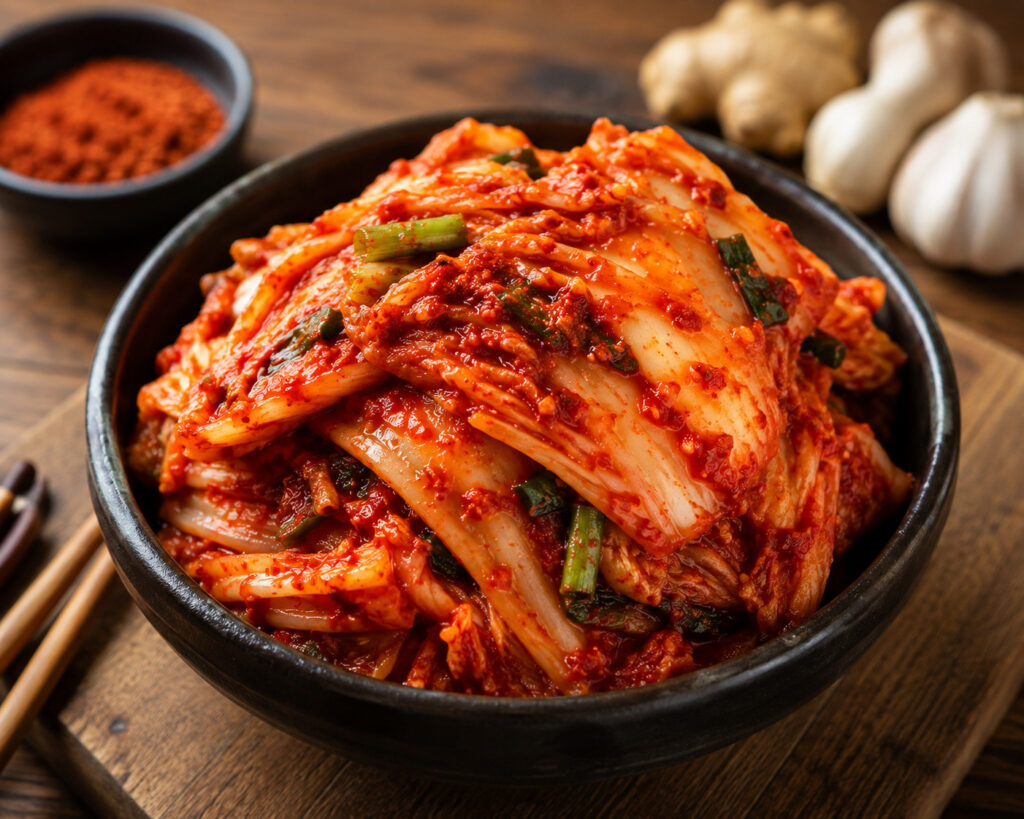
Kimchi (김치) is one of South Korea’s most iconic foods and an important part of Korean cuisine. It refers to a large family of salted and fermented vegetables, usually seasoned with ingredients such as chili pepper, garlic, ginger, and sometimes fermented seafood.
The most famous variety is baechu kimchi, made with napa cabbage.
Kimchi is much more than just a side dish. It is closely connected to Korean food culture, history, fermentation traditions, and communal cooking.
What Is Kimchi?
Kimchi is a traditional Korean dish made by salting and fermenting vegetables with different seasonings.
Although cabbage kimchi is probably the variety best known around the world, kimchi isn’t just one recipe. There are hundreds of varieties, made with different vegetables, seasonings, and preparation methods.
Common ingredients include:
- Napa cabbage
- Korean red pepper flakes (gochugaru)
- Garlic
- Ginger
- Green onions
- Salt
- Fish sauce
- Salted shrimp
- Radish
- Sometimes pear or other fruits
Not all kimchi contains seafood. Some varieties are completely vegetarian or vegan.
History of Kimchi
Kimchi has a history that goes back many centuries.
The basic idea of kimchi grew from the need to preserve vegetables during times when fresh produce was harder to find. Before modern refrigeration, salting and fermentation were important ways to keep vegetables edible for longer.
Early Korean fermented vegetable dishes were quite different from the bright-red cabbage kimchi we often see today. Chili peppers arrived in Korea much later and eventually became an important ingredient in many popular kimchi varieties.
Over time, kimchi continued to evolve, resulting in the huge variety of fermented vegetable dishes enjoyed across Korea today.
4. Ramen
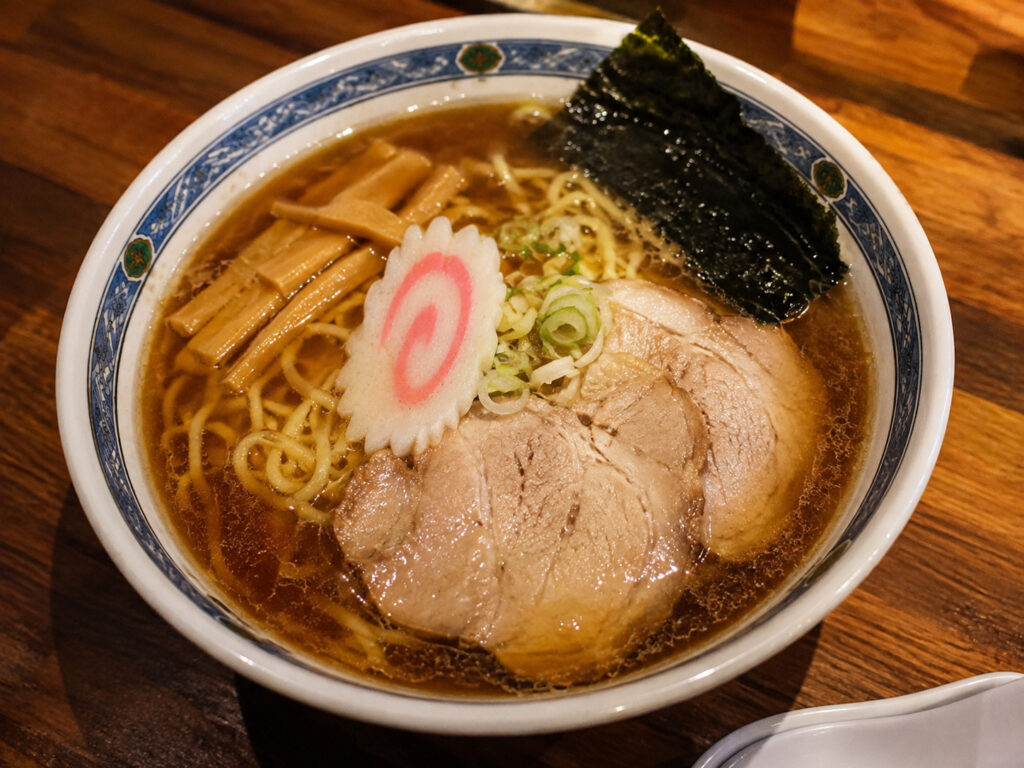
Ramen (ラーメン) is one of Japan’s most beloved foods and one of the world’s best-known Japanese dishes. It is a noodle soup made with wheat noodles, broth, tare seasoning, and different toppings.
Although ramen is strongly associated with Japan, its roots are connected to Chinese-style wheat noodles. Over time, Japanese cooks developed these influences into a huge food tradition with many different regional styles.
What Is Ramen?
At its simplest, ramen has four main parts: noodles, broth, tare, and toppings. The combination can be very different from one restaurant to another.
Common toppings include:
- Chashu pork
- Soft-boiled egg
- Green onions
- Nori (dried seaweed)
- Menma (bamboo shoots)
- Corn
- Bean sprouts
- Mushrooms
- Fish cake
The broth can be made with ingredients such as:
- Pork
- Chicken
- Beef
- Seafood
- Vegetables
- Dried fish
- Kombu
- Mushrooms
History of Ramen
Ramen has an interesting history because it brings together Chinese noodle traditions and Japanese food culture.
Chinese-style noodles were introduced to Japan long before modern ramen became popular. During the late 19th and early 20th centuries, Chinese-style noodle dishes became increasingly popular in Japanese cities.
Early versions of ramen were often called shina soba or chūka soba, meaning Chinese-style noodles. During the 20th century, ramen continued to evolve and became more distinctly Japanese.
Different regions developed their own broths, noodles, seasonings, toppings, and cooking methods. After World War II, ramen became especially popular as an affordable and filling meal.
Then, in 1958, Momofuku Ando introduced instant ramen, turning noodles into one of the world’s most convenient and widely available foods.
5. Buuz
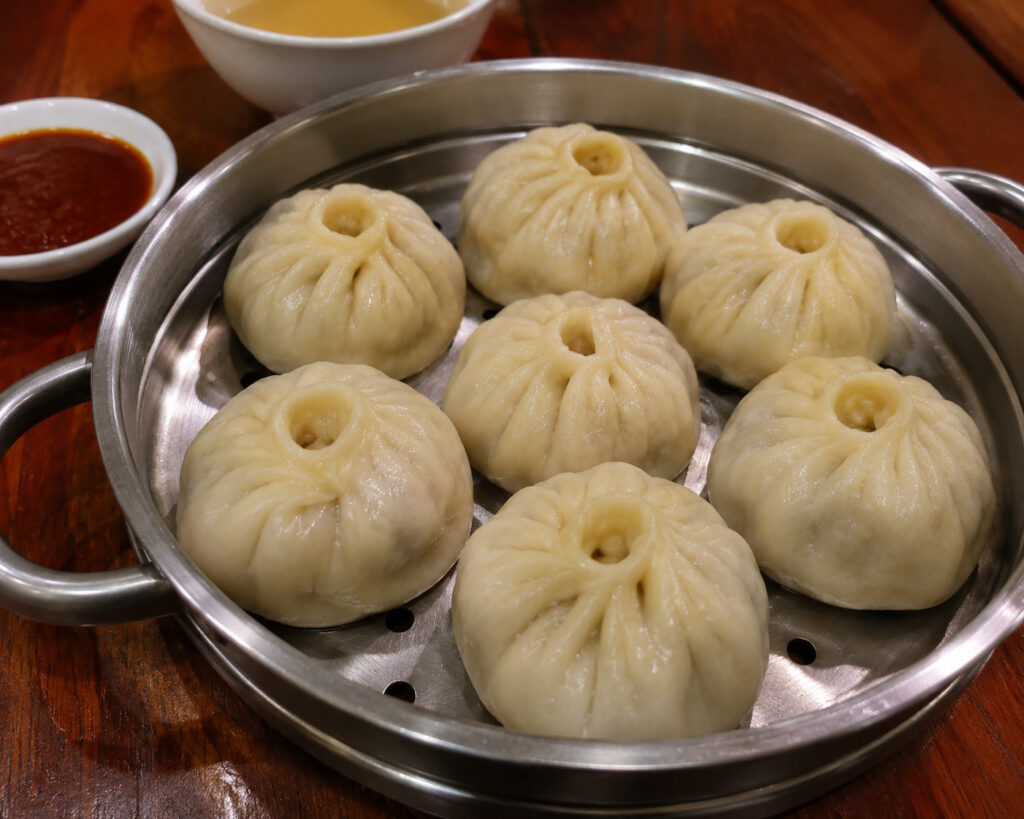
Buuz (бууз) are traditional Mongolian steamed dumplings, usually filled with minced meat, onions, garlic, and simple seasonings. They are one of Mongolia’s most iconic foods and an important part of family life, hospitality, and celebrations.
Unlike fried or boiled dumplings, buuz are steamed, giving them a soft dough wrapper and a juicy, flavorful filling.
What Is Buuz?
Buuz are small, round dumplings made from wheat-flour dough and filled mainly with minced meat.
Traditional fillings commonly include:
- Mutton or lamb
- Beef
- Goat
- Onion
- Garlic
- Salt
- Black pepper
The dumplings are folded by hand, usually with a small opening or decorative pattern on top, and then steamed.
One of the best parts of buuz is the juicy broth that forms inside the dumpling as the meat cooks. When you bite into one, the filling is warm, tender, and full of flavor.
History of Buuz
Buuz are part of Mongolia’s long tradition of meat-based foods, which was shaped by the country’s nomadic pastoral lifestyle.
For centuries, Mongolian communities have relied heavily on livestock such as sheep, goats, cattle, horses, yaks, and camels. Because of this, meat and dairy products became important parts of the traditional diet.
Buuz also belongs to a much larger family of filled and steamed dumplings found across Central and East Asia. It is often compared with foods such as Chinese baozi and other regional dumpling traditions.
The exact history of buuz is complex, but Mongolia developed its own distinctive version, which eventually became an important part of the country’s food culture.
Today, buuz are especially popular during Tsagaan Sar, the Mongolian Lunar New Year, when families gather together and prepare large quantities of dumplings for guests and celebrations.
6. Biryani
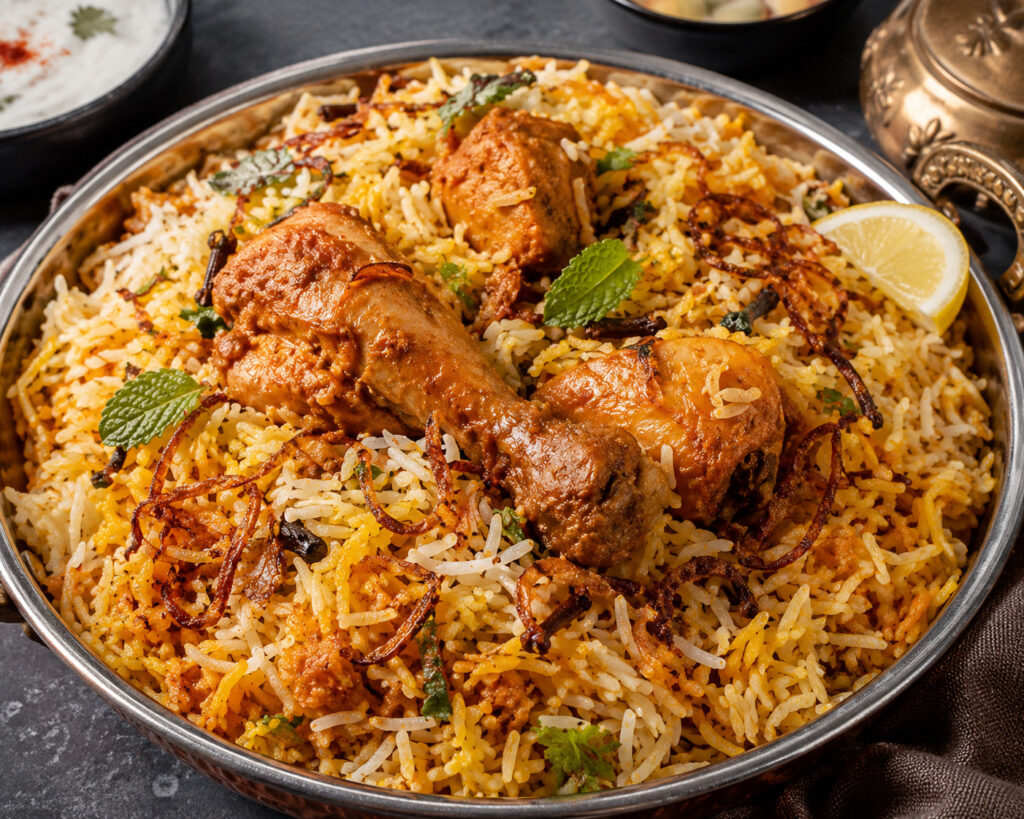
Biryani is one of India’s most beloved and diverse rice dishes. Made with fragrant long-grain rice, meat or vegetables, aromatic spices, herbs, and sometimes saffron, biryani is known for its rich aroma, layered flavors, and beautifully separate grains of rice.
But biryani isn’t just one dish. India has developed many regional biryani traditions, each with its own ingredients, cooking methods, flavors, and history.
What Is Biryani?
Biryani is a flavorful rice dish in which partially cooked rice is layered or combined with a richly seasoned preparation of meat, seafood, eggs, or vegetables.
Common ingredients include:
- Basmati or other aromatic rice
- Chicken, mutton, or other meats
- Vegetables
- Onions
- Garlic
- Ginger
- Mint
- Coriander
- Chilies
- Saffron or saffron-infused milk
- Salt
- Ghee or oil
- Whole spices
Common whole spices include cardamom, cinnamon, cloves, bay leaves, star anise, cumin, mace, and nutmeg.
The result is a delicious combination of fragrant rice and deeply seasoned ingredients, with every bite packed with aroma and flavor.
History of Biryani
Biryani has a long and complex history, and its exact origins are still debated.
The dish is strongly connected to the culinary traditions of the Persianate and Central Asian worlds, which influenced South Asian food over many centuries. Its name is commonly linked to Persian or related terms associated with cooking rice.
Biryani developed further in the Indian subcontinent through royal kitchens, trade, migration, and cultural exchange. Over time, different regions adapted the dish to their own ingredients, spices, rice varieties, cooking methods, and religious and cultural traditions.
That’s why Hyderabadi biryani tastes very different from Kolkata biryani or Malabar biryani.
Rather than having one simple origin story, biryani is better understood as a dish that evolved over centuries through cultural exchange and regional adaptation. Today, it remains one of the most popular and widely loved foods in India.
7. Butter Chicken
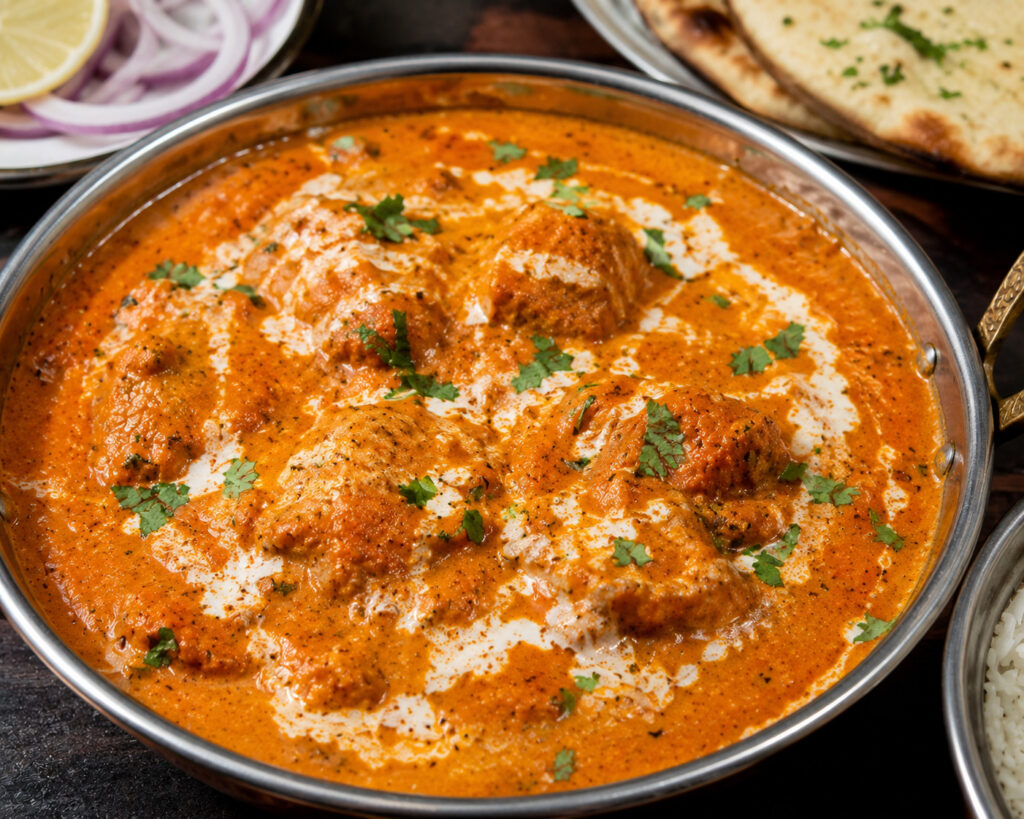
Butter Chicken, also known as Murgh Makhani (मुरग़ मख़नी), is one of India’s most famous dishes. It is a rich and creamy curry made with tandoori-style chicken cooked in a tomato-based sauce with butter, cream, and aromatic spices.
Originating in Delhi, butter chicken has become one of the best-known Indian dishes around the world.
Its popularity comes from the delicious combination of smoky chicken, tangy tomatoes, buttery richness, mild spices, and cream.
What Is Butter Chicken?
Butter chicken is made with pieces of cooked chicken served in a smooth, flavorful curry. A classic preparation usually has two main parts: tandoori-style chicken and a rich tomato-based makhani sauce.
The chicken is often marinated in yogurt and spices before being roasted in a tandoor, which gives it a smoky flavor.
It is then added to a sauce made with ingredients such as:
- Tomatoes
- Butter
- Cream
- Garlic
- Ginger
- Chili
- Fenugreek leaves
- Salt
- Garam masala
The result is a rich and creamy curry that is usually mild to moderately spicy.
History of Butter Chicken
Butter chicken has a relatively modern history compared with many traditional Indian dishes. It is strongly associated with Delhi in the mid-20th century and the culinary traditions of Punjabi migrants.
The dish is closely linked to Moti Mahal, a famous restaurant associated with Delhi’s Daryaganj area. The restaurant’s founders—Kundan Lal Gujral, Kundan Lal Jaggi, and Thakur Dass Makhani—are central to the commonly told story of butter chicken.
According to the popular account, the dish was created by combining leftover tandoori chicken with a rich tomato-and-butter gravy. This turned already-cooked chicken into a new, flavorful meal while keeping it moist.
The exact story of who invented butter chicken is disputed, with different claims about its original creator. However, its connection to Delhi’s Punjabi restaurant culture is an important part of the dish’s modern history.
Today, butter chicken is enjoyed across India and has become a staple of Indian restaurants around the world.
8. Momo
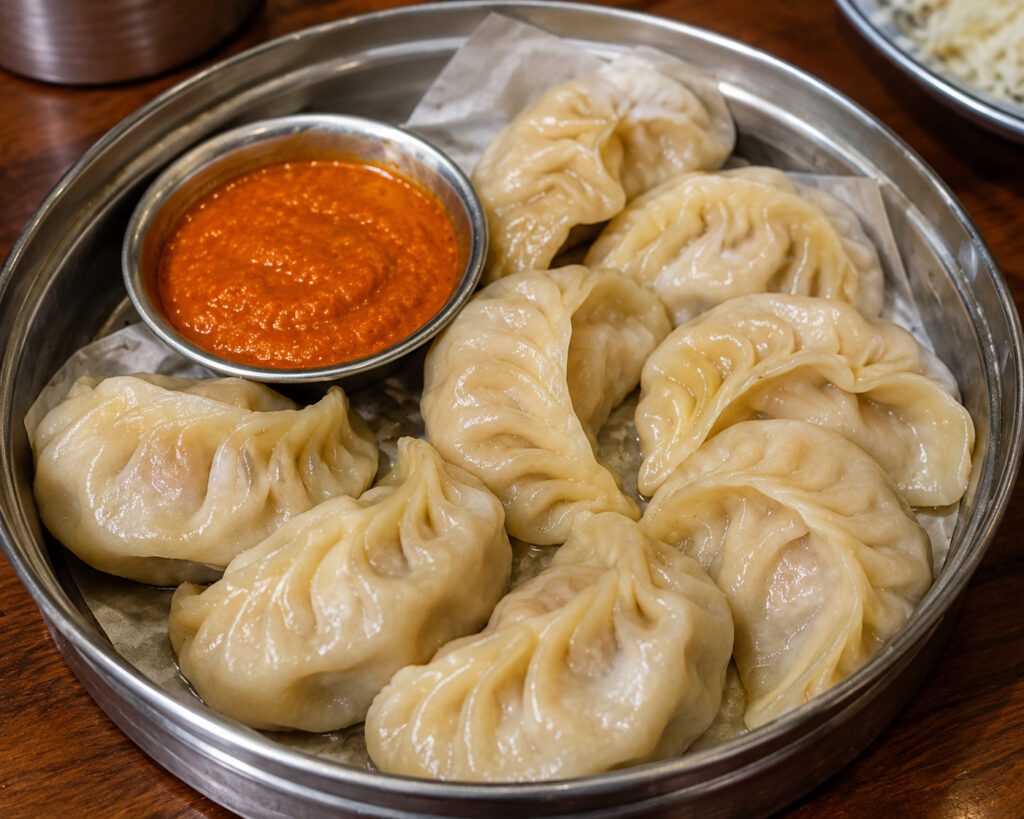
Momo is one of the most popular dumpling dishes in the Himalayan region, especially in Nepal, Tibet, Bhutan, and parts of India. These small parcels of dough are filled with meat or vegetables, folded by hand, and most commonly steamed.
Today, momo is much more than a traditional Himalayan food. It has become a major part of Nepali street food and everyday cuisine, with countless variations found throughout Nepal.
What Is Momo?
Momo is essentially a filled dumpling made with a thin wheat-flour wrapper.
Common fillings include:
- Buff (water buffalo)
- Chicken
- Mutton
- Cabbage
- Onion
- Garlic
- Ginger
- Coriander
- Chilies
- Salt and spices
Momos are usually steamed, although fried and pan-fried versions are also very popular.
A typical plate of momo comes with a spicy tomato-based chutney or achar, which adds a delicious kick to the soft, juicy dumplings.
History and Origins of Momo
The history of momo is closely connected to the Himalayan region and Tibetan culinary traditions. Momo is generally believed to have developed from or alongside Tibetan dumpling traditions before becoming deeply established in Nepal.
The dish’s history also reflects centuries of trade, migration, and cultural exchange across the Himalayas.
Trade routes connected communities in Tibet, Nepal, Bhutan, and northern India, allowing foods and cooking traditions to travel between regions. As momo spread, different communities adapted it to their own local ingredients and tastes.
That’s why momo can look and taste quite different depending on where you try it.
Nepali momo, for example, has developed its own distinctive identity, especially through its spicy chutneys, flavorful fillings, and popularity as an everyday street food.
9. Rice and Curry
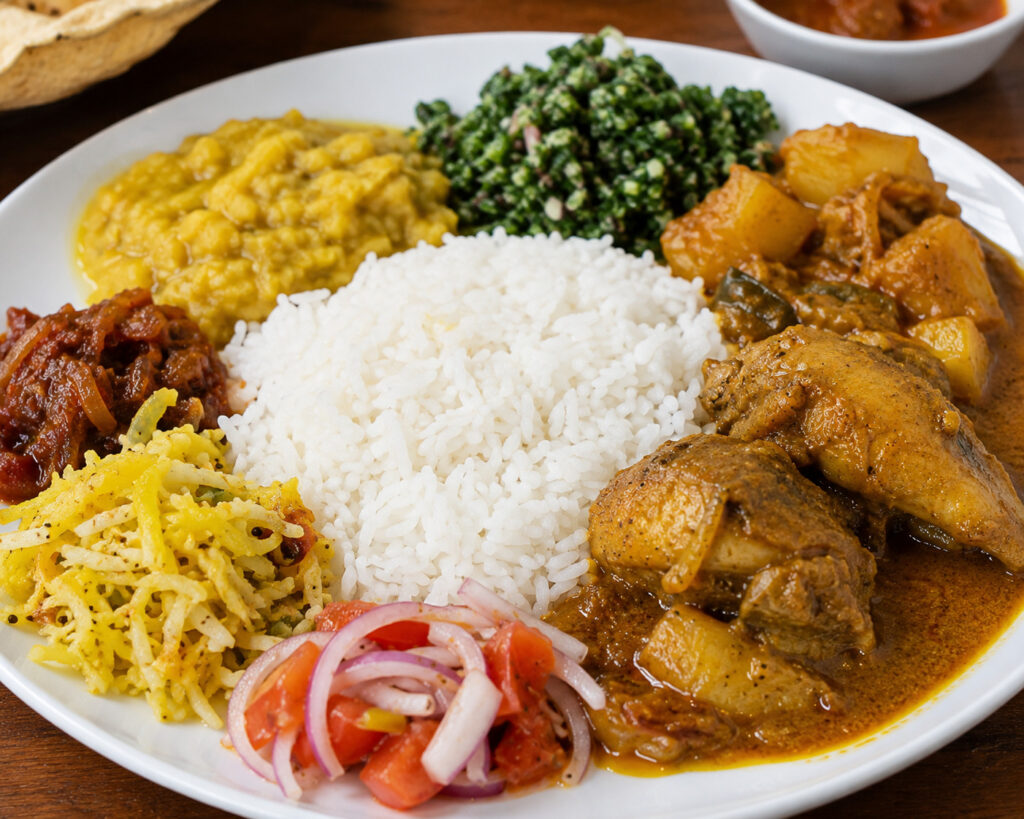
Rice and Curry is one of the most important and beloved meals in Sri Lankan cuisine. Rather than being a single curry, it is a complete meal of steamed rice served with several curries, vegetables, sambols, pickles, and other sides.
It is an everyday meal for many Sri Lankans, but the combination can become much more elaborate on special occasions.
The best thing about rice and curry is the variety. One plate can have several different flavors, colors, textures, and levels of spice, all served together.
What Is Sri Lankan Rice and Curry?
At its simplest, it is rice + several curries + sambols + vegetables + other accompaniments.
A typical meal might include:
- Steamed rice
- Fish curry
- Dhal curry
- Vegetable curry
- Coconut sambol
- Mallung (seasoned leafy greens)
- Eggplant
- Pickles
- Papadum
There is no single recipe for Sri Lankan rice and curry. The combination can change depending on the region, season, household, available ingredients, personal preferences, and occasion.
That makes rice and curry more of a meal tradition than one standardized dish.
History of Rice and Curry
Rice has been central to Sri Lanka’s agriculture and food culture for thousands of years. The island has a long history of rice cultivation, supported by impressive irrigation systems that helped farmers grow rice in its tropical climate.
Over the centuries, Sri Lankan cuisine was influenced by the island’s connections with South India, Southeast Asia, Arab traders, Portugal, the Netherlands, and Britain. These connections brought new ingredients and cooking techniques that were gradually adapted into local food traditions.
Despite these influences, Sri Lankan cuisine developed its own distinctive character, especially through ingredients such as coconut, curry leaves, pandan, local chilies, cinnamon, roasted spices, and seafood.
Rice and curry brings many of these flavors together in one meal, making it one of the best ways to experience the diversity of Sri Lankan cooking.
10. Haleem
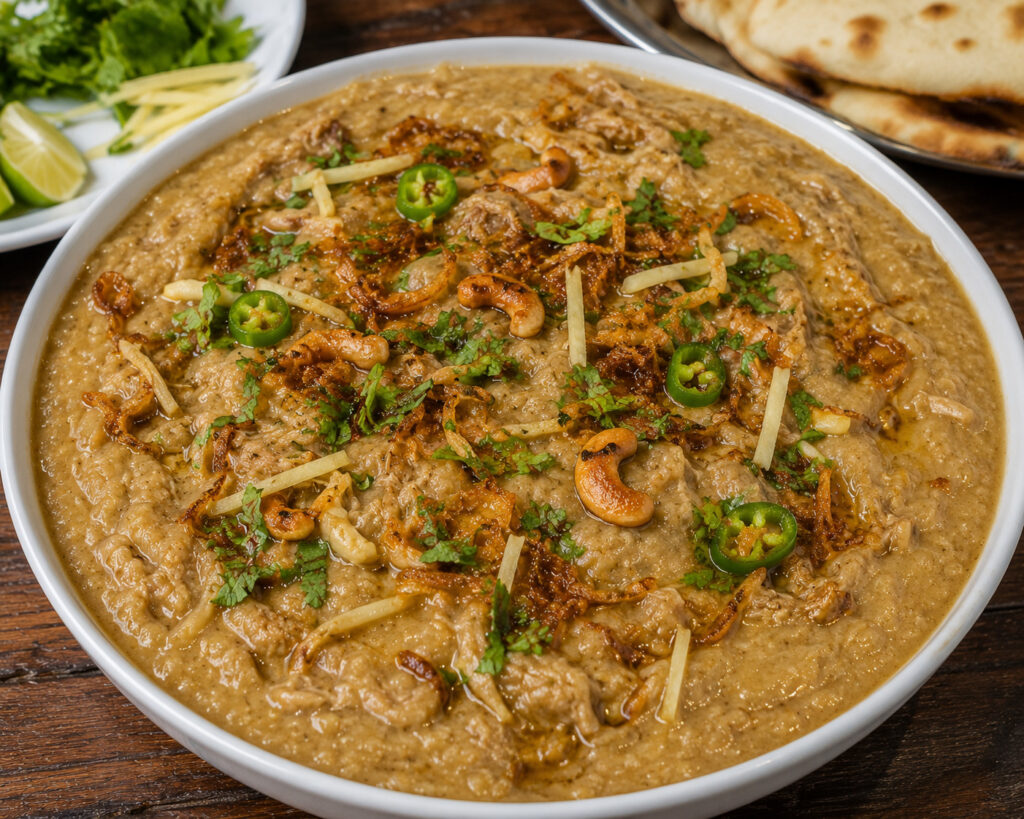
Haleem is a rich, slow-cooked meat, lentil, and grain stew that is especially popular in Pakistan, India, Bangladesh, and parts of the wider Middle East and South Asia.
It is traditionally made by slowly cooking wheat or other grains, lentils, meat, and spices for several hours until everything breaks down into a thick, smooth, porridge-like dish.
Haleem is known for its deep savory flavor, creamy texture, and warm spices. It is also strongly associated with Ramadan and other religious and cultural occasions, although it is enjoyed throughout the year in many places.
What Is Haleem?
At its heart, haleem combines four main components: grains + lentils + meat + spices.
Common ingredients include:
- Wheat
- Barley
- Lentils
- Chickpeas
- Mutton or beef
- Ginger
- Garlic
- Fried onions
- Chili
- Turmeric
- Cumin
- Coriander
- Garam masala
- Clarified butter (Ghee) or oil
The ingredients are cooked together slowly for several hours until the grains, lentils, and meat become almost completely blended.
The result is thick, smooth, and creamy, even though traditional haleem does not necessarily contain any dairy.
History of Haleem
Haleem has a long and complex history stretching across the Middle East, Central Asia, Persia, and South Asia.
It belongs to a broader family of ancient grain-and-meat porridges and stews. A Middle Eastern dish known as harisa or harees is often mentioned when discussing the culinary history and possible ancestry of haleem.
As Persianate and Islamic culinary traditions spread across South Asia, related dishes developed into different regional versions of haleem.
South Asian cooks then adapted the dish using local lentils, grains, meats, spices, and cooking methods.
Because of this long history of cultural exchange, there is no single universally accepted inventor of haleem. It is better understood as a dish that evolved over centuries as different cultures and cooking traditions came together.
11. Pho
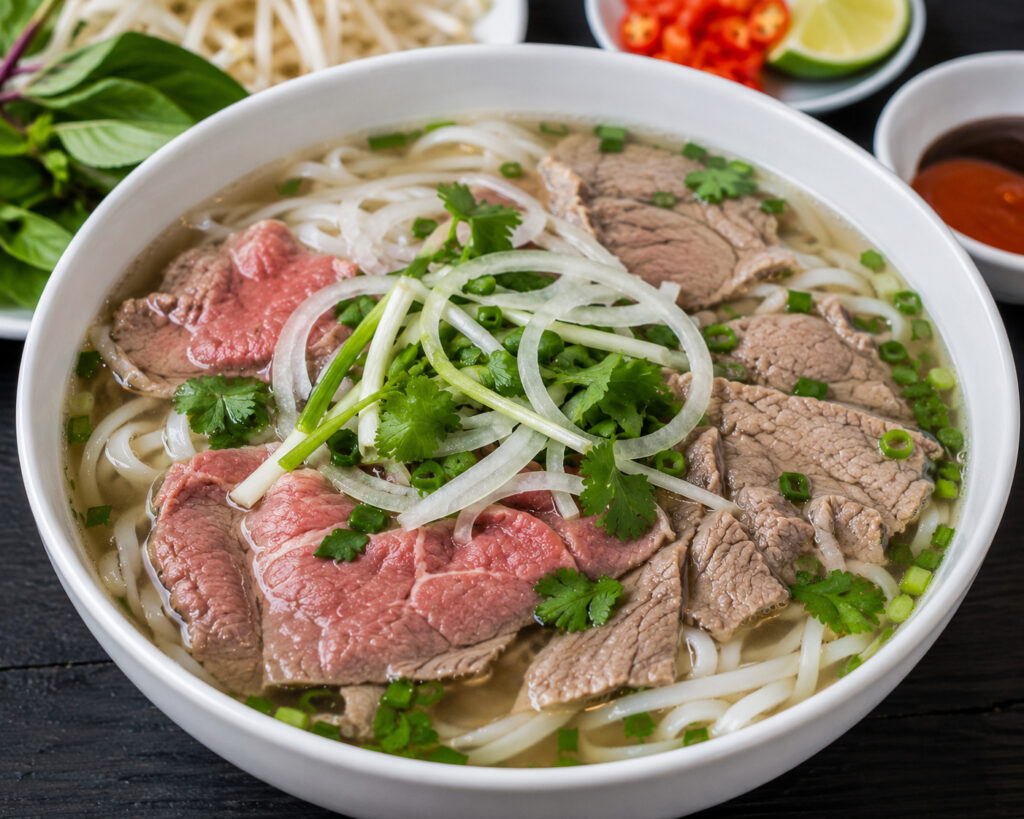
Phở (Pho) is one of Vietnam’s most famous dishes and one of the world’s best-known noodle soups. It is made with rice noodles, meat, and a fragrant slow-cooked broth, usually served with fresh herbs, chilies, lime, and other condiments.
Phở is especially associated with northern Vietnam, where it developed in the early 20th century before spreading across the country and eventually becoming popular around the world.
The real star of phở is its broth. It is deeply savory, aromatic, and slightly sweet, with spices such as star anise, cinnamon, and cloves adding much of its distinctive flavor.
What Is Phở?
At its simplest, phở is rice noodles + meat + aromatic broth + fresh herbs.
The two most famous versions are Phở Bò (beef phở) and Phở Gà (chicken phở).
A traditional bowl may also come with:
- Green onions
- Cilantro
- Thai basil
- Bean sprouts
- Lime
- Fresh chili
- Hoisin sauce
- Chili sauce
The toppings and serving styles can vary, especially between northern and southern Vietnam.
History of Phở
Phở is a relatively modern Vietnamese dish compared with many traditional foods. It emerged in northern Vietnam in the early 20th century, particularly around Nam Định and Hanoi. Its exact origins, however, are still debated.
Historians and food researchers have suggested that several influences may have played a role, including local Vietnamese noodle traditions, Chinese culinary influences, and changes in beef consumption during the French colonial period.
The French colonial period increased the availability and consumption of beef in Vietnam, which may have helped encourage the development of beef-based phở.
Rather than being a simple copy of one foreign dish, phở is best understood as a Vietnamese creation shaped by several culinary influences and developed into its own unique tradition.
12. Tom Yum
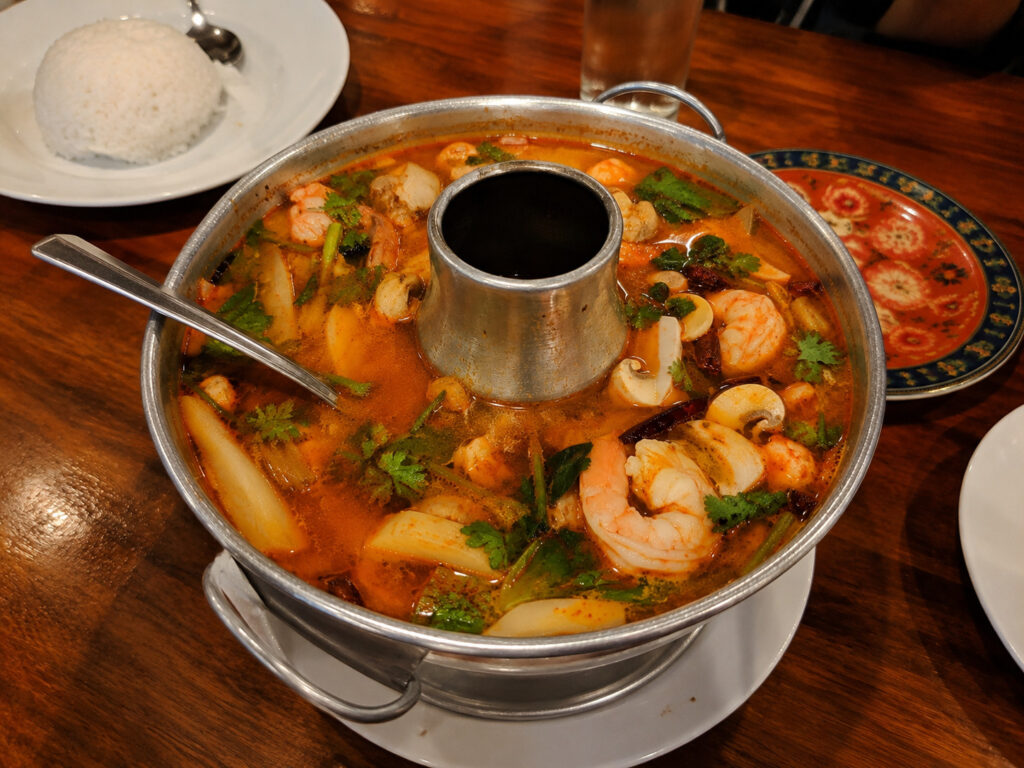
Tom Yum is one of Thailand’s most famous dishes—a hot, sour, and aromatic Thai soup traditionally made with ingredients such as lemongrass, galangal, makrut lime leaves, chilies, and lime juice.
It is especially famous in its seafood version, Tom Yum Goong, which is made with shrimp.
Unlike many Western soups, Tom Yum is all about balancing different flavors. A good bowl brings together spicy, sour, salty, aromatic, and sometimes slightly sweet tastes in one dish.
What Is Tom Yum?
The name Tom Yum (ต้มยำ) refers to a family of Thai hot-and-sour soups rather than one fixed recipe. The word tom refers to boiling or cooking in liquid, while yam describes a spicy and sour style of Thai preparation.
A classic Tom Yum brings together chilies + lime + aromatic herbs + savory seasoning + protein.
Common ingredients include:
- Lemongrass
- Galangal
- Makrut lime leaves
- Fresh chilies
- Lime juice
- Fish sauce
- Mushrooms
- Shrimp or another protein
There are many versions of Tom Yum, and the ingredients can vary depending on the region, cook, and type of protein used.
History of Tom Yum
Tom Yum is deeply rooted in Thai culinary traditions, especially Thailand’s long-standing love of balancing several flavors in a single dish.
Its exact origin cannot be traced to one person, restaurant, or specific date. Instead, Tom Yum developed as part of Thailand’s broader tradition of herbal soups, spicy and sour dishes, fresh aromatic ingredients, and freshwater seafood.
Over time, different cooks and regions created their own versions, helping Tom Yum become one of the most recognizable dishes in Thai cuisine.
13. Satay
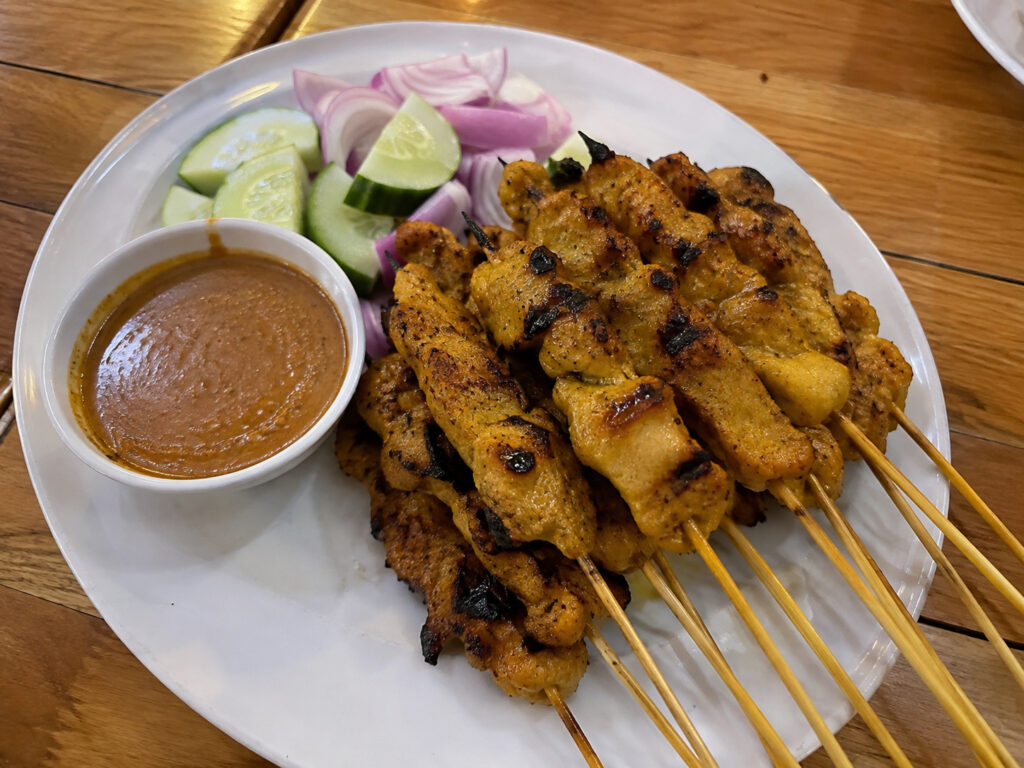
Satay, known as sate in Indonesia, is one of the country’s most famous foods. It consists of small pieces of marinated meat placed on bamboo skewers and grilled over hot charcoal, usually served with a flavorful sauce or sambal.
Although satay is popular across Southeast Asia, Indonesia is widely considered its main culinary home, with many regional varieties found throughout the Indonesian archipelago.
Its appeal comes from the combination of smoky grilled meat, fragrant spices, caramelized edges, and rich sauces.
What Is Satay?
At its simplest, satay is marinated meat + bamboo skewers + charcoal grill + sauce.
The meat is cut into small pieces, placed on skewers, and quickly grilled over hot charcoal.
Common meats include:
- Chicken
- Goat
- Beef
- Water buffalo
- Mutton
- Fish
- Pork in some Indonesian communities
The type of meat, marinade, and sauce can vary greatly depending on the region.
History of Satay
The exact origins of satay are difficult to pinpoint, but the dish is strongly associated with Java, particularly with the development of Indonesian street-food culture.
Satay grew from Indonesia’s long tradition of grilling small pieces of meat and seasoning them with aromatic spices. Its development was also shaped by the movement of people, ingredients, and culinary ideas across the region.
Java’s diverse food culture helped turn satay into a flexible dish that could be adapted to different local tastes and ingredients.
From Java, different forms of sate became popular across Indonesia and eventually spread to neighboring countries such as Malaysia, Singapore, Brunei, and Thailand.
Today, satay is one of Indonesia’s signature foods and has become one of the country’s best-known culinary traditions around the world.
14. Nasi Lemak
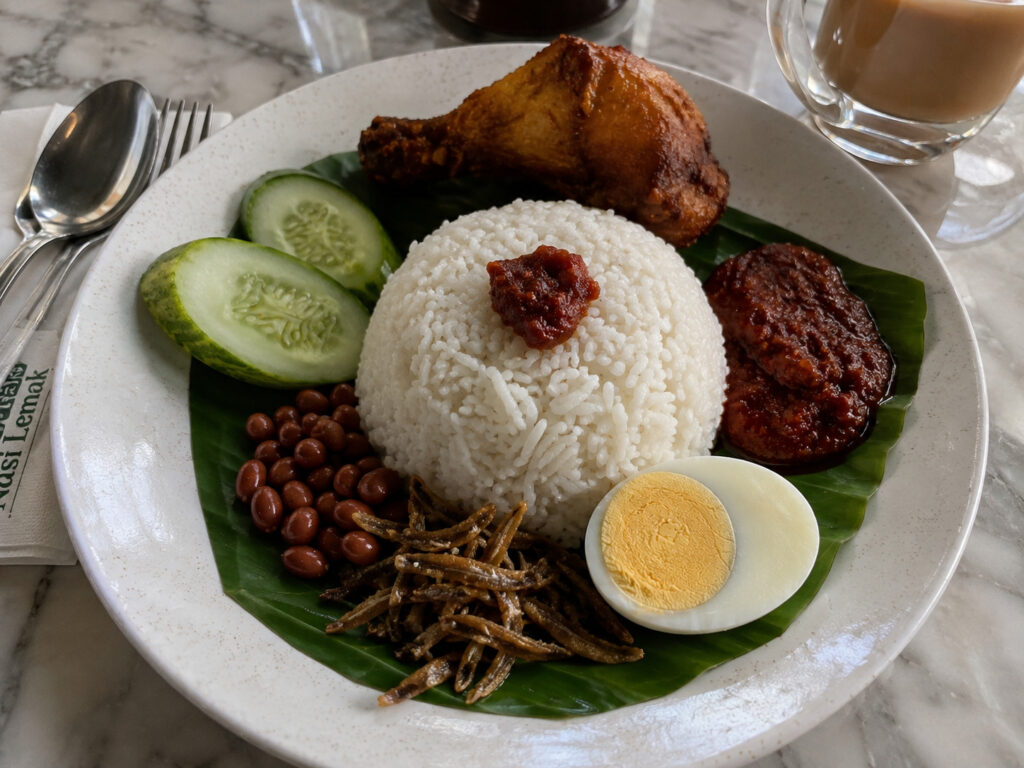
Nasi Lemak is one of Malaysia’s most iconic dishes and is widely regarded as a national dish of Malaysia. At its heart, it is fragrant rice cooked with coconut milk, traditionally served with sambal, fried anchovies, roasted peanuts, cucumber, and egg.
But nasi lemak is much more than just coconut rice. Its appeal comes from the delicious contrast between creamy rice, spicy-sweet sambal, salty and crispy anchovies, crunchy peanuts, refreshing cucumber, and rich egg.
The name nasi lemak refers to the rice’s rich and creamy quality, which comes from cooking it with coconut milk.
What Is Nasi Lemak?
The basic combination is coconut rice + sambal + anchovies + peanuts + cucumber + egg.
Traditional accompaniments commonly include:
- Coconut-milk rice
- Sambal
- Fried ikan bilis (anchovies)
- Roasted or fried peanuts
- Cucumber slices
- Hard-boiled or fried egg
Depending on the version, nasi lemak may also be served with fried chicken, beef rendang, chicken curry, prawns, fried fish, extra egg, or vegetables.
This flexibility is one reason nasi lemak can be enjoyed as a simple everyday meal or turned into a much more elaborate dish.
History of Nasi Lemak
Nasi lemak developed within the Malay culinary tradition of the Malay Peninsula. Its exact origins are difficult to pinpoint because coconut rice dishes have been prepared in the region for generations.
Historically, nasi lemak was closely associated with Malay rural communities, where ingredients such as rice, coconut, fish, and chilies were readily available.
Because these ingredients were relatively affordable and easy to prepare, nasi lemak became a practical everyday meal.
Over time, this humble local dish grew in popularity and evolved into one of Malaysia’s most recognizable and beloved foods. Today, it is enjoyed throughout the country, from simple roadside stalls and markets to restaurants and modern cafés.
15. Adobo
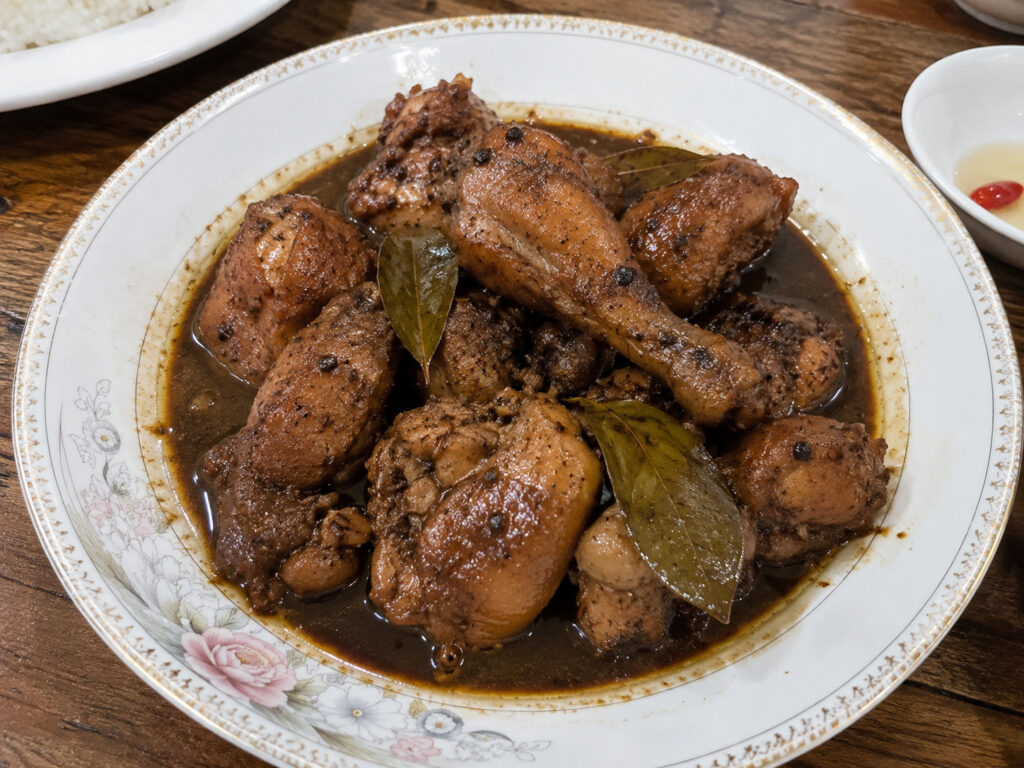
Adobo is one of the most iconic dishes of the Philippines and a cornerstone of Filipino cuisine. It is traditionally made by braising meat in a flavorful mixture of vinegar, soy sauce, garlic, bay leaves, and black peppercorns.
The most familiar versions are chicken adobo (adobong manok) and pork adobo (adobong baboy), although adobo actually refers to a much broader family of Filipino cooking styles.
Its distinctive flavor comes from the delicious combination of tangy vinegar, salty soy sauce, aromatic garlic, pepper, and tender meat.
What Is Adobo?
At its simplest, Filipino adobo is meat + garlic + soy sauce + vinegar + bay leaves + black pepper. The meat is simmered or braised in the seasoned liquid until it becomes tender and flavorful.
Unlike dishes that rely on lots of different spices, adobo gets its signature taste from a relatively simple group of ingredients.
The result is savory, tangy, garlicky, slightly sweet, and deeply aromatic.
History of Filipino Adobo
The word adobo comes from the Spanish term adobar, meaning to marinate or season. However, the Filipino cooking style itself predates Spanish colonization.
Before Spanish rule, Filipinos already used vinegar and salt to preserve and flavor food, which was especially useful in the Philippines’ warm tropical climate.
When Spanish colonizers encountered this cooking method, they used the familiar word adobo to describe it. So, while the name is Spanish, the dish itself is rooted in precolonial Filipino cooking traditions.
Over time, different regions and families developed their own versions, using ingredients and cooking methods that suited their local tastes. That’s why there is no single recipe for Filipino adobo—some versions are darker and saltier, while others are more tangy, garlicky, or slightly sweet.
16. Laksa
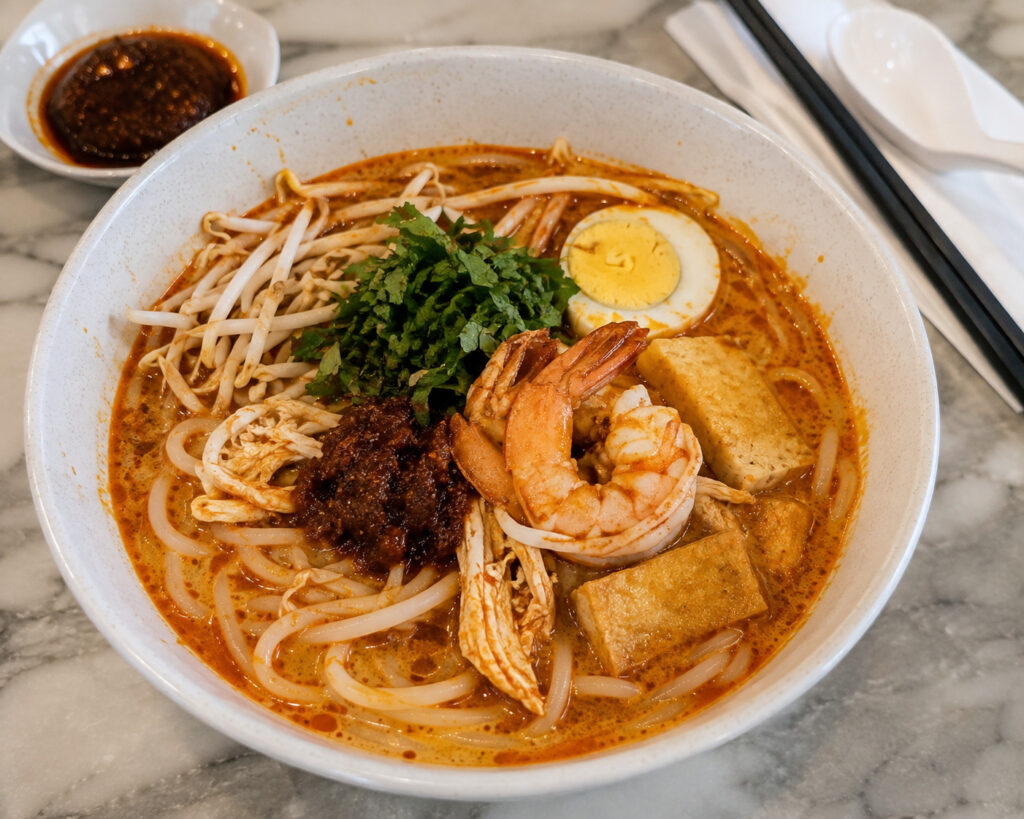
Laksa is one of the most famous noodle dishes of Malaysia and Singapore. It is a broad family of spicy and aromatic noodle soups made with ingredients such as chili, herbs, seafood, meat, coconut milk, or tamarind-based broth.
There isn’t just one laksa recipe. Instead, laksa includes many regional styles, with curry laksa, asam laksa, and Singapore’s Katong laksa among the best known.
What makes laksa special is the mix of Southeast Asian spices, Chinese noodles, coconut milk, seafood, fresh herbs, and spicy or sour flavors.
What Is Laksa?
At its simplest, laksa is noodles + aromatic broth + protein + herbs + toppings.
Depending on the variety, the broth can be:
- Creamy and coconut-based
- Sour and tamarind-based
- Spicy and aromatic
- Rich with fish or seafood
Common ingredients include:
- Rice noodles
- Coconut milk
- Chilies
- Lemongrass
- Galangal
- Shrimp paste
- Tamarind
- Fish
- Shrimp
- Tofu puffs
- Bean sprouts
- Cucumber
- Fresh herbs
Because there are so many regional versions, the taste and ingredients can be very different from one bowl of laksa to another.
History of Laksa
Laksa’s history is closely connected to the multicultural maritime world of Southeast Asia. The dish developed over centuries of interaction between different communities, particularly Malay, Chinese, Peranakan, Indian, and Indigenous Southeast Asian cultures.
The exact origin of laksa is still debated, and different regional versions may have developed independently or through cultural exchange.
Laksa is especially associated with the Straits of Malacca, where Chinese and Southeast Asian food traditions came together through trade, migration, and local communities.
This cultural blending can be seen clearly in Peranakan cuisine, which combines Chinese cooking traditions with local Malay and Southeast Asian ingredients.
Today, laksa remains one of the region’s most loved noodle dishes, with each place putting its own unique spin on this flavorful Southeast Asian classic.
17. Kebab
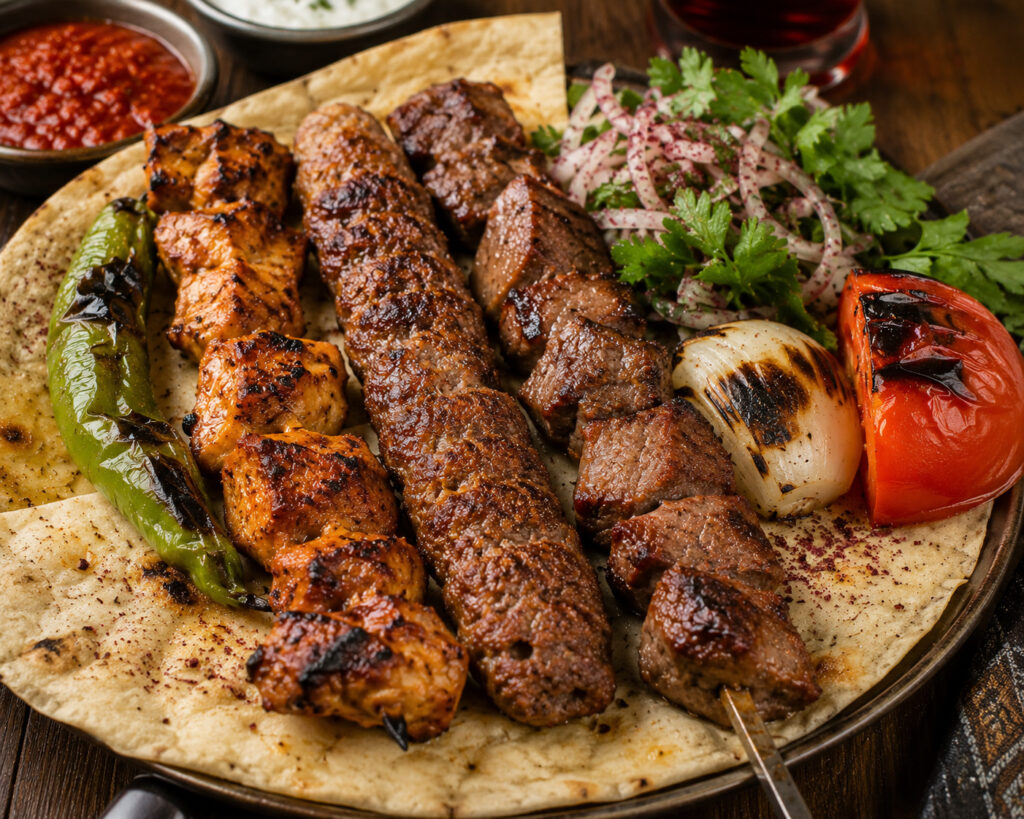
Kebab is one of the most famous and diverse food traditions of Türkiye. The word refers to a broad family of dishes made with meat that is grilled, roasted, or cooked over fire, often seasoned with spices and served with bread, rice, vegetables, salads, or sauces.
There isn’t just one “Turkish kebab.” Türkiye has dozens of regional kebab varieties, each with its own meat, preparation style, spices, and cooking method.
Some of the most famous include Döner Kebab, Adana Kebab, Urfa Kebab, Şiş Kebab, and İskender Kebab.
What Is Kebab?
At its heart, Turkish kebab is all about meat + fire + seasoning + accompaniments.
Depending on the type, kebab may be made with:
- Lamb
- Beef
- Chicken
- Veal
- A mixture of meats
Traditional Turkish kebabs are often cooked over charcoal or an open flame, giving the meat a delicious smoky aroma.
The meat may be:
- Skewered
- Minced and shaped
- Layered onto a vertical spit
- Cooked directly on a grill
- Roasted together with vegetables
Each cooking method creates a different texture and flavor.
History of Kebab
Cooking meat over fire is an ancient tradition across Anatolia and the wider Middle East.
Turkish kebab developed through a mixture of Anatolian culinary traditions, Ottoman cuisine, Central Asian Turkic food traditions, Middle Eastern cooking, and regional pastoral cultures.
Türkiye’s location also played an important role. Anatolia has long connected Central Asia, the Middle East, the Mediterranean, and Europe, allowing ingredients, cooking techniques, and food traditions to travel and evolve.
Over centuries, different cities and regions developed their own distinctive kebabs. This is why trying kebab in different parts of Türkiye can be a completely different experience.
Today, kebab is an important part of Turkish cuisine and one of the country’s best-known foods around the world.
18. Hummus
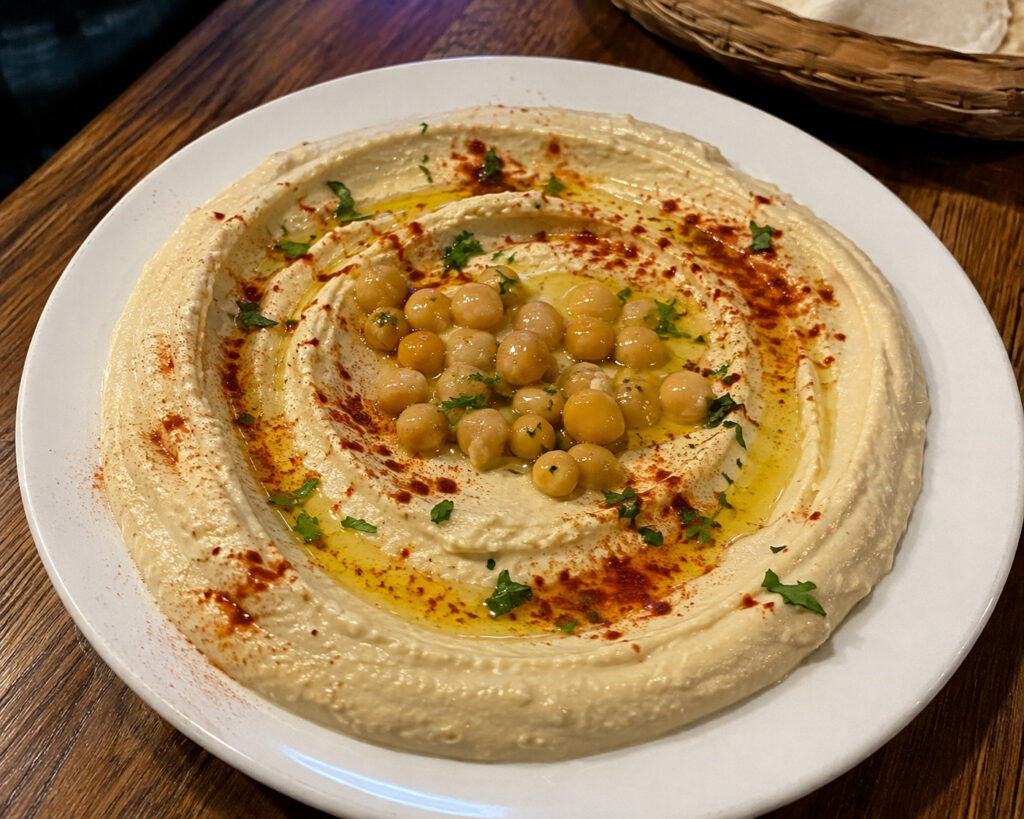
Hummus is a classic Levantine dish made primarily from chickpeas and tahini (sesame paste), blended with lemon juice, garlic, and olive oil. It is one of the most recognizable foods of the Eastern Mediterranean and is deeply associated with the cuisines of the Levant, particularly Lebanon, Syria, Palestine, Jordan, and Israel.
The Arabic name ḥummuṣ (حمص) means chickpeas.
Creamy, nutty, tangy, garlicky, and rich with olive oil, hummus is traditionally eaten as a dip, spread, or mezze dish, usually alongside fresh or toasted pita bread.
History of Hummus
Hummus has a long and debated history in the Levant and wider Middle East.
Chickpeas have been cultivated and eaten in the region for thousands of years, and sesame paste, lemon, and garlic have also been fundamental ingredients in Middle Eastern cuisine for centuries.
However, the exact origin of modern hummus is difficult to establish.
Several Levantine communities have deep historical connections to the dish, and Lebanese, Syrian, Palestinian, Jordanian, and Israeli cuisines all have their own hummus traditions.
Rather than belonging neatly to one modern country, hummus is best understood as part of the shared culinary heritage of the Levant.
19. Plov
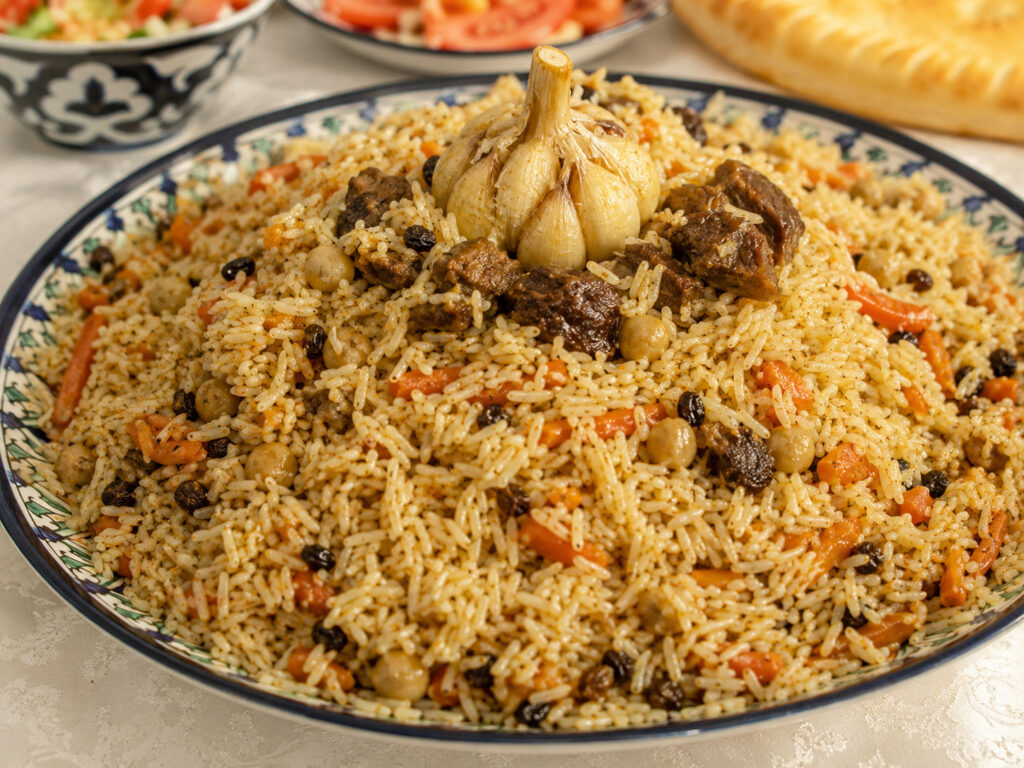
Plov, also known as Osh in Uzbekistan, is one of the country’s most iconic and beloved dishes. It is a hearty rice dish traditionally made with rice, lamb or beef, carrots, onions, oil, and spices, often cooked together in a large, heavy pot called a kazan.
Plov is much more than an everyday meal. In Uzbekistan, it is closely connected with hospitality, celebrations, weddings, family gatherings, and other important occasions.
What makes it so delicious is the combination of fragrant rice, tender meat, sweet carrots, caramelized onions, and aromatic spices.
History of Plov
Plov belongs to the much larger family of pilaf or pilau dishes found across Central Asia, the Middle East, the Caucasus, South Asia, and other parts of the world.
Its exact origin is difficult to determine because rice-based dishes developed across this vast and interconnected region over many centuries.
In Central Asia, plov became deeply rooted in local food traditions, especially among communities living along historic trade routes. As the dish spread, different regions developed their own ingredients, cooking methods, and styles.
Uzbekistan developed an especially strong and distinctive plov culture, with numerous regional variations and cooking traditions.
Today, Uzbek plov is one of the defining dishes of Uzbek cuisine and an important symbol of hospitality and community. It is often prepared in large quantities and shared with family, friends, and guests.
20. Chelow Kebab
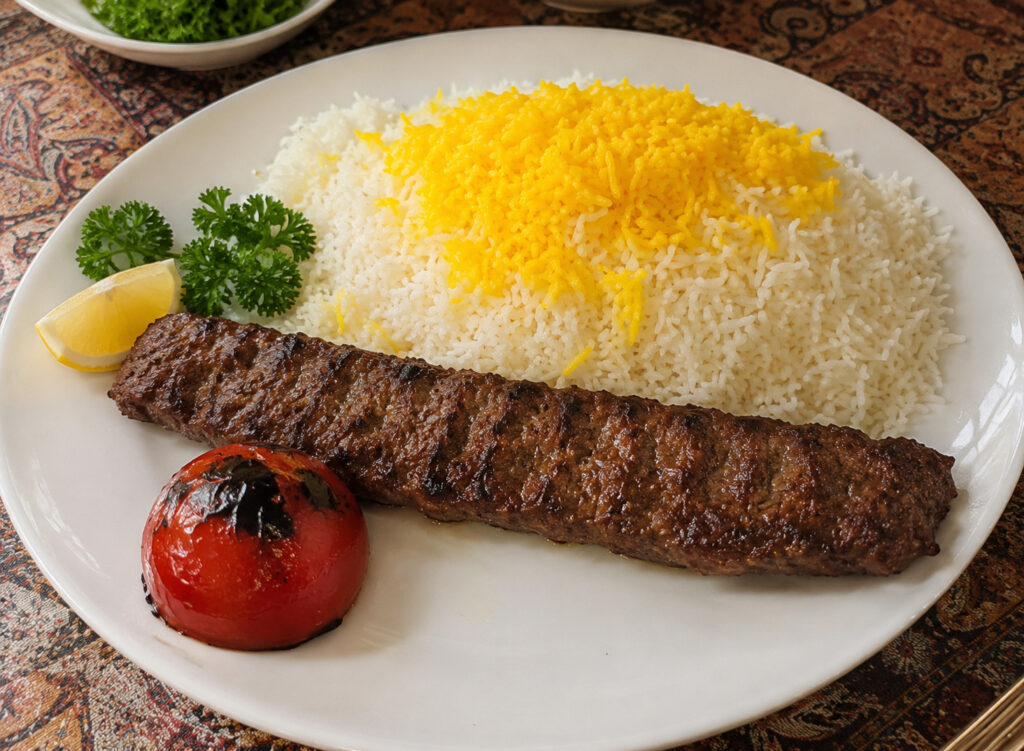
Chelow Kebab is one of the most iconic dishes of Iranian (Persian) cuisine. It combines fluffy Persian-style steamed rice (chelow) with grilled kebab, traditionally served with saffron, grilled tomatoes, butter, and fresh herbs.
Among the many Iranian kebabs, Kebab Koobideh and Kebab Barg are especially popular with chelow.
The dish is loved for its delicious combination of fragrant rice, smoky grilled meat, rich butter, aromatic saffron, and juicy grilled tomatoes.
History of Chelow Kebab
Chelow kebab became one of the defining dishes of modern Iranian cuisine, particularly through the growth of traditional chelow kebabi restaurants.
The dish brings together two important parts of Persian cooking: carefully prepared rice and grilled meat. Iran has a very old tradition of cooking both rice and meat, but the modern form of chelow kebab became especially popular during the Qajar period and afterward.
Over time, it became closely associated with restaurants, hospitality, special meals, and Iranian culinary identity.
Today, chelow kebab remains one of Iran’s most famous dishes and is often considered a must-try for anyone exploring Persian cuisine.
21. Khachapuri
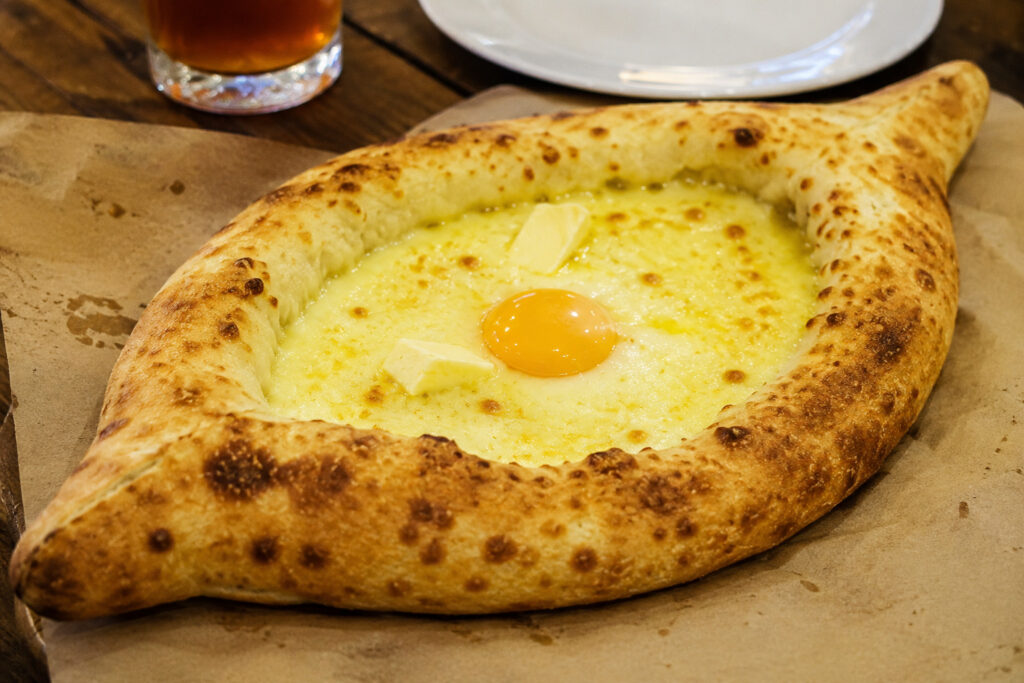
Khachapuri is one of the most iconic dishes of Georgia. It is a traditional cheese-filled bread that is deeply connected to Georgian cuisine and culture. Made with soft, leavened dough and plenty of cheese, khachapuri comes in many shapes and styles, with different regions of Georgia having their own versions.
The name comes from Georgian words meaning roughly “cheese” (khacho) and “bread” (puri).
One of the most famous versions is Adjarian khachapuri, which has a boat-like shape and is topped with cheese, butter, and a runny egg. Another popular style is the round Imeruli khachapuri, filled with cheese and baked until golden.
History of Khachapuri
Khachapuri has a long history in Georgian food traditions, particularly in western parts of the country, where dairy farming and cheese-making have traditionally been important.
Georgia’s location at the crossroads of the Caucasus, Anatolia, Persia, and the Black Sea allowed different culinary ideas and ingredients to travel through the region over centuries.
However, khachapuri developed its own distinct Georgian identity.
Different regions created their own versions using local cheeses, ingredients, shapes, and cooking methods. This is why khachapuri can look and taste quite different depending on where you try it.
Today, khachapuri is considered one of Georgia’s national dishes and most recognizable culinary symbols, enjoyed both at home and in restaurants around the world.
22. Shawarma
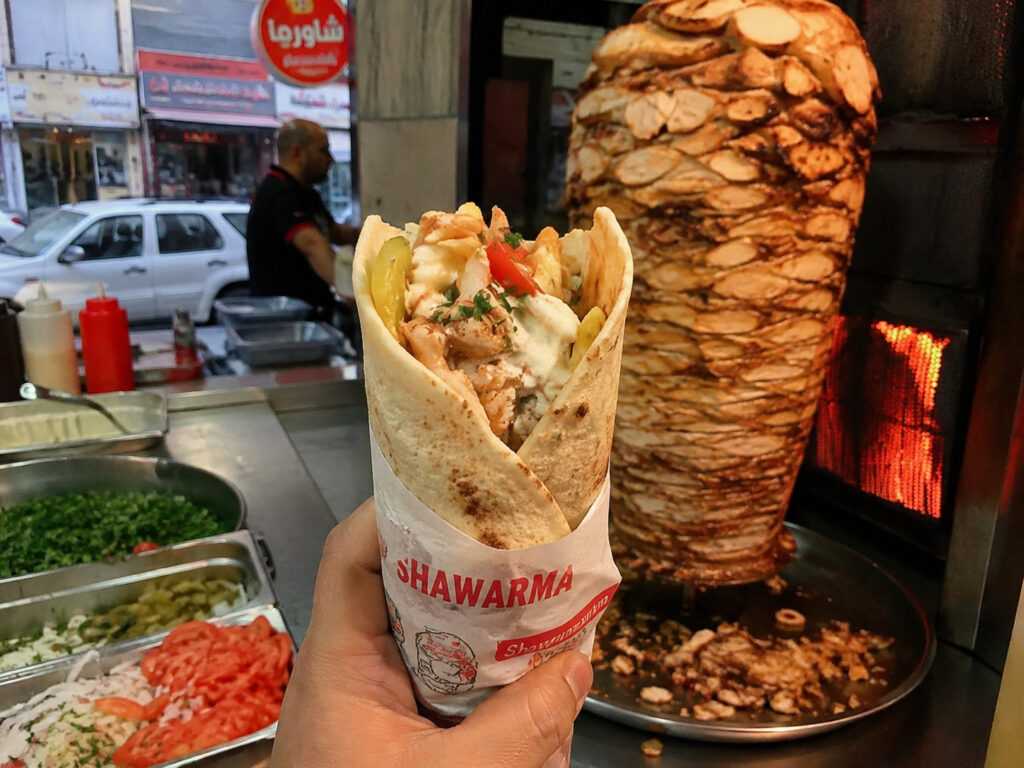
Shawarma is one of the most famous Middle Eastern street foods. It is made from seasoned meat that is slowly roasted on a vertical rotating spit and shaved into thin slices as it cooks. The meat is usually served inside pita or flatbread with vegetables, pickles, herbs, and flavorful sauces.
The meat can be chicken, lamb, beef, or a combination, depending on the region and recipe.
Shawarma is especially associated with the cuisines of the Levant, including Lebanon, Syria, Jordan, Palestine, and surrounding areas. Today, it is enjoyed throughout the Middle East and has become a popular street food around the world.
History of Shawarma
Shawarma developed from the broader Ottoman-era tradition of cooking meat on a rotating vertical spit.
It is closely related to Turkish döner kebab, which uses a similar cooking technique. As the method spread across the Middle East, local cooks adapted it to their own tastes using different spices, marinades, meats, breads, pickles, and sauces.
Over time, different countries and cities developed their own versions of shawarma, giving the dish many regional variations.
Today, shawarma is strongly associated with Levantine and Middle Eastern cuisine and is one of the region’s most recognizable street foods.
23. Falafel
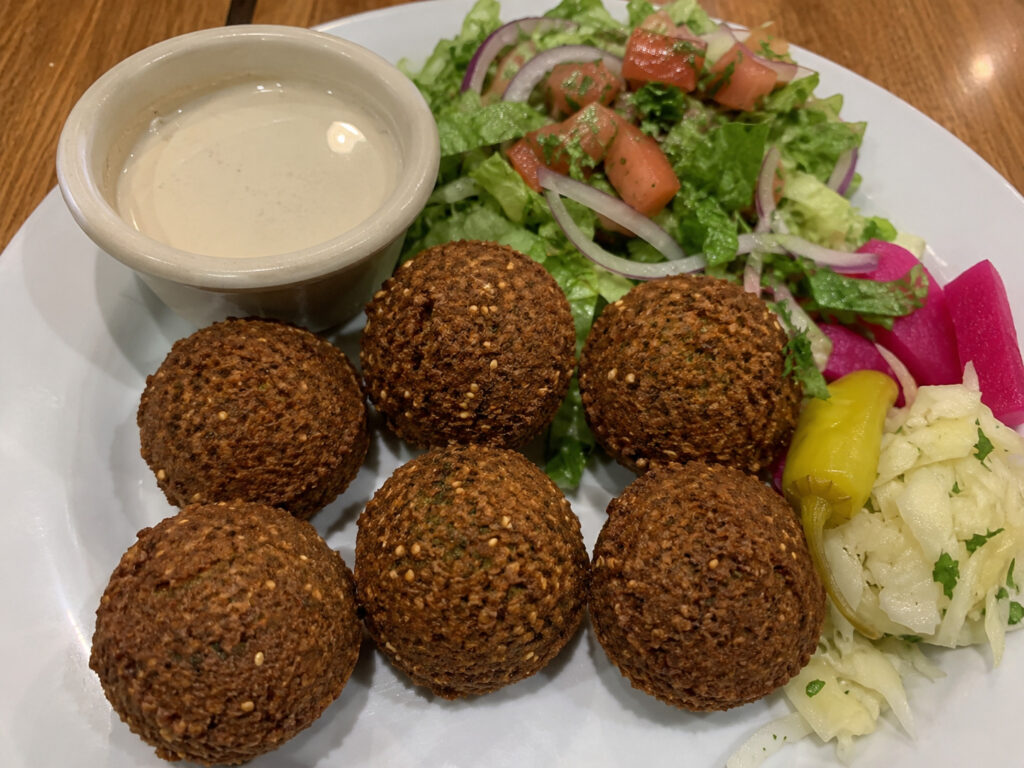
Falafel is a famous Middle Eastern dish made from ground legumes—most commonly chickpeas or fava beans—mixed with herbs, onions, garlic, and spices. The mixture is shaped into small balls or patties and deep-fried until crisp and golden.
Falafel is often served inside pita or another type of flatbread with tahini sauce, tomatoes, cucumber, pickles, lettuce, herbs, and other toppings. It is also commonly served as part of a mezze platter.
Falafel is especially associated with Egypt and the Levant and has become one of the world’s best-known vegetarian foods from the Middle East.
History of Falafel
The exact origin of falafel is still debated.
Egypt has a particularly strong historical connection to the dish, especially through ta’amiya, the Egyptian version traditionally made mainly with fava beans.
Over time, falafel became deeply established throughout the Levant, where chickpea-based versions became especially popular. Because the dish developed in a region with centuries of trade, migration, and cultural exchange, it is difficult to identify one definite birthplace.
Today, falafel is an important part of the cuisines of Egypt, Lebanon, Syria, Jordan, Palestine, Israel, and other Middle Eastern communities.
Rather than belonging exclusively to one modern country, falafel is better understood as part of the shared culinary heritage of the Middle East, with each region adding its own ingredients, flavors, and traditions.
24. Kabsa
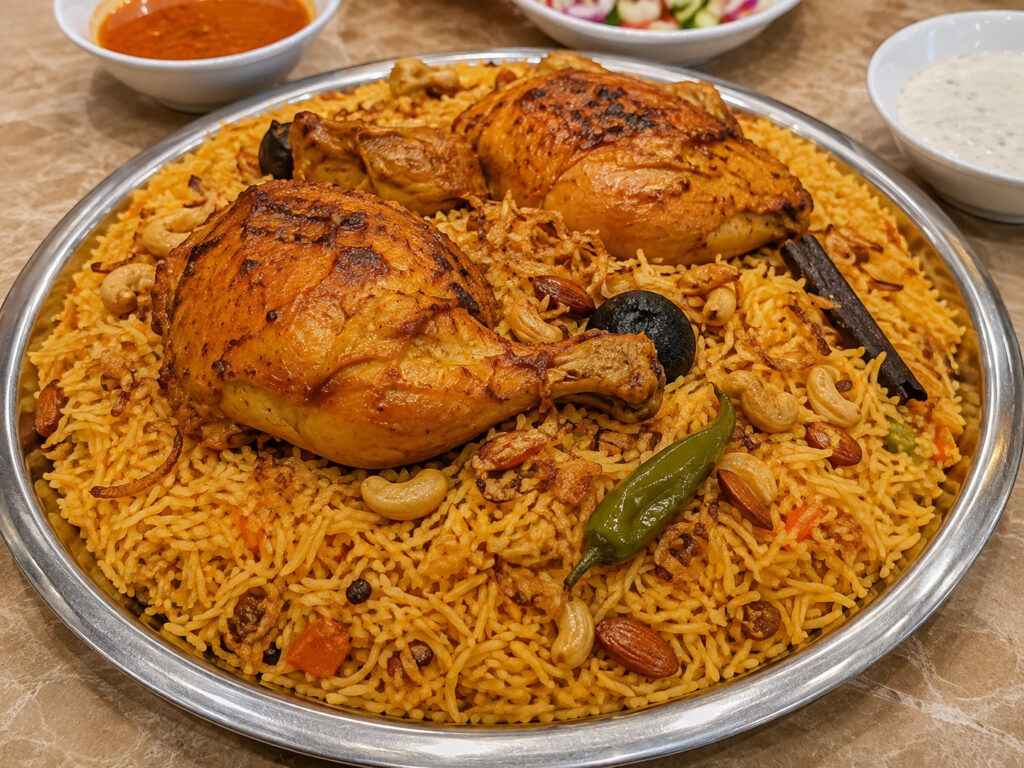
Kabsa is one of the most famous and beloved dishes of Saudi Arabia and is widely considered a cornerstone of Saudi cuisine. It is a fragrant rice dish traditionally made with rice, chicken or meat, tomatoes, onions, and a blend of aromatic spices.
The ingredients are usually cooked together so the rice can soak up the rich flavors of the meat, vegetables, spices, and cooking broth. Kabsa is often served on a large communal platter, making it perfect for family gatherings, celebrations, and sharing with guests.
History of Kabsa
Kabsa is deeply rooted in the culinary traditions of the Arabian Peninsula, particularly Saudi Arabia.
The dish developed within a food culture shaped by rice, meat, dried spices, regional trade, Bedouin and settled communities, and influences from the Gulf and Red Sea.
Rice became increasingly important in the Arabian Peninsula through historic trade networks connecting the region with South Asia and the wider Indian Ocean world. Over time, rice-and-meat dishes became an important part of the region’s cuisine.
Kabsa also developed into different regional and family variations, with cooks using different meats, spices, and ingredients depending on where they live.
Today, Kabsa is strongly associated with Saudi Arabia and is considered one of the country’s signature dishes. It is especially popular when families and friends come together to share a meal.
25. Mansaf
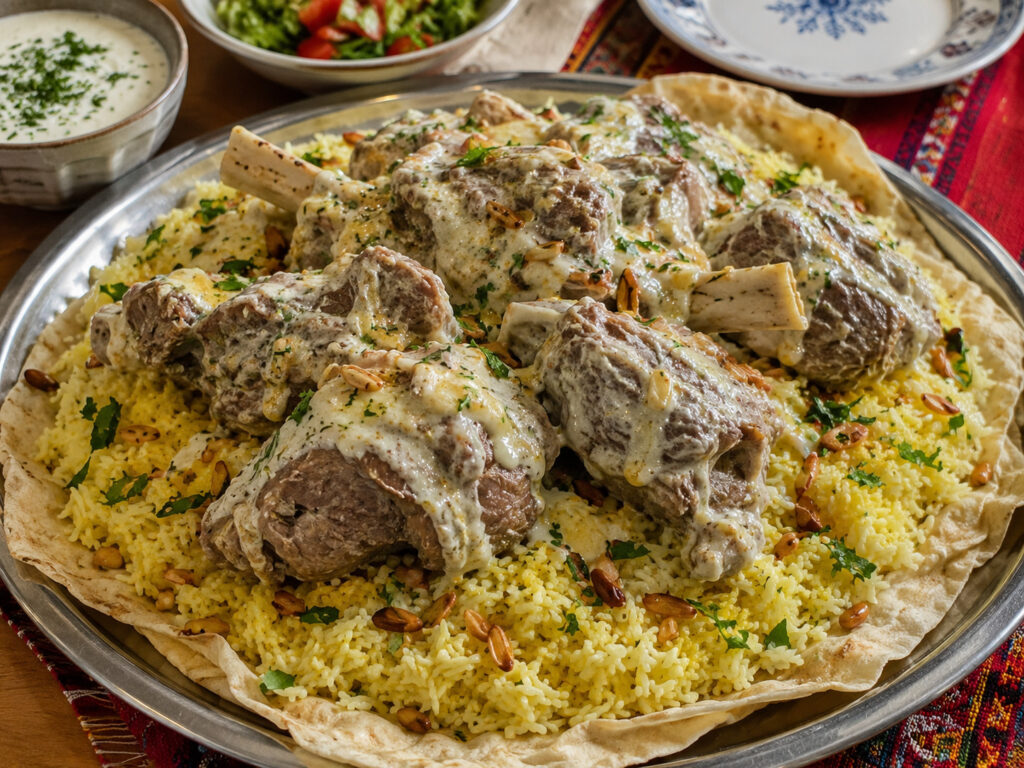
Mansaf is the national dish of Jordan and one of the most important foods in Jordanian cuisine. It is made with tender lamb cooked in a fermented dried-yogurt sauce called jameed, then served over rice or bulgur and traditionally arranged on a large platter lined with thin shrak bread.
Mansaf is much more than just a meal. It is closely connected to Jordanian hospitality, generosity, celebrations, weddings, family gatherings, and Bedouin traditions.
The combination of tender lamb, tangy jameed, fragrant rice, toasted nuts, and soft bread gives mansaf its distinctive flavor and makes it unlike many other Middle Eastern dishes.
History of Mansaf
Mansaf has deep roots in the traditional food culture of Jordan and the wider southern Levant.
The dish is strongly associated with Bedouin and pastoral traditions, particularly the use of sheep or goat milk products and lamb.
The name mansaf is generally associated with a large communal dish or platter used for serving food. Over time, mansaf grew from a dish connected with rural and pastoral communities into an important symbol of Jordanian identity and hospitality.
Today, it is commonly prepared for weddings, births, religious holidays, family gatherings, special guests, and important cultural occasions.
Sharing a large platter of mansaf is an important part of Jordanian hospitality, making the dish as much about bringing people together as it is about the food itself.
Final Thoughts
The traditional foods of Asia offer an incredible journey through history, culture, geography, and flavor.
From the delicate preparation of Japanese sushi and the fermented flavors of Korean kimchi to the aromatic spices of Indian biryani and the comforting noodle dishes of Southeast Asia, every dish tells a story about the people, places, and traditions behind it.
Asia’s culinary diversity is far too vast to capture in just 25 dishes. Every country has countless regional specialties, family recipes, unique ingredients, and traditional cooking techniques waiting to be discovered.
Whether you’re planning your next trip or simply exploring new cuisines from home, traditional Asian foods are a delicious way to experience the incredible cultural diversity of this vast continent. So, pick a dish, give it a try, and discover a new taste of Asia.