Bangkok is not just a city—it’s a living, breathing food market. From sizzling woks on busy sidewalks to smoky grills in hidden alleys, street food is the heart of daily life in Thailand’s capital. Locals don’t just eat it—they rely on it. Travelers don’t just try it—they remember it forever.
In fact, Bangkok is widely considered one of the world’s greatest street food destinations, offering everything from spicy noodles to sweet coconut desserts—all at incredibly affordable prices.
This guide takes you deep into Bangkok’s street food culture—covering must-try dishes, where to eat, flavors, and insider tips.
Why Bangkok is the Street Food Capital of the World?
Street food in Bangkok isn’t just about convenience—it’s about culture, tradition, and flavor.
- Food stalls are found everywhere—markets, alleys, roadsides
- Dishes are cooked fresh in front of you
- Prices are extremely affordable
- Recipes are often passed down through generations
Popular areas like Yaowarat (Chinatown), Victory Monument, and night markets are packed with legendary food stalls serving iconic dishes.
Must-Try Street Food in Bangkok
1. Pad Thai – Thailand’s Most Iconic Dish
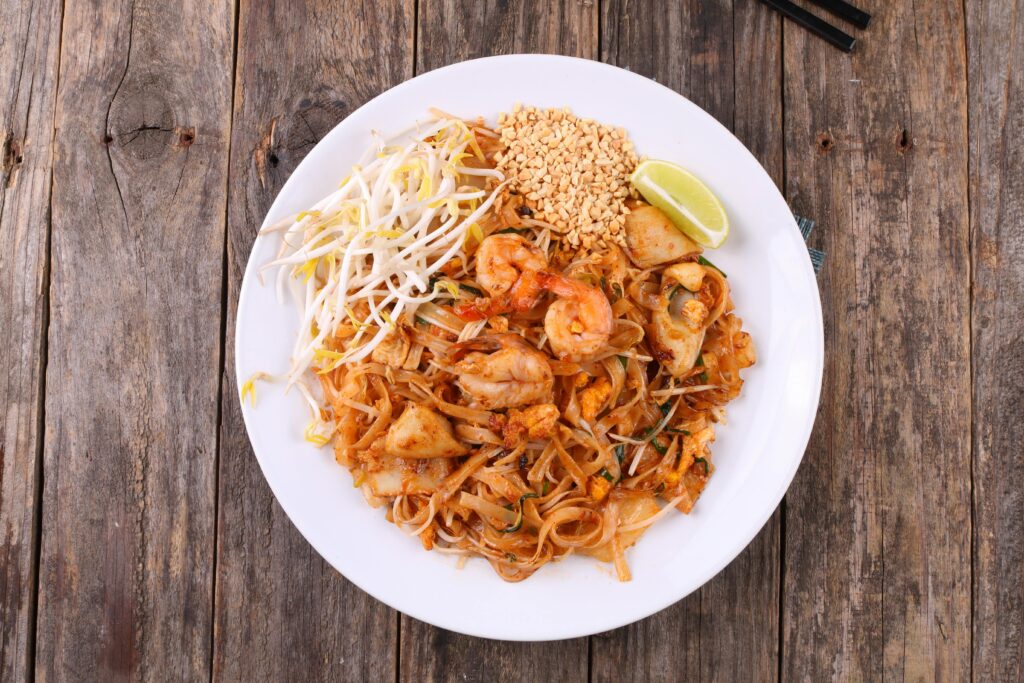
If there’s one dish that defines the vibrant street food culture of Thailand, it’s Pad Thai. Sweet, tangy, savory, and slightly smoky—this stir-fried noodle dish is loved worldwide. But there’s much more to Pad Thai than meets the eye.
Pad Thai is a classic Thai stir-fried noodle dish made with rice noodles, eggs, tofu or shrimp, and a signature sauce that blends sweet, sour, salty, and umami flavors. It’s typically garnished with crushed peanuts, lime wedges, bean sprouts, and sometimes chili flakes for extra heat.
A. How is Pad Thai Made?
Making authentic Pad Thai is all about balance and technique.
Key Ingredients:
- Flat rice noodles
- Tamarind paste (for tanginess)
- Fish sauce (for saltiness)
- Palm sugar (for sweetness)
- Eggs
- Tofu, shrimp, or chicken
- Garlic
- Bean sprouts
- Crushed peanuts
- Lime
The secret? High heat + fast cooking gives Pad Thai its signature smoky flavor (called “wok hei”).
B. Best Places to Eat Pad Thai
If you want the real deal, nothing beats eating Pad Thai in its homeland.
Top Spots in Bangkok:
- Thipsamai Pad Thai
Known as the “King of Pad Thai,” famous for its rich flavor and long queues. - Pad Thai Fai Ta Lu
A Michelin Bib Gourmand spot with a modern twist. - Raan Jay Fai
Run by a Michelin-star chef famous for street-style cooking with premium ingredients.
Street stalls across Thailand also serve incredible, authentic versions—often better than restaurants!
C. How Was Pad Thai Invented?
Pad Thai isn’t as ancient as you might think. It was popularized in the 1930s–40s during the leadership of Plaek Phibunsongkhram.
Why was it created?
- To promote Thai nationalism
- To reduce rice consumption during shortages
- To create a national dish that represented Thai identity
The government even encouraged street vendors to sell Pad Thai, helping it become a global icon.
D. Why is Pad Thai So Popular Worldwide?
- Quick and easy street food
- Customizable (vegetarian, chicken, seafood)
- Balanced flavors that suit global taste buds
- Widely available in Thai restaurants around the world
Pad Thai isn’t just food—it’s a story of culture, history, and flavor packed into one dish. Whether you eat it from a street cart in Bangkok or cook it at home, it delivers a truly unforgettable experience.
2. Som Tam (Papaya Salad) – A Flavor Explosion
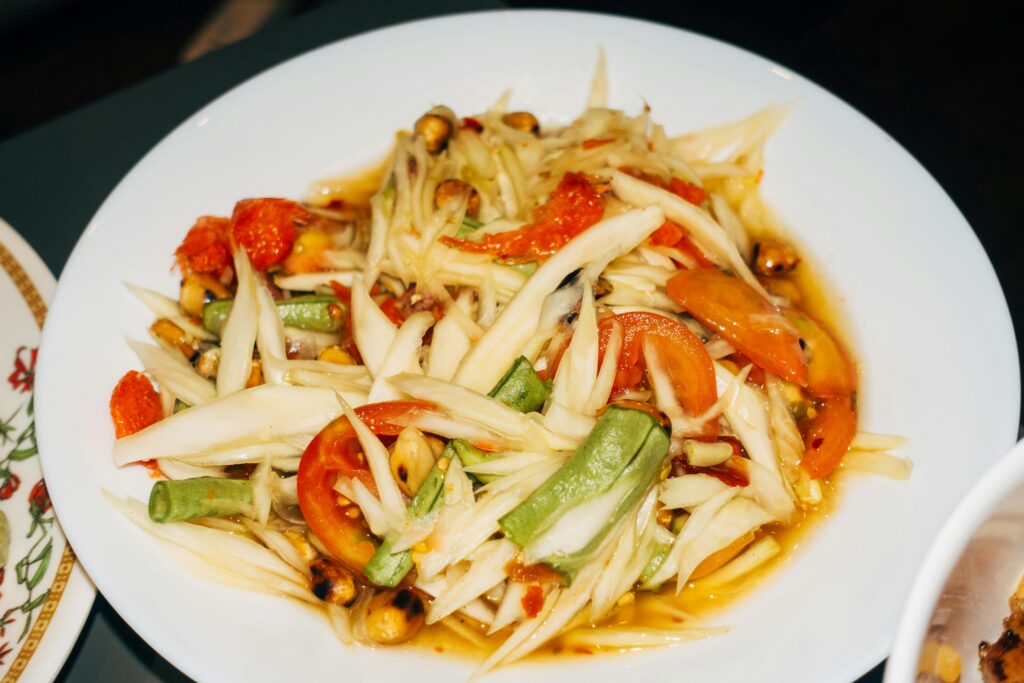
When it comes to fresh, fiery, and flavor-packed Thai dishes, Som Tam stands out as one of the most exciting. Originating from northeastern Thailand, this green papaya salad is a perfect example of how Thai cuisine balances sweet, sour, salty, and spicy in one bite.
A. What is Som Tam?
Som Tam is a traditional Thai salad made from shredded unripe (green) papaya, mixed with lime juice, fish sauce, palm sugar, chilies, and garlic. It’s usually pounded in a mortar and pestle, which gives it a unique texture and helps blend all the flavors together. It’s light, refreshing, but also surprisingly spicy!
B. How is Som Tam Made?
Unlike most salads, Som Tam is pounded, not just mixed.
Key Ingredients:
- Green (unripe) papaya
- Garlic
- Bird’s eye chilies
- Lime juice
- Fish sauce
- Palm sugar
- Cherry tomatoes
- Long beans
- Crushed peanuts
The key technique is gentle pounding + mixing, which creates a juicy, flavorful salad.
Types of Som Tam You Should Know
Som Tam has many regional variations:
- Som Tam Thai – Sweet, sour, balanced (most popular version)
- Som Tam Pla Ra – Fermented fish sauce, stronger flavor
- Som Tam Poo – With salted crab
- Som Tam Vegetarian – No fish sauce, plant-based
C. Best Places to Eat Som Tam:
To experience authentic Som Tam, you have to try it in Thailand.
- Somtam Nua
Famous for its flavorful and modern take on Som Tam. - Hai Som Tam Convent
Known for authentic northeastern Thai flavors. - Jay So
A popular street-style spot with bold and spicy Som Tam.
Street vendors across Thailand often serve the most authentic and intense flavors.
D. How Was Som Tam Invented?
Som Tam originates from the Isan region (northeastern Thailand), heavily influenced by neighboring Laos.
Cultural Background:
- Traditionally eaten by farmers and rural communities
- Made using locally available ingredients
- Designed to be quick, fresh, and flavorful
Over time, it spread across Thailand and became a staple in Thai cuisine—and now a global favorite.
E. Why is Som Tam So Popular?
- Healthy and low in calories
- Fresh and refreshing in hot climates
- Highly customizable spice levels
- Unique preparation style (pounding method)
- Represents authentic Thai street food culture
Som Tam is not just a salad—it’s an experience. From its pounding preparation to its explosive taste, it captures the essence of Thai street food culture in every bite. If Pad Thai is comfort food, Som Tam is bold, raw, and unforgettable.
3. Moo Ping – Thai BBQ on a Stick
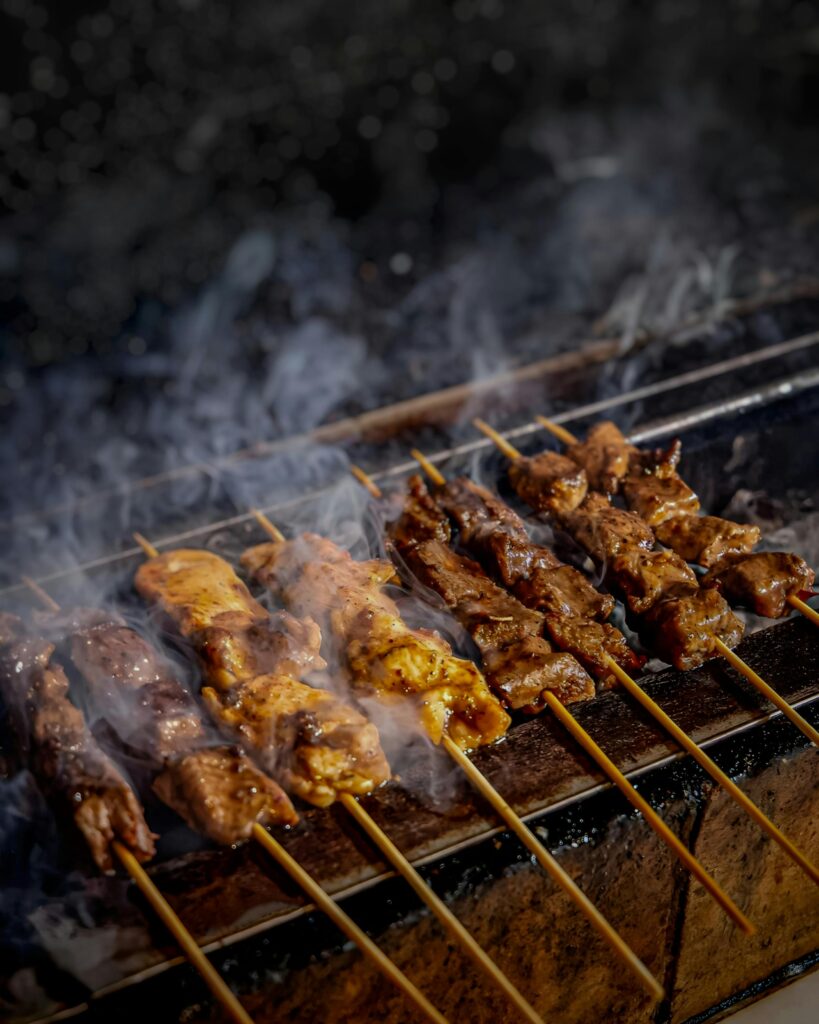
If you walk through the streets of Thailand early in the morning or late evening, you’ll smell something irresistible—Moo Ping. These juicy, smoky grilled pork skewers are one of Thailand’s most beloved street foods. Simple, affordable, and incredibly flavorful, Moo Ping is a must-try for anyone exploring Thai cuisine.
A. What is Moo Ping?
Moo Ping (หมูปิ้ง) is a Thai street food made of marinated pork skewers grilled over charcoal.
- Moo = pork
- Ping = grilled
It’s usually served with sticky rice (khao niao), making it a quick and satisfying meal.
B. How is Moo Ping Made?
The magic of Moo Ping lies in its marinade and grilling technique.
Key Ingredients:
- Pork (usually shoulder or belly for juiciness)
- Garlic
- Soy sauce
- Fish sauce
- Palm sugar
- Coconut milk
- White pepper
- Coriander root (optional but authentic)
The coconut milk and sugar create a slightly caramelized, smoky glaze on the outside.
C. Best Places to Eat Moo Ping
For the most authentic taste, Thailand’s street vendors are unbeatable.
Top Spots in Bangkok:
- Moo Ping Hea Owen
A legendary street vendor known for perfectly grilled skewers. - Silom Moo Ping
Popular for breakfast Moo Ping with sticky rice. - Moo Ping Bang Chak
A local favorite with rich marinade flavors.
You’ll also find incredible Moo Ping at roadside carts across Thailand—often better than restaurants!
D. How Was Moo Ping Invented?
Moo Ping doesn’t have a single origin story like Pad Thai—it evolved naturally from Thailand’s street food culture.
Background:
- Inspired by traditional Southeast Asian grilling methods
- Influenced by local ingredients like fish sauce and palm sugar
- Became popular as a cheap, portable meal for workers and travelers
Over time, Moo Ping became a staple breakfast and snack across Thailand.
E. Why is Moo Ping So Popular?
- Affordable and widely available
- Perfect grab-and-go street food
- Easy to pair with sticky rice
- Loved for its smoky, grilled flavor
- Great for breakfast, snacks, or late-night bites
Moo Ping is proof that simple food can be extraordinary. With just a few ingredients and traditional grilling, it delivers bold flavors that capture the heart of Thai street food culture. If Som Tam is refreshing and Pad Thai is comforting, Moo Ping is smoky, juicy, and deeply satisfying.
4. Boat Noodles (Kuay Teow Reua) – Small Bowl, Big Flavor
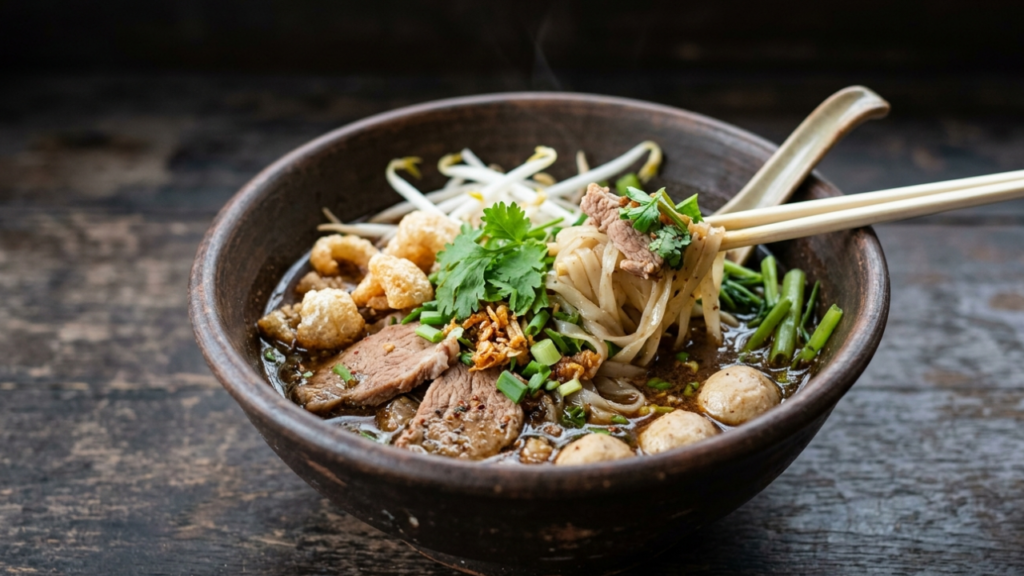
Among the many legendary street foods of Thailand, Boat Noodles (Kuay Teow Reua) stand out for their deep, intense flavor and unique history. Served in small bowls but packed with bold taste, this dish is a must-try for true food lovers.
A. What Are Boat Noodles?
Boat Noodles are a Thai noodle soup traditionally served in small portions, featuring a rich, dark broth with meat (usually beef or pork), noodles, herbs, and spices. The name comes from the way they were originally served—from boats along canals in central Thailand.
B. How Are Boat Noodles Made?
The secret of Boat Noodles lies in their deep, complex broth.
Key Ingredients:
- Rice noodles (or egg noodles)
- Beef or pork (sliced + meatballs)
- Garlic
- Soy sauce & dark soy sauce
- Fish sauce
- Palm sugar
- Star anise & cinnamon
- Fresh herbs (cilantro, Thai basil)
- Bean sprouts
Traditionally, a small amount of pig or cow blood is added to thicken the broth and enhance richness
C. Best Places to Eat Boat Noodles
To taste authentic Boat Noodles, head to Thailand’s famous noodle hubs.
Top Spots in Bangkok:
- Victory Monument Boat Noodles
A hotspot with multiple vendors serving bowls for just a few baht. - Wattana Panich
Famous for its legendary slow-simmered beef broth that’s been maintained for decades. - Boat Noodle Alley
A must-visit area with authentic traditional flavors.
Locals often eat multiple small bowls instead of one big serving!
D. How Were Boat Noodles Invented?
Boat Noodles date back to a time when Bangkok’s canals were the main transportation routes.
Historical Background:
- Vendors cooked and sold noodles directly from boats
- Small bowls made it easy to serve without spilling
- Rich, concentrated broth prevented dilution
As Bangkok modernized, the dish moved to land—but the small bowl tradition remains.
E. Why Are Boat Noodles So Popular?
- Unique history and cultural roots
- Deep, complex broth unlike other noodle soups
- Affordable and widely available
- Fun eating style (multiple small bowls)
- Authentic Thai street food experience
Boat Noodles are more than just a meal—they’re a journey into Thailand’s past. From canal-side boats to bustling street stalls, this dish carries history, culture, and bold flavor in every bowl. If Pad Thai is balanced and Som Tam is refreshing, Boat Noodles are rich, intense, and deeply satisfying.
5. Tom Yum Goong – Spicy Thai Soup
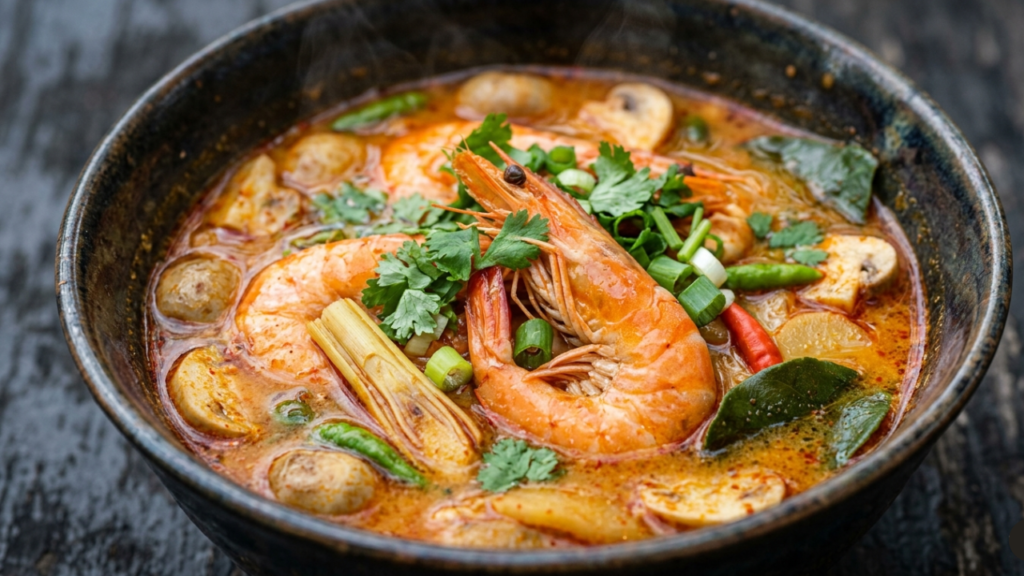
When it comes to bold, unforgettable flavors, Tom Yum Goong is one of the most famous dishes from Thailand. Known for its hot, sour, and aromatic profile, this soup perfectly represents the essence of Thai cuisine.
A. What is Tom Yum Goong?
Tom Yum Goong is a traditional Thai soup made with shrimp (goong), infused with fragrant herbs and a spicy, tangy broth.
- Tom = boiling
- Yum = spicy & sour salad style
- Goong = shrimp
It’s light yet intensely flavorful—often considered one of the world’s best soups.
B. How is Tom Yum Goong Made?
The secret lies in its aromatic herb base and perfectly balanced broth.
Key Ingredients:
- Fresh shrimp
- Lemongrass
- Kaffir lime leaves
- Galangal (Thai ginger)
- Bird’s eye chilies
- Fish sauce
- Lime juice
- Mushrooms
- Chili paste (Nam Prik Pao)
- Fresh cilantro
Lime juice is added at the end to keep the flavor fresh and vibrant.
Types of Tom Yum Goong
There are two main styles:
- Tom Yum Nam Sai – Clear broth, lighter and sharper flavor
- Tom Yum Nam Khon – Creamy version with evaporated milk or coconut milk
Both are delicious—the choice depends on your preference!
C. Best Places to Eat Tom Yum Goong
To experience authentic Tom Yum, Thailand is unbeatable.
Top Spots in Bangkok:
- Pe Aor Tom Yum Kung Noodle
Famous for its rich and creamy Tom Yum with seafood. - Jeh O Chula
A legendary late-night spot with bold flavors. - Baan Somtum
Known for authentic and well-balanced Thai dishes.
Street vendors and local eateries often serve equally amazing versions.
D. How Was Tom Yum Goong Invented?
Tom Yum Goong has roots in central Thailand, where fresh herbs and river shrimp were abundant.
Cultural Background:
- Developed using local herbs for medicinal benefits
- Known for boosting immunity and digestion
- Evolved into a national dish over time
Unlike some dishes, Tom Yum grew organically from Thai cooking traditions rather than being officially created.
E. Why is Tom Yum Goong So Popular?
- Unique combination of hot & sour flavors
- Healthy and herb-based
- Recognized globally as a top soup
- Represents authentic Thai culinary identity
- Loved by both locals and international travelers
Tom Yum Goong is not just a soup—it’s a sensory experience. From its aromatic steam to its fiery and tangy taste, it captures the heart of Thai cuisine in every spoonful. If Pad Thai is comforting and Som Tam is refreshing, Tom Yum Goong is bold, spicy, and unforgettable.
6. Khao Man Gai – Thai Chicken Rice
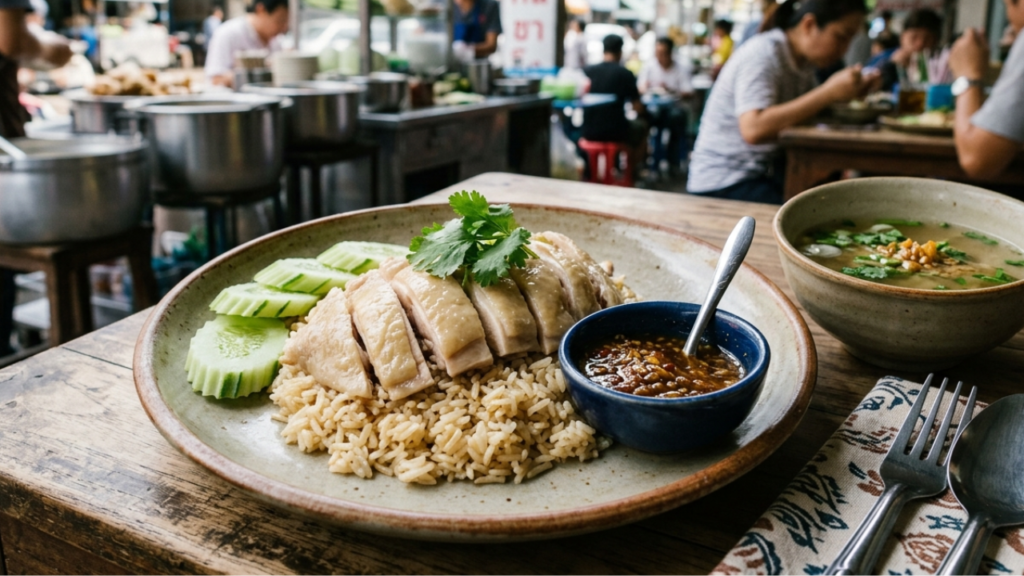
Simple, comforting, and deeply satisfying—Khao Man Gai (Thai Chicken Rice) is one of the most loved everyday dishes in Thailand. While it may look minimal, its flavor lies in perfect technique and balance.
A. What is Khao Man Gai?
Khao Man Gai is Thailand’s version of chicken rice, made with:
- Poached chicken
- Fragrant rice cooked in chicken fat
- A bold, tangy dipping sauce
- Khao = rice
- Man = oily/fat-infused
- Gai = chicken
It’s often served with a light soup and fresh cucumber slices.
B. How is Khao Man Gai Made?
This dish is all about layered flavor from simplicity.
Key Ingredients:
- Whole chicken
- Jasmine rice
- Garlic
- Ginger
- Soybean paste
- Fish sauce
- Sugar
- Vinegar
- Fresh chilies
- Cilantro
C. Best Places to Eat Khao Man Gai
To taste authentic Khao Man Gai, Thailand is the best destination.
Top Spots in Bangkok:
- Go-Ang Kaomunkai Pratunam
A Michelin Bib Gourmand spot, often called the best in Bangkok. - Kuang Heng Chicken Rice
Famous for its pink-uniform staff and consistent flavor. - Mongkol Chai Chicken Rice
Loved by locals for its juicy chicken and flavorful rice.
Street vendors also serve incredibly authentic versions at affordable prices.
D. How Was Khao Man Gai Invented?
Khao Man Gai is inspired by Chinese Hainanese chicken rice.
Cultural Background:
- Introduced by Chinese immigrants to Thailand
- Adapted with Thai flavors (especially the spicy dipping sauce)
- Became a staple comfort food across the country
Today, it’s a perfect blend of Chinese technique + Thai flavor.
E. Why is Khao Man Gai So Popular?
- Simple yet flavorful
- Affordable and filling
- Comfort food for all ages
- Easy to find across Thailand
- Balanced meal (protein + carbs + freshness)
Khao Man Gai proves that simple food can be extraordinary. With just a few ingredients and perfect technique, it delivers comfort, flavor, and authenticity in every bite. If Tom Yum is bold and Som Tam is fiery, Khao Man Gai is calm, comforting, and deeply satisfying.
7. Hoy Tod – Crispy Oyster Omelet
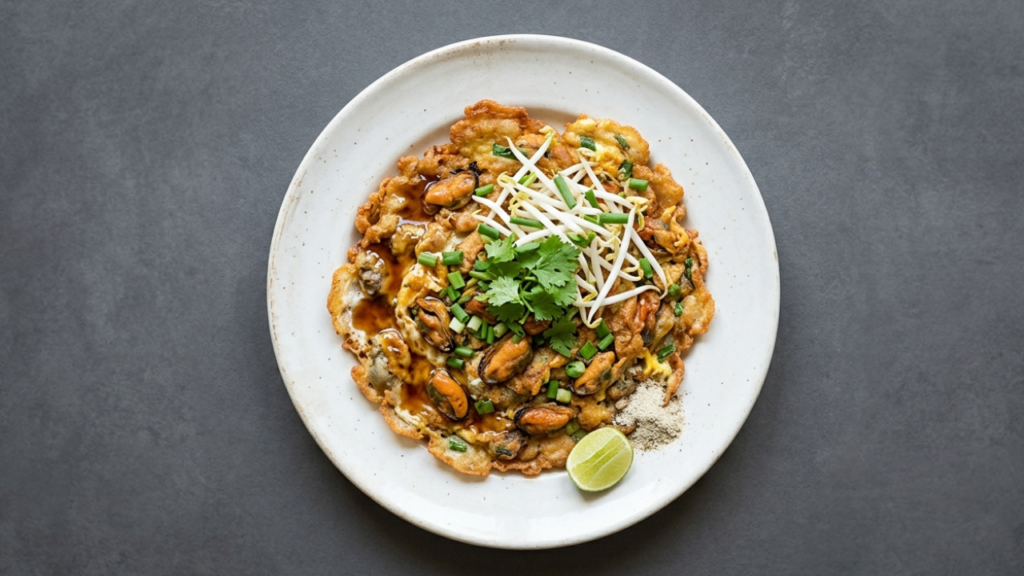
Crunchy, savory, and packed with seafood flavor—Hoy Tod is one of the most addictive street foods in Thailand. Known for its crispy texture and rich taste, this dish is a favorite among locals and food lovers alike.
A. What is Hoy Tod?
Hoy Tod is a Thai-style oyster omelette, made by frying oysters (or sometimes mussels) with eggs and a starchy batter until crispy.
- Hoy = shellfish (usually oysters)
- Tod = fried
It’s typically served with a spicy chili sauce that adds a tangy kick.
B. How is Hoy Tod Made?
The secret of Hoy Tod lies in its crispy batter + hot pan technique.
Key Ingredients:
- Fresh oysters (or mussels)
- Eggs
- Rice flour or tapioca starch
- Garlic
- Bean sprouts
- Fish sauce
- White pepper
- Oil (for frying)
The goal is a contrast of textures—crispy edges with a soft, gooey center.
C. Types of Hoy Tod
You’ll find a couple of variations:
- Hoy Tod (Oyster Omelette) – Traditional version with oysters
- Hoy Tod Mussels – Uses mussels instead of oysters
- Or Suan – Softer, less crispy version with a gooey texture
D. Best Places to Eat Hoy Tod
For the most authentic taste, Thailand’s street stalls are the best.
Top Spots in Bangkok:
- Nai Mong Hoi Thod
A Michelin Bib Gourmand spot famous for crispy oyster omelette. - Hoi Tod Chaw-Lae Restaurant
Known for fresh seafood and perfectly fried texture. - Hoy Tod Talad Phlu
A local favorite with bold flavors.
Street vendors often cook Hoy Tod right in front of you, adding to the experience.
E. How Was Hoy Tod Invented?
Hoy Tod has strong influences from Chinese cuisine, especially Teochew cooking styles.
Cultural Background:
- Introduced by Chinese immigrants
- Adapted with Thai ingredients and flavors
- Became popular as a street-side seafood dish
Today, it’s a perfect fusion of Chinese technique + Thai taste.
F. Why is Hoy Tod So Popular?
- Unique texture unlike typical omelettes
- Quick and satisfying street food
- Affordable seafood dish
- Cooked fresh in front of customers
- Loved for its bold and indulgent flavor
Hoy Tod is a perfect example of how Thai street food turns simple ingredients into something extraordinary. From its sizzling preparation to its crispy bite, it delivers a bold and satisfying experience. If Khao Man Gai is comforting and Tom Yum is intense, Hoy Tod is crispy, rich, and indulgent.
8. Mango Sticky Rice – The Perfect Dessert
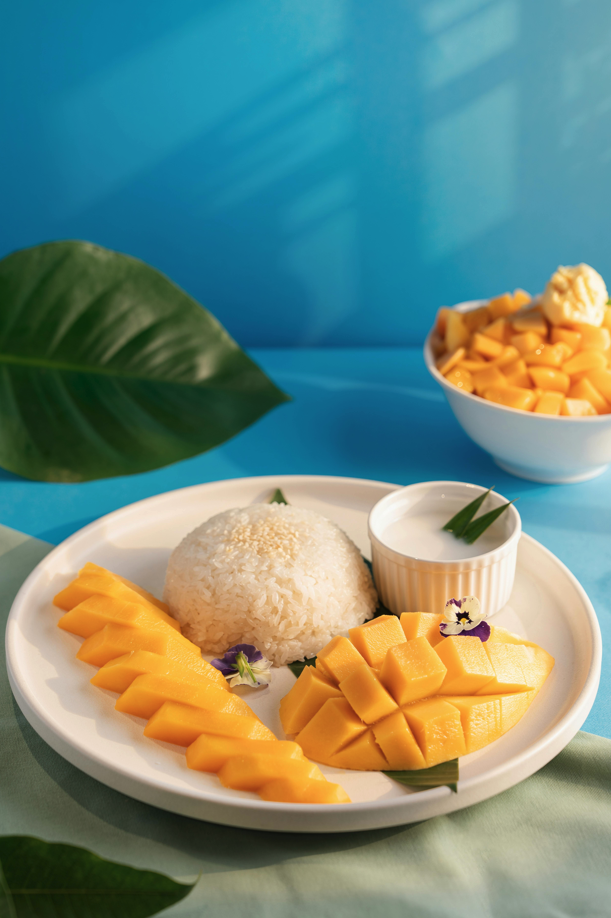
Sweet, creamy, and irresistibly tropical—Mango Sticky Rice (Khao Niew Mamuang) is one of the most iconic desserts from Thailand. Loved by locals and travelers alike, it perfectly balances simplicity with indulgence.
A. What is Mango Sticky Rice?
Mango Sticky Rice is a traditional Thai dessert made with:
- Sweet sticky rice
- Fresh ripe mango
- Coconut milk
- Khao Niew = sticky rice
- Mamuang = mango
It’s usually served with a drizzle of coconut cream and sometimes topped with crispy mung beans.
B. How is Mango Sticky Rice Made?
This dessert is all about quality ingredients and perfect timing.
Key Ingredients:
- Glutinous (sticky) rice
- Coconut milk
- Palm sugar or regular sugar
- Salt
- Ripe mango (preferably Thai varieties like Nam Dok Mai)
C. Best Places to Eat Mango Sticky Rice
To experience authentic flavor, Thailand is the best place.
Top Spots in Bangkok:
- Mae Varee Mango Sticky Rice
One of the most famous spots, known for premium mango quality. - Kor Panich Sticky Rice
A legendary place with decades of history. - Boonsap Thai Desserts
A hidden gem loved by locals.
Street vendors also serve incredibly fresh and delicious versions during mango season.
D. How Was Mango Sticky Rice Invented?
Mango Sticky Rice developed naturally from Thailand’s agricultural abundance.
Cultural Background:
- Thailand produces high-quality rice and tropical fruits
- Coconut milk is widely used in Thai desserts
- Mango season made this dish a seasonal favorite
Over time, it became a national dessert symbol of Thailand.
E. Why is Mango Sticky Rice So Popular?
- Simple yet indulgent dessert
- Perfect balance of flavors
- Uses fresh, natural ingredients
- Iconic representation of Thai cuisine
- Loved worldwide
Mango Sticky Rice is proof that desserts don’t need to be complicated to be extraordinary. With just a few ingredients, it delivers a rich, comforting, and unforgettable taste of Thailand. If Tom Yum is bold and Hoy Tod is crispy, Mango Sticky Rice is sweet, creamy, and pure comfort.
9. Roti Gluay (Banana Pancake)
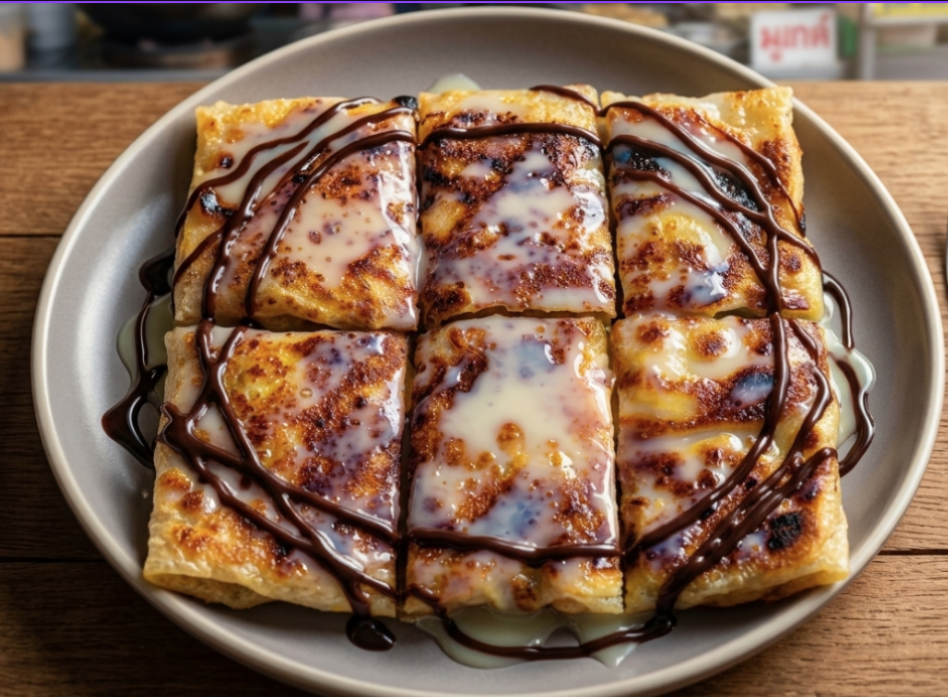
Crispy on the outside, soft and sweet on the inside—Roti Gluay is one of the most popular street desserts in Thailand. Found sizzling on roadside griddles, this indulgent treat is a must-try for anyone with a sweet tooth.
A. What is Roti Gluay?
Roti Gluay is a Thai-style fried flatbread filled with banana, often topped with condensed milk, sugar, or chocolate sauce.
- Roti = flatbread (influenced by Indian cuisine)
- Gluay = banana
It’s sometimes called the Thai banana pancake, but it’s crispier and richer than typical pancakes.
B. How is Roti Gluay Made?
The magic lies in its thin dough + buttery frying technique.
Key Ingredients:
- Roti dough (flour, water, egg, oil)
- Ripe bananas
- Butter or margarine
- Condensed milk
- Sugar
- Chocolate or Nutella (optional)
The result is crispy, flaky layers with a soft, sweet filling.
C. Best Places to Eat Roti Gluay
Roti Gluay is best enjoyed fresh from street vendors.
Top Spots in Bangkok:
- Roti Mataba
Famous for both savory and sweet roti varieties. - Roti Sai Mai Street Vendors
Known for authentic street-style roti experiences. - Khao San Road Roti Stalls
A hotspot for tourists craving fresh, crispy roti.
You’ll find roti stalls almost everywhere in Thailand—especially at night markets.
D. How Was Roti Gluay Invented?
Roti Gluay has roots outside Thailand.
Cultural Background:
- Inspired by Indian flatbread “roti”
- Brought to Thailand by Muslim and Indian communities
- Adapted into a sweet street dessert with banana and toppings
Today, it’s a fusion of Indian influence + Thai creativity.
E. Why is Roti Gluay So Popular?
- Affordable and widely available
- Freshly made in front of you
- Highly customizable (banana, chocolate, Nutella, egg, etc.)
- Perfect late-night dessert
- Loved by tourists and locals alike
Roti Gluay is more than just a dessert—it’s a street food experience. From the stretching of the dough to the sizzling sound on the griddle, every step adds to its charm. If Mango Sticky Rice is creamy and traditional, Roti Gluay is crispy, indulgent, and fun.
10. Thai Coconut Ice Cream
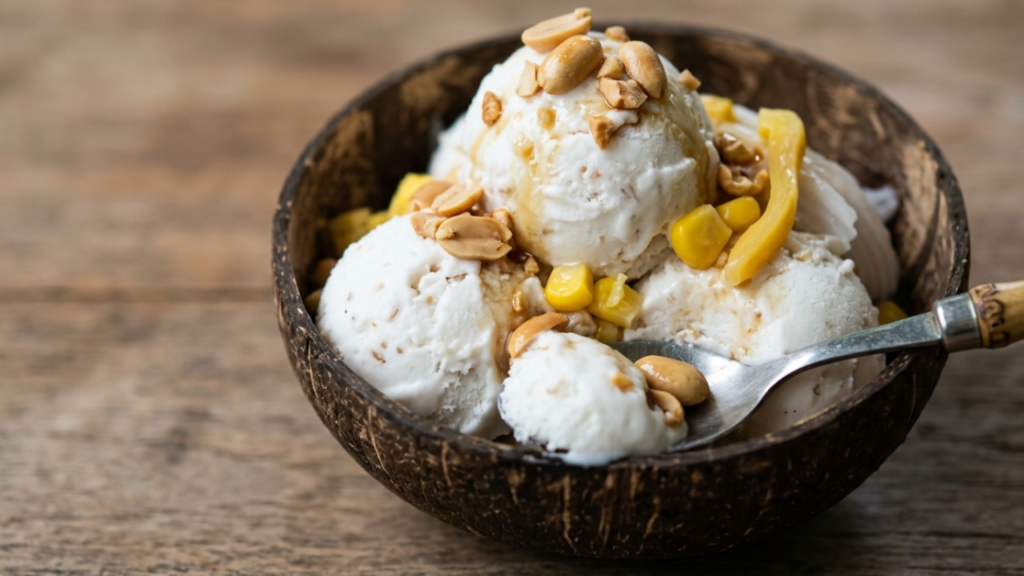
Cool, creamy, and naturally sweet—Thai Coconut Ice Cream is one of the most refreshing desserts you can try in Thailand. Served in coconut shells and topped with a variety of unique ingredients, this dessert is both simple and unforgettable.
A. What is Thai Coconut Ice Cream?
Thai Coconut Ice Cream is a dairy-free (or lightly creamy) dessert made primarily from:
- Coconut milk
- Sugar
- Ice
It’s often served in a real coconut shell, making it as visually appealing as it is delicious. Known locally as I-Tim Kati, it’s a staple in Thai street markets.
B. How is Thai Coconut Ice Cream Made?
The beauty of this dessert lies in its natural ingredients and smooth texture.
Key Ingredients:
- Coconut milk
- Coconut cream
- Palm sugar or sugar
- Salt (a pinch for balance)
- Ice or ice cream base
Some traditional vendors use hand-churning methods for a richer texture.
C. Best Places to Eat Thai Coconut Ice Cream
For the best experience, try it fresh in Thailand.
Top Spots in Bangkok:
- Coconut Ice Cream at Chatuchak Market
One of the most famous spots with customizable toppings. - Khao San Road Coconut Ice Cream Stalls
Popular among tourists for authentic street-style servings. - Jatujak Coconut Ice Cream Vendors
Known for serving ice cream in fresh coconut shells.
Street markets are the best places to enjoy this dessert fresh.
D. How Was Thai Coconut Ice Cream Invented?
Thai Coconut Ice Cream developed naturally from Thailand’s abundant coconut production.
Cultural Background:
- Coconut milk has been used in Thai desserts for centuries
- Street vendors adapted it into a frozen treat
- Became popular due to its cooling effect in hot weather
It reflects Thailand’s love for natural, tropical ingredients.
E. Why is Thai Coconut Ice Cream So Popular?
- Naturally refreshing in tropical weather
- Dairy-free option (great for many diets)
- Customizable with unique toppings
- Served fresh in street markets
- Represents authentic Thai dessert culture
Thai Coconut Ice Cream is the perfect way to cool down while exploring Thailand. With its creamy coconut base and exciting toppings, it offers a refreshing escape from the heat in every bite. If Mango Sticky Rice is rich and Roti Gluay is indulgent, this dessert is light, cooling, and tropical.
Final Thoughts
Exploring street food in Bangkok is like going on a culinary adventure where every corner offers something new. Whether it’s the smoky aroma of grilled meats, the tangy punch of papaya salad, or the sweetness of mango sticky rice—Bangkok delivers unforgettable flavors.
If you’re planning a trip or any other reasons, one thing is certain: “You haven’t experienced Bangkok until you’ve eaten on its streets.”