Waterfalls are among the most mesmerizing natural wonders on Earth—where raw power meets breathtaking beauty. From thunderous cascades to serene hidden gems, waterfalls attract millions of travelers every year for their visual drama, misty rainbows, and calming sounds.
Why Waterfalls Are So Fascinating
Waterfalls are not just scenic—they represent geological evolution, hydrological power, and ecological richness. They often form where rivers flow over resistant rock layers, creating dramatic drops over time.
Key reasons why waterfalls attract travelers:
- Natural rainbows & mist effects
- Perfect photography locations
- Surrounded by rich ecosystems
- Relaxing and therapeutic ambiance
Top Most Beautiful Waterfalls in the World
1. Iguazú Falls (Argentina & Brazil)
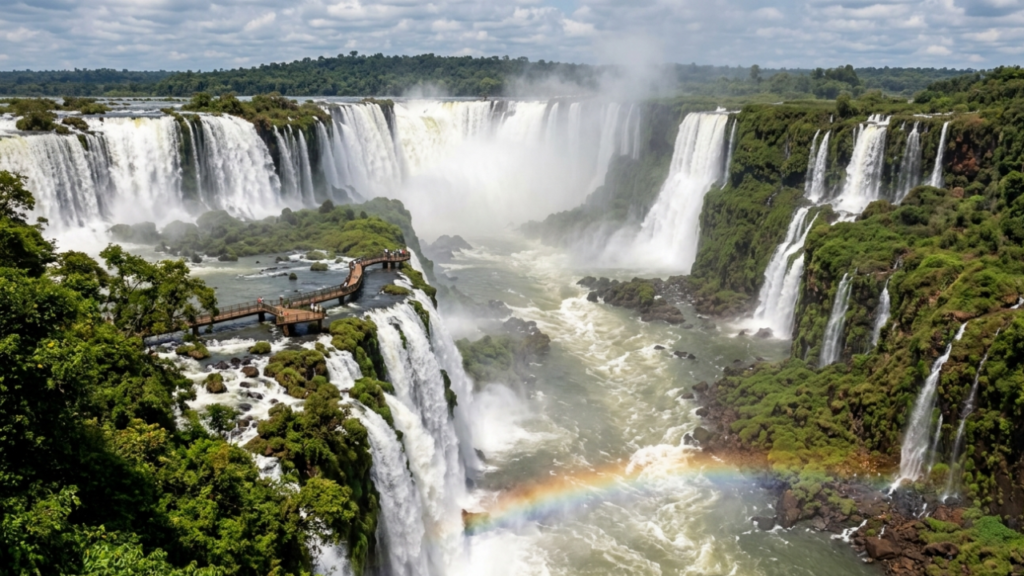
Stretching across the border of Argentina and Brazil, Iguazú Falls is one of the most breathtaking natural wonders on Earth. Larger than Niagara Falls and often considered more dramatic, this massive waterfall system is a true spectacle of nature.
A. Location & Geography
Iguazú Falls lies within two protected national parks:
- Iguazú National Park (Argentina side)
- Iguaçu National Park (Brazil side)
The falls are formed by the Iguazú River, which flows through lush rainforest before dramatically plunging over a series of cliffs.
B. Size & Structure
- Total waterfalls: ~275 individual cascades
- Width: About 2.7 km (1.7 miles)
- Height: 60–82 meters (197–269 feet)
Unlike a single waterfall, Iguazú is a vast system of interconnected falls, separated by islands and dense vegetation. This creates a unique panoramic view unlike anywhere else in the world.
C. Devil’s Throat (Garganta del Diablo)
The most iconic section is:
- A massive U-shaped chasm
- Water plunges about 80 meters straight down
- Produces a constant mist cloud visible from miles away
Standing near it feels like witnessing the raw power of nature—loud, immersive, and unforgettable.
D. Experience: Argentina vs Brazil
Argentina Side (Closer Experience)
- Extensive walking trails and footbridges
- Get very close to the waterfalls
- Immersive jungle experience
- Highlights: Upper Circuit, Lower Circuit, Devil’s Throat walkway
Brazil Side (Panoramic Views)
- Offers wide-angle, postcard-perfect views
- Shorter walking routes
- Best for photography
Tip: Visit both sides for the complete experience.
E. Best Time to Visit
- December to March: High water flow (more powerful, but humid)
- April to September: Pleasant weather, clearer views
- Avoid peak crowds: Early morning visits are best
Iguazú Falls isn’t just a waterfall—it’s an overwhelming sensory experience. The thunder of water, the mist on your skin, the rainbows in the air, and the surrounding jungle all combine to create something truly unforgettable. If you’re building a travel blog (like Nomad Sabor), this destination is a must-feature centerpiece—it captures adventure, nature, and global wonder all in one place.
2. Angel Falls (Venezuela)
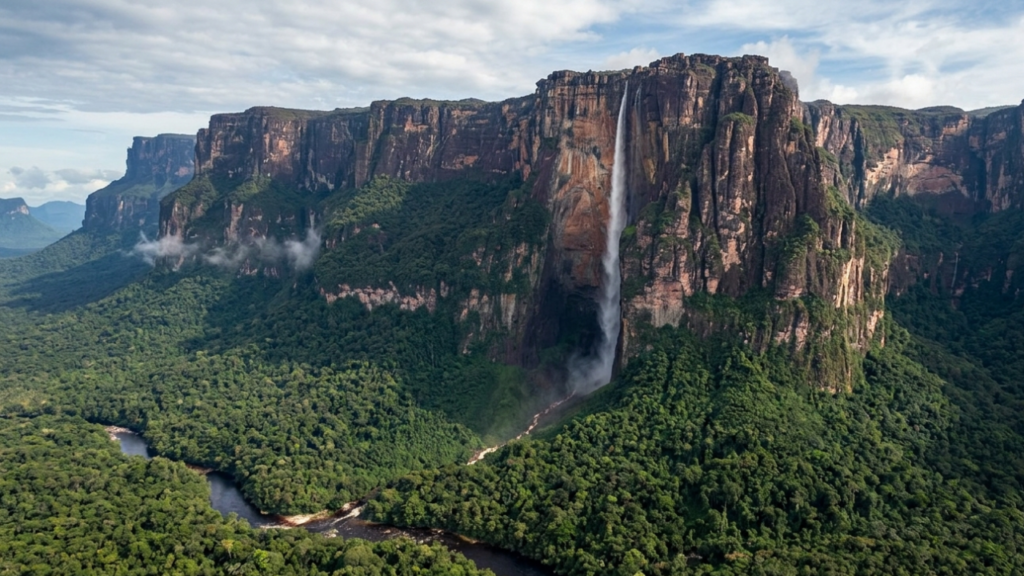
Hidden deep within the wild jungles of Venezuela, Angel Falls is the tallest waterfall in the world, plunging dramatically from the edge of a massive tabletop mountain. It’s one of the most remote and awe-inspiring natural wonders on Earth.
A. Location & Geography
Angel Falls is located inside:
- Canaima National Park
This UNESCO World Heritage Site is known for its unique geological formations called tepuis—flat-topped mountains rising straight out of the jungle.
The waterfall drops from:
- Auyán-tepui
These ancient formations date back over 2 billion years, making them among the oldest geological features on Earth.
B. Height & Structure
- Total height: 979 meters (3,212 feet)
- Main uninterrupted drop: 807 meters (2,648 feet)
Because of its extreme height, much of the falling water turns into mist before reaching the ground, creating a surreal, floating effect.
C. Unique Appearance
Unlike most waterfalls:
- Water often disperses into mist mid-air
- Appears like a white ribbon floating from the sky
- During dry seasons, the flow becomes thinner but still magical
This gives Angel Falls an almost dreamlike, otherworldly look.
D. Discovery & History
Angel Falls is named after:
- Jimmie Angel
In 1933, he flew over the falls while searching for gold and later landed his plane on Auyán-tepui in 1937 (it got stuck there!). However, indigenous Pemon people had known about the falls long before. They call it: Kerepakupai Merú (waterfall of the deepest place)
E. Best Time to Visit
May to November (Rainy Season):
- Strongest water flow
- Easier river access
December to April (Dry Season):
- Lower water flow
- Falls may appear thinner
Angel Falls isn’t just a destination—it’s an expedition into one of the last untouched places on Earth. The sheer height, isolation, and mystical landscape make it feel like something out of another world. For your travel blog, this is a perfect “ultimate adventure” feature—it combines mystery, rarity, and natural grandeur in a way very few places can.
3. Victoria Falls (Zambia & Zimbabwe)
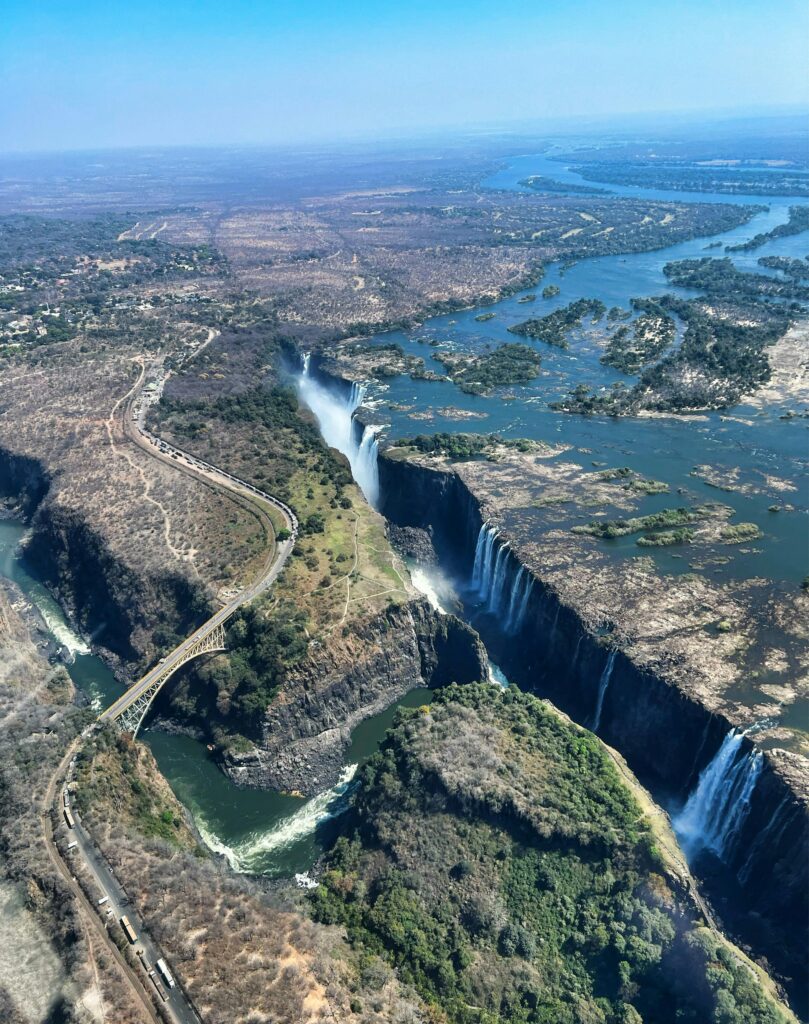
Straddling the border between Zambia and Zimbabwe, Victoria Falls is one of the most powerful and awe-inspiring waterfalls on Earth. Known locally as “The Smoke That Thunders,” it’s a place where nature’s force is both seen and felt.
A. Location & Geography
Victoria Falls lies on the mighty “Zambezi River”
It forms a natural border between:
- Mosi-oa-Tunya National Park
- Victoria Falls National Park
The waterfall plunges into a narrow gorge, creating dramatic cliffs and a roaring cascade.
B. Height & Structure
- Width: ~1,708 meters (5,604 feet)
- Height: ~108 meters (354 feet)
While not the tallest or widest individually, Victoria Falls is considered the largest sheet of falling water in the world. It creates the biggest continuous curtain of water on Earth—especially during peak flow.
C. The Smoke That Thunders
The local name:
- Mosi-oa-Tunya (“The Smoke That Thunders”)
comes from:
- Massive spray rising up to 400 meters into the sky
- A thunderous roar that can be heard from miles away
The mist is so intense that it creates a rainforest ecosystem around the falls.
D. Unique Features
Devil’s Pool:
- A natural rock pool at the edge of the falls
- Visitors can swim right up to the drop (during dry season!)
- One of the most thrilling experiences in the world
Victoria Falls is not just something you see—it’s something you feel. The ground trembles, the air is filled with mist, and the roar surrounds you. It’s one of the most intense natural experiences on Earth.
4. Niagara Falls (USA & Canada)
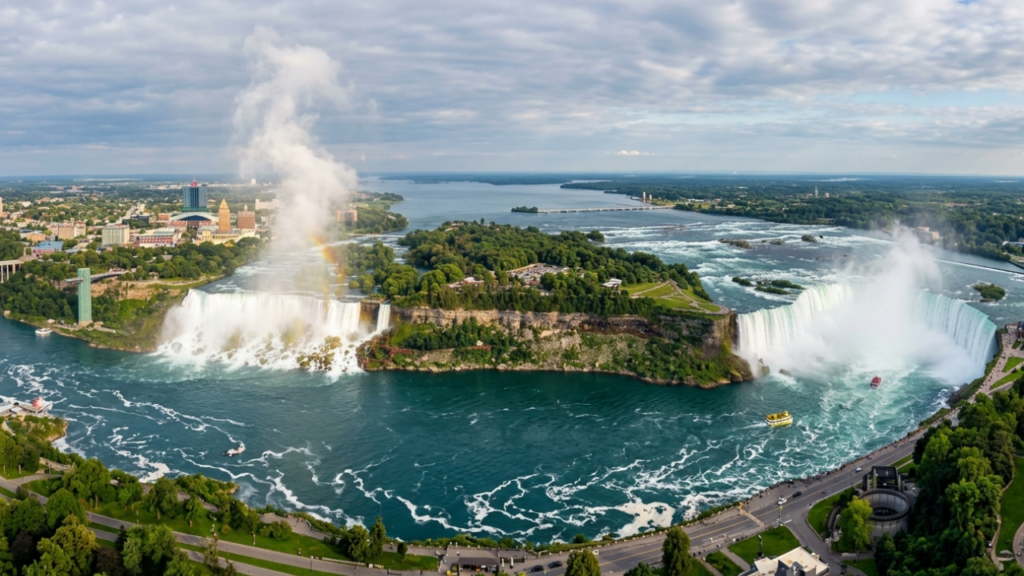
Located on the border between United States and Canada, Niagara Falls is one of the most famous and visited waterfalls in the world. Unlike remote giants like Angel Falls, Niagara is known for its accessibility, sheer power, and iconic beauty.
A. Location & Geography
Niagara Falls sits on the:
- Niagara River
It connects two Great Lakes:
- Lake Erie → Lake Ontario
The falls lie between:
- Niagara Falls (USA side)
- Niagara Falls (Canada side)
B. Structure: Three Waterfalls
Niagara Falls is actually made up of three separate waterfalls:
1. Horseshoe Falls (Largest & Most Powerful)
- Located mostly in Canada
- Width: ~790 meters
- The most iconic and powerful section
2. American Falls
- Entirely in the U.S.
- Rockier base gives it a rugged look
3. Bridal Veil Falls
- Smallest but very picturesque
- Separated by Luna Island
C. Mist & Rainbows
- Constant mist rises from the base
- Frequent rainbows visible during sunny days
- At night, the falls are illuminated with colorful lights
D. Best Time to Visit
June to August: Peak season, full flow, large crowds
September to November: Fewer tourists, pleasant weather
December to February: Frozen landscapes, Magical icy formations
Niagara Falls is where natural power meets human accessibility. You don’t just see it—you stand beside it, feel its spray, and hear its roar up close.
5. Seljalandsfoss (Iceland)
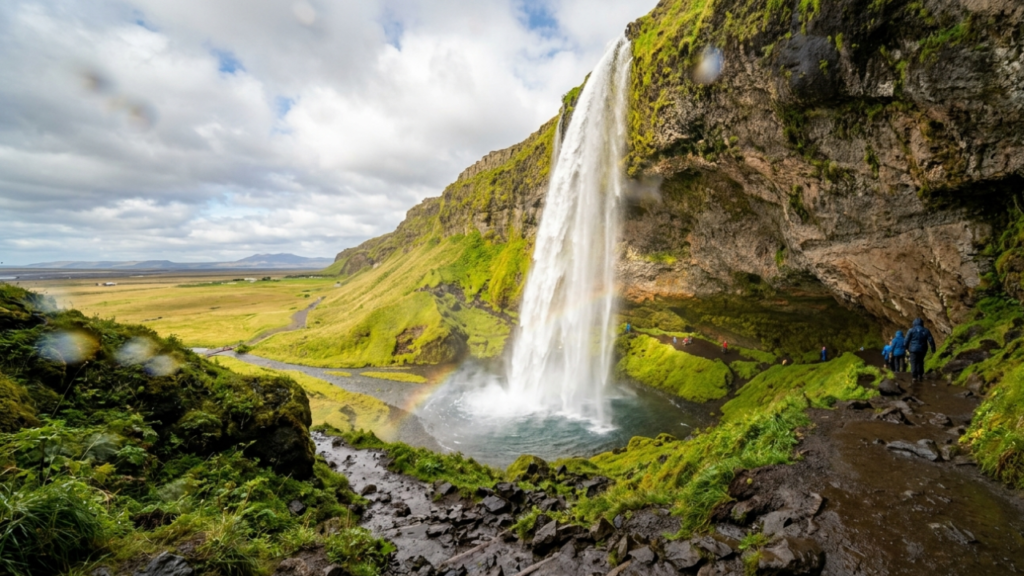
Located along Iceland’s famous south coast, Seljalandsfoss is one of the most unique waterfalls in the world—because you can actually walk behind it. This magical feature makes it a must-visit destination in Iceland.
A. Location & Geography
Seljalandsfoss lies just off Iceland’s Ring Road (Route 1), making it very easy to access.
- Near: Hvolsvöllur
- Part of the Seljalands River
The waterfall drops from cliffs that were once part of Iceland’s ancient coastline—formed when the sea level was much higher.
B. Height & Structure
- Height: ~60 meters (197 feet)
- Water source: Glacial meltwater from the Eyjafjallajökull
The water flows over a concave cliff, creating a natural path behind the falling curtain.
C. Walk Behind the Waterfall
This is what makes Seljalandsfoss truly special:
You can walk a full path behind the waterfall
- Offers a 360° perspective
- Feel the mist and hear the roar from inside
- Perfect for unique photography angles
Be prepared:
- You will get wet
- The path can be slippery—wear proper shoes
D. Unique Features
- Frequent rainbows on sunny days
- Golden-hour lighting creates magical views
- In winter, parts of the waterfall may freeze, creating an icy wonderland
E. Best Time to Visit
Summer (June–August):
- Midnight sun
- Easier and safer to walk behind
Winter (November–March):
- Frozen beauty
- Limited access behind the falls due to ice
Shoulder seasons (Spring/Autumn):
- Fewer crowds
- Balanced conditions
Seljalandsfoss feels like stepping into a fantasy world. Walking behind the waterfall, surrounded by mist and light, creates a moment that’s both peaceful and unforgettable.
6. Kaieteur Falls (Guyana)
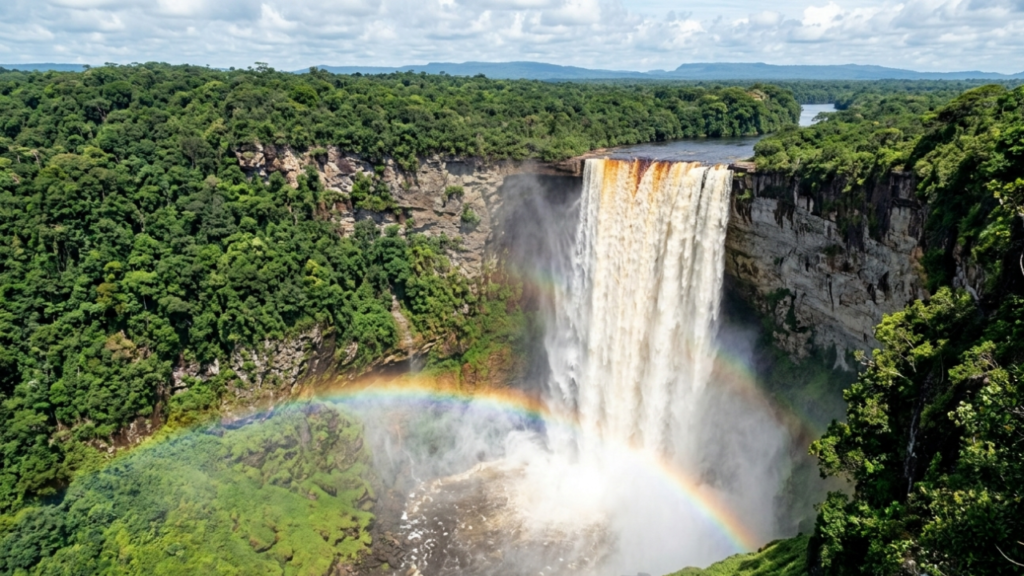
Deep in the untouched rainforests of Guyana lies one of the world’s most powerful yet least-visited waterfalls—Kaieteur Falls. Known for its sheer force, dramatic drop, and isolation, it’s often described as one of the most underrated natural wonders on Earth.
A. Location & Geography
Kaieteur Falls is located in:
- Kaieteur National Park
It sits on the:
- Potaro River
The falls plunge off a sandstone plateau into a deep gorge surrounded by dense Amazon rainforest.
B. Height & Structure
- Total height: 226 meters (741 feet)
- Type: Single-drop waterfall
That makes it:
- About 4× taller than Niagara Falls
- One of the tallest single-drop waterfalls in the world
Unlike multi-tiered falls like Iguazú Falls, Kaieteur is a massive, uninterrupted plunge, giving it a raw and powerful appearance.
C. Water Flow
Kaieteur is famous for its incredible volume:
- Average flow rate: ~663 cubic meters per second
Despite being smaller in width than some waterfalls, the combination of height and volume creates a thunderous, continuous cascade.
D. Best Time to Visit
May to August (Rainy Season):
- Strongest water flow
- Most dramatic views
September to April:
- Lower flow but clearer weather
Kaieteur Falls is not about crowds or convenience—it’s about pure wilderness and raw natural power. Standing near it feels like discovering a secret that the world hasn’t fully caught onto yet.
7. Yosemite Falls (USA)
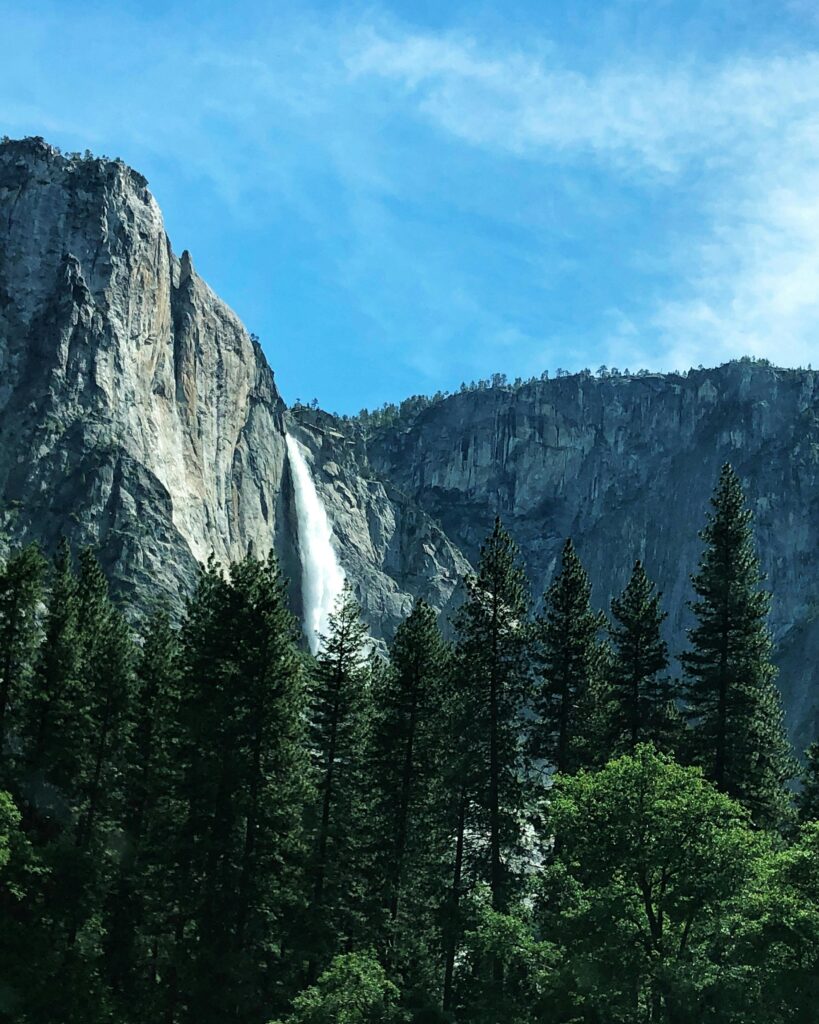
Towering over the iconic Yosemite Valley, Yosemite Falls is one of the most spectacular natural attractions in United States. It’s the tallest waterfall in North America and a centerpiece of the legendary Yosemite National Park.
A. Location & Geography
Yosemite Falls is located in the heart of Yosemite Valley in California’s Sierra Nevada mountains.
- Surrounded by massive granite cliffs
- Fed by snowmelt from the surrounding highlands
- Easily visible from many points across the valley
Its dramatic drop from towering cliffs makes it one of the most recognizable landscapes in the U.S.
B. Seasonal Flow
Unlike many waterfalls, Yosemite Falls is seasonal:
- Peak Flow (May–June):
- Snowmelt creates a powerful cascade
- Most dramatic time to visit
- Summer (July–September):
- Flow decreases significantly
- Sometimes dries up completely
- Winter:
- Portions may freeze, creating icy formations
C. Unique Features
- Wind can blow the falling water sideways, creating a floating waterfall effect
- Mist creates rainbows during sunny days
- Thunderous sound echoes through Yosemite Valley
D. History & Cultural Significance
- Known to Native American tribes for centuries
- Part of Yosemite’s designation as one of the first protected national parks
- Popularized globally by photographer:
- Ansel Adams
His iconic images helped make Yosemite famous worldwide.
E. Best Time to Visit
Late Spring (May–June):
- Best water flow
- Peak beauty
Early Morning / Sunset:
- Soft lighting
- Fewer crowds
Yosemite Falls is a perfect blend of grandeur and accessibility. Whether you’re standing at its base or hiking, it offers a powerful reminder of nature’s scale and beauty.
8. Plitvice Waterfalls (Croatia)
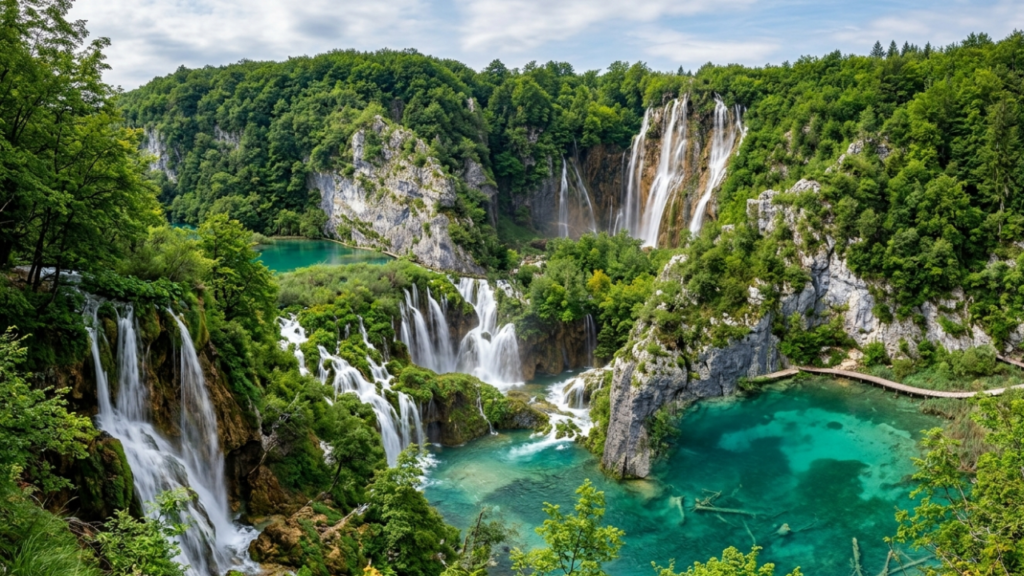
Nestled in the heart of Croatia, Plitvice Lakes National Park is one of the most breathtaking natural wonders in Europe. Known for its cascading waterfalls, crystal-clear lakes, and lush forests, it feels like stepping into a real-life fairy tale.
A. Location & Geography
Plitvice Waterfalls lie in central Croatia, between the capital Zagreb and the coastal city Zadar.
Key Geographic Features:
- The park spans ~300 square kilometers
- Contains 16 interconnected lakes
- Divided into:
- Upper Lakes (Gornja Jezera) – calmer, surrounded by dense forests
- Lower Lakes (Donja Jezera) – dramatic limestone canyon with steep cliffs
- Water flows through a series of over 90 waterfalls
The lakes are formed on travertine barriers—natural limestone dams created by mineral deposits.
B. Seasonal Flow
The beauty of Plitvice changes dramatically with the seasons:
Spring (March–May)
- Highest water flow due to snowmelt
- Waterfalls are at their most powerful
- Lush greenery begins to bloom
Summer (June–August)
- Vibrant turquoise waters
- Lower water levels compared to spring
- Peak tourist season
Autumn (September–November)
- Stunning fall colors (reds, oranges, yellows)
- Moderate water flow
- Fewer crowds
Winter (December–February)
- Frozen waterfalls create a magical landscape
- Snow-covered forests
- Some areas may be closed
C. Unique Features
Plitvice stands out globally due to several extraordinary natural characteristics:
Travertine Formation
- Water continuously deposits calcium carbonate
- Creates natural dams, terraces, and barriers
- These formations are constantly evolving
Crystal-Clear Waters
- Water colors range from emerald green to deep blue
- Color changes depending on:
- Mineral content
- Sunlight angle
- Microorganisms
Biodiversity
- Home to:
- Brown bears
- Wolves
- Lynx
- Rich plant life and ancient forests
Wooden Walkways
- Iconic floating boardwalks allow visitors to walk directly over the lakes and waterfalls
D. History & Cultural Significance
- Established as a national park in 1949
- Declared a UNESCO World Heritage Site in 1979
- Historically known as the Devil’s Garden (Hortus Diaboli) due to its wild terrain
Historical Events:
- Site of the Plitvice Lakes incident, marking the beginning of the Croatian War of Independence
Cultural Impact:
- Inspired filmmakers and nature lovers worldwide
- Considered a symbol of Croatia’s natural beauty
E. Best Time to Visit
Best Overall Time:
May to June & September to October
- Perfect balance of:
- Good weather
- Strong waterfalls
- Fewer tourists
Depending on Your Preference:
- For powerful waterfalls: Visit in spring
- For photography & colors: Visit in autumn
- For snow scenery: Visit in winter
- For swimming vibes (not allowed in lakes but nearby areas): Visit in summer
Plitvice Waterfalls are not just a single waterfall—they are a living, evolving ecosystem of lakes and cascades. What makes them truly unique is the combination of geology, water movement, and biodiversity, creating a landscape that feels almost unreal.
9. Ban Gioc–Detian Falls (Vietnam & China)
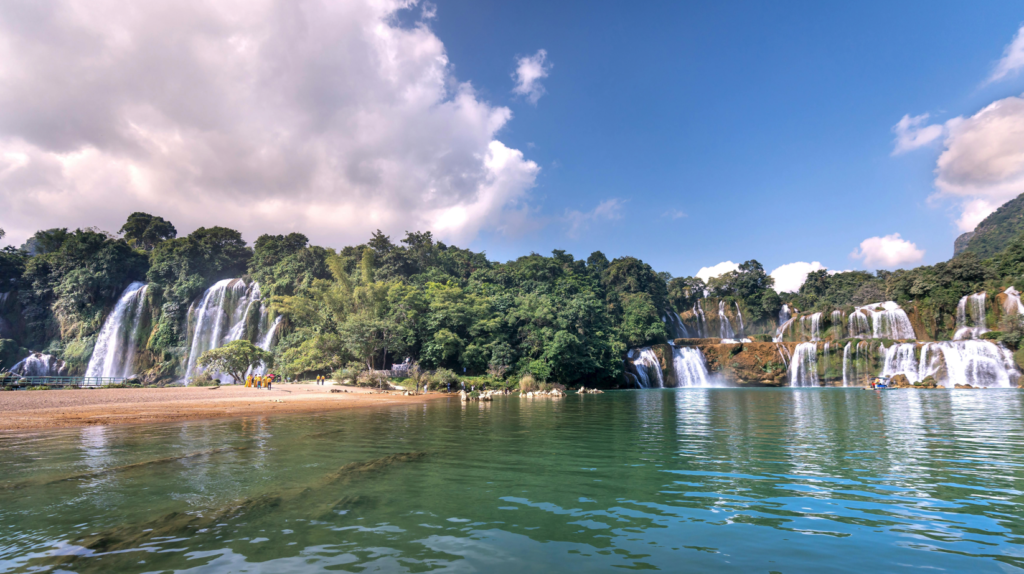
The majestic Ban Gioc–Detian Falls is one of Asia’s most breathtaking natural wonders. Straddling the border between Vietnam and China, it is the largest transnational waterfall in Asia and among the most beautiful in the world. Unlike single-drop waterfalls, Ban Gioc–Detian is a multi-tiered cascade, surrounded by lush mountains, rice fields, and karst formations—creating a scene straight out of a dream.
A. Location & Geography
Ban Gioc–Detian Falls lies on the Quây Sơn River, forming a natural border between:
- Cao Bằng Province (Vietnam side)
- Guangxi Region (China side)
Geographic Highlights:
- Located ~350 km from Hanoi
- Surrounded by dramatic limestone karst mountains
- Falls span over 200 meters wide
- Drop height: approx. 30 meters
The waterfall is divided into:
- Ban Gioc Falls (Vietnam side)
- Detian Falls (China side)
Together, they form a spectacular cross-border natural system.
B. Seasonal Flow
The beauty and intensity of Ban Gioc–Detian Falls change throughout the year:
Rainy Season (June–September)
- Most powerful flow
- Water turns slightly muddy due to heavy rains
- Dramatic and thunderous waterfalls
Post-Rain Season (October–November) Best Time
- Clear blue-green water
- Strong but stable flow
- Ideal for photography
Dry Season (December–May)
- Lower water levels
- More visible rock formations
- Peaceful and less crowded
C. Unique Features
Ban Gioc–Detian Falls stands out globally for several reasons:
Transnational Waterfall
- One of the few waterfalls in the world shared by two countries
- Often compared to Iguazú Falls
Karst Landscape
- Surrounded by towering limestone mountains
- Creates a surreal, cinematic backdrop
Bamboo Raft Experience
- Visitors can ride rafts close to the falls
- Feel the mist and hear the roar up close
Rural Beauty
- Nearby villages, rice paddies, and traditional lifestyles
- Offers a peaceful contrast to tourist-heavy destinations
D. History & Cultural Significance
- The waterfall has long been a natural boundary marker between Vietnam and China
- The surrounding region has seen historical border tensions but is now peaceful
Cultural Importance:
- Important for local ethnic communities like the Tay and Nung people
- Symbolizes natural harmony between nations
Cultural Appeal:
- Frequently featured in travel documentaries
- Known as one of Southeast Asia’s hidden gems
E. Best Time to Visit
Ideal Months:
September to November (Highly Recommended)
- Perfect water clarity
- Comfortable weather
- Fewer crowds
Travel Tips:
- Visit early morning for fewer tourists
- Combine with nearby attractions like:
- Nguom Ngao Cave
- Bring cash (limited ATMs nearby)
Ban Gioc–Detian Falls is not just a waterfall—it’s a rare blend of geography, culture, and natural beauty. Its peaceful setting, combined with dramatic scenery, makes it a must-visit destination for travelers seeking something unique and less commercial.
10. Jog Falls (India)
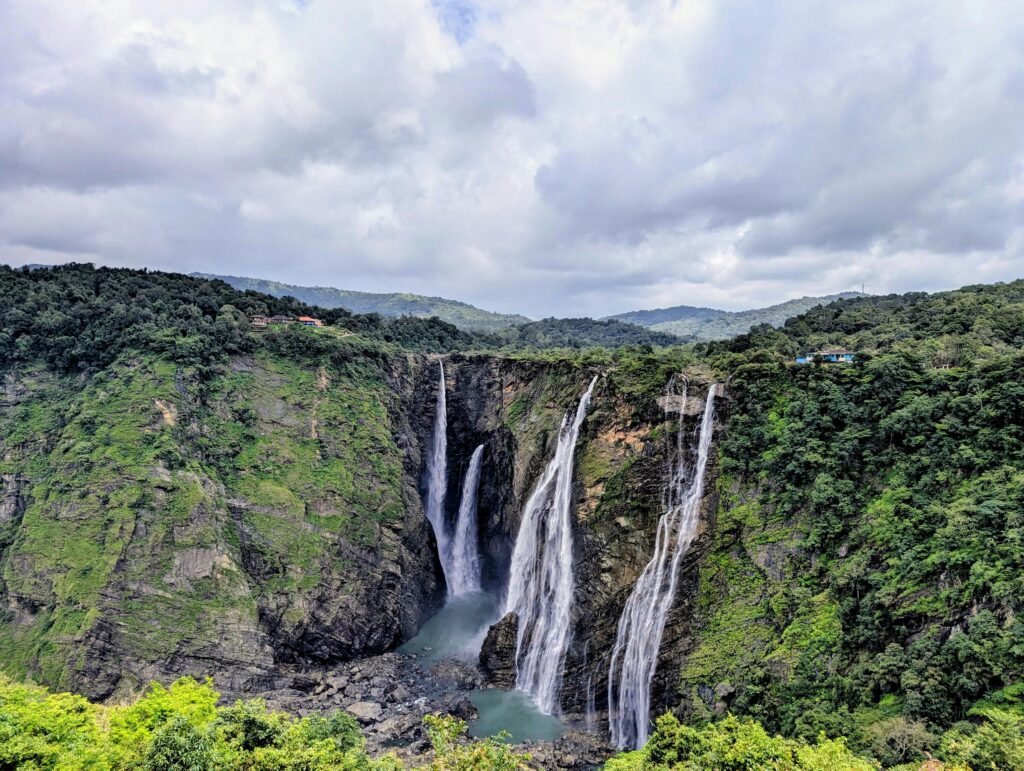
The magnificent Jog Falls is one of the highest waterfalls in India and a true monsoon spectacle. Located in the lush Western Ghats, this waterfall is famous for its four distinct cascades plunging dramatically from great heights. Unlike many tiered waterfalls, Jog Falls transforms into a single powerful plunge during peak monsoon, making it one of the most awe-inspiring natural sights in India.
A. Location & Geography
Jog Falls is situated in the state of Karnataka, near the town of Sagara.
Geographic Highlights:
- Formed by the Sharavathi River
- Located in the Western Ghats (a UNESCO biodiversity hotspot)
- Height: approx. 253 meters (830 feet)
- Surrounded by dense forests and hills
Four Main Cascades:
Jog Falls is uniquely divided into four streams:
- Raja – the main, unbroken drop
- Rani – a graceful, winding cascade
- Roarer – loud and forceful
- Rocket – fast and narrow
These streams merge during heavy rainfall, creating a massive, thunderous waterfall.
B. Seasonal Flow
Jog Falls is completely dependent on monsoon rains, which dramatically change its appearance.
Monsoon (June–September) Best Time
- Full power and volume
- Waterfalls appear as a single massive cascade
- Mist, roar, and dramatic views
Post-Monsoon (October–January)
- Good water flow
- Clear skies for photography
- Balanced experience
Summer (February–May)
- Very low water flow
- Sometimes reduced to thin streams
- Less impressive visually
C. Unique Features
Jog Falls stands out among India’s waterfalls for several reasons:
One of India’s Tallest Waterfalls
- Second highest plunge waterfall in India
- Creates a free-falling water curtain
Monsoon Transformation
- Changes from four separate streams → one giant waterfall
Western Ghats Setting
- Surrounded by lush greenery and biodiversity
- A paradise for nature lovers
Viewpoints & Steps
- Visitors can:
- View from scenic viewpoints
- Trek down ~1,400 steps to the base
D. History & Cultural Significance
- Historically known as “Gersoppa Falls”
- Associated with the nearby ancient region of Gersoppa
Hydroelectric Importance:
- Nearby Sharavathi Hydroelectric Project harnesses water from the river
- One of India’s earliest hydroelectric stations
Cultural Presence:
- Featured in Indian travel documentaries and films
- A popular tourist attraction in South India
E. Best Time to Visit
Ideal Months:
July to September (Peak Monsoon) 🌧️
- Best for witnessing the waterfall in its full glory
Alternative Option:
October to December
- Pleasant weather
- Less crowd
- Good photography conditions
Jog Falls is not just a waterfall—it’s a seasonal wonder that showcases the raw power of nature during India’s monsoon. Its dramatic height, roaring sound, and misty surroundings create an unforgettable experience.
Final Thoughts:
The most beautiful waterfalls in the world are not just about height or power—they are about the experience, surroundings, and emotions they create. From the thunder of Victoria Falls to the serenity of Plitvice Lakes, each waterfall offers something unique. Whether you’re a traveler, photographer, or nature lover, these destinations promise unforgettable memories.