Europe is home to some of the world’s most famous food traditions. From handmade pasta in Italy and flaky pastries in France to hearty stews in Central Europe and fresh seafood around the Mediterranean, European cuisine is shaped by centuries of history, local ingredients, and different cultures coming together.
Every country has its own unique dishes, cooking styles, and food traditions. Even within the same country, food can vary a lot from one region to another.
In this ultimate guide, we’ll explore 25 traditional foods of Europe, featuring popular and authentic dishes from Southern, Western, Northern, Central, and Eastern Europe.
If you enjoyed exploring food traditions from around the world, you can also check out our guide, “Ultimate Guide to Traditional Foods of Asia,” for more delicious dishes, interesting food traditions, and the stories behind them.
1. Bacalhau
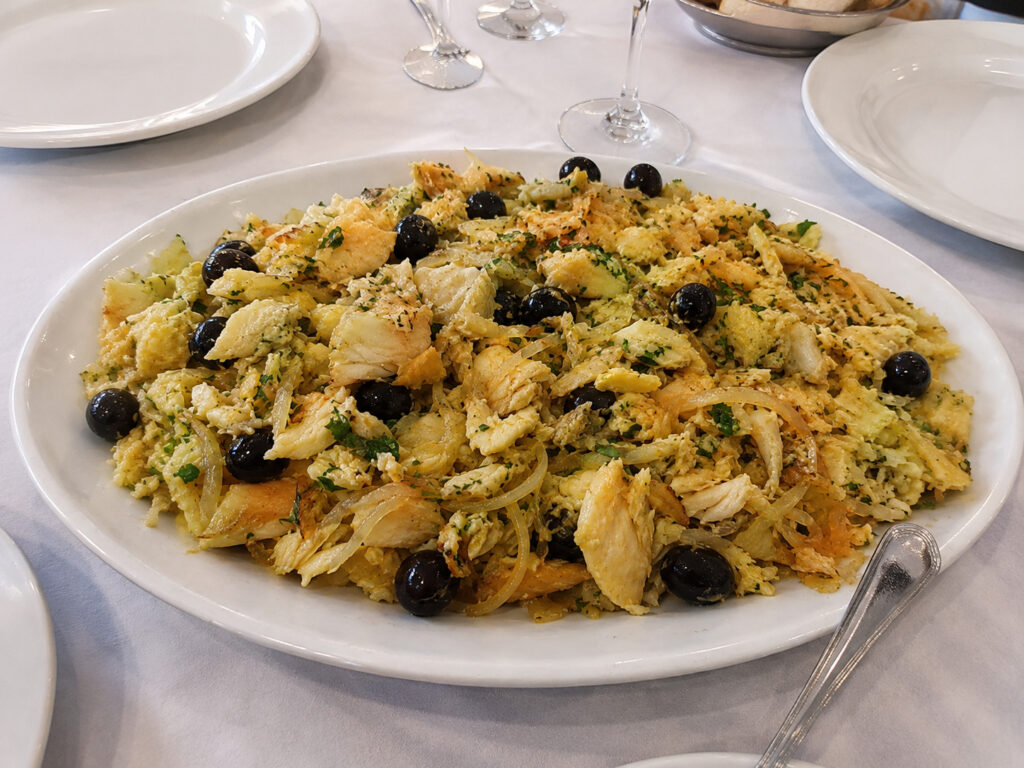
Bacalhau is the Portuguese word for salted and dried cod, and it is one of the most famous ingredients in Portuguese cuisine. Although cod is not native to Portugal’s waters, Portuguese cooks built a huge culinary tradition around preserved cod, creating hundreds of different recipes over the centuries.
There’s a popular Portuguese saying: “There are 365 ways to cook bacalhau — one for every day of the year.” It’s not meant to be an exact count, but it shows just how important bacalhau is to Portuguese food culture.
History of Bacalhau in Portugal
Portugal’s connection with salted cod goes back centuries. During the 15th and 16th centuries, Portuguese sailors became involved in the North Atlantic fishing trade, where cod was abundant. Preserving the fish with salt was especially useful because long sea voyages could last for months. Salted cod lasted a long time, was easy to transport, provided a good source of protein, didn’t need refrigeration, and could be prepared in many different ways.
Over time, bacalhau became much more than a preserved food. It became an important part of Portuguese cuisine, traditions, and cultural identity, and today it remains a staple on Portuguese tables.
2. Moussaka
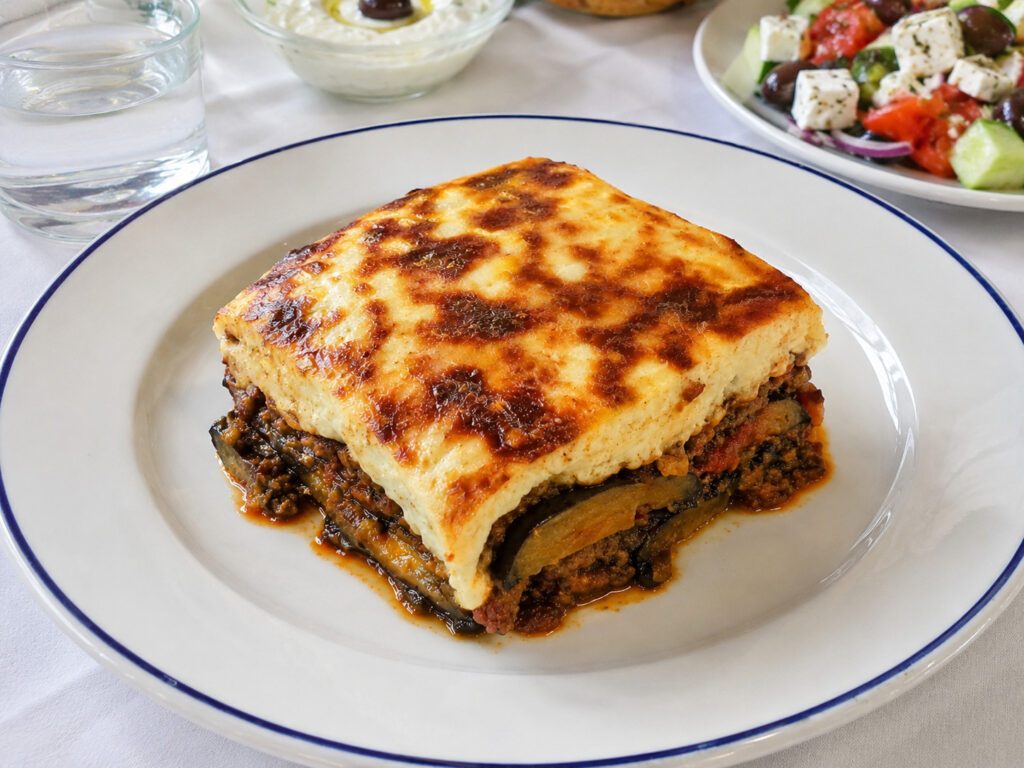
Moussaka is one of the most famous dishes in Greek cuisine. It is a rich, layered baked dish traditionally made with eggplant (aubergine), minced meat, a tomato-based sauce, and creamy béchamel sauce.
Golden and bubbling on top, with soft layers underneath, Greek moussaka is the kind of comforting dish that feels like home cooking. It brings together simple ingredients and classic Mediterranean flavors in one hearty meal.
Although different versions of moussaka are found across the Eastern Mediterranean and Middle East, the Greek version topped with béchamel sauce is probably the best known around the world.
History of Moussaka
The exact origins of moussaka are difficult to trace. It belongs to a wider family of eggplant-and-meat dishes that have been enjoyed across the Eastern Mediterranean and Middle East for centuries.
The modern Greek version is closely associated with Nikolaos Tselementes, one of Greece’s most influential chefs and cookbook writers of the early 20th century. He helped popularize a version made with French-style béchamel sauce, which gave Greek moussaka the creamy, golden top layer that many people recognize today.
As a result, modern Greek moussaka reflects a mix of Mediterranean ingredients, Eastern Mediterranean and Ottoman culinary traditions, and European, particularly French, influence.
3. Paella
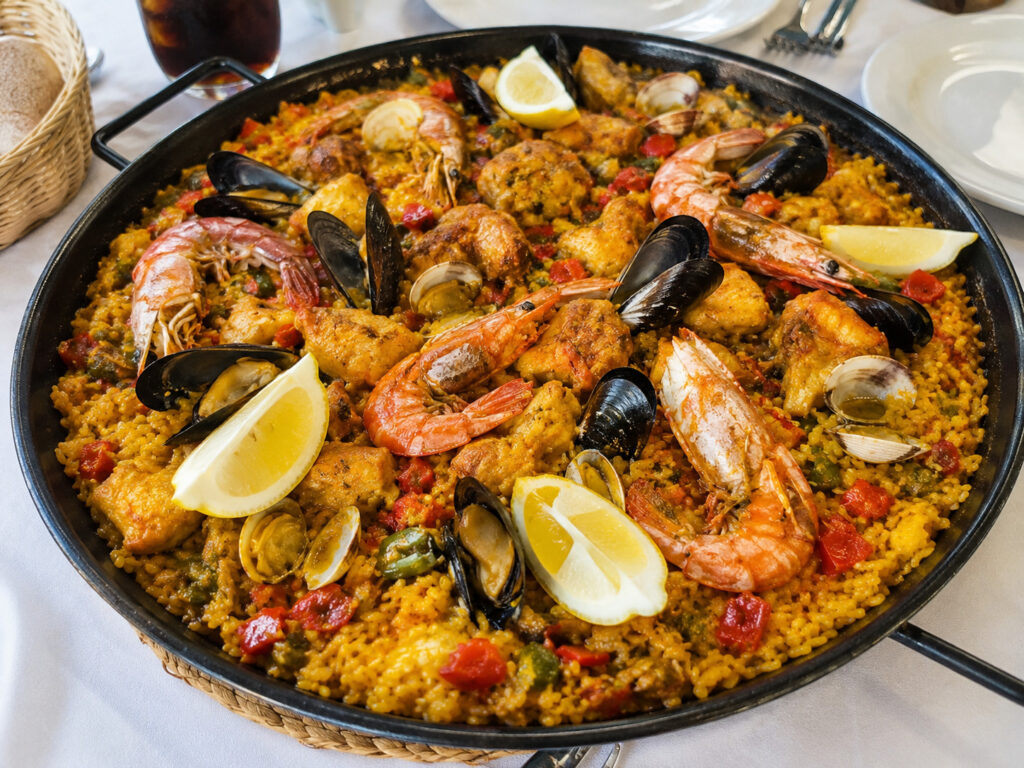
Paella is one of Spain’s most famous dishes and one of the world’s best-known rice dishes. While it is often simply called a “Spanish dish,” its roots are more specifically linked to Valencia, on Spain’s eastern Mediterranean coast.
Traditional Paella Valenciana developed around the l’Albufera wetlands near Valencia, an area known for rice farming. It started as a practical meal prepared by farmers and agricultural workers using rice, local vegetables, and whatever meat or other ingredients were available. Over time, it became much more than a simple working meal and grew into an important part of Valencian food culture.
Today, paella is both a beloved dish in Spain and a major symbol of Valencian identity and Spanish cuisine.
Where Did Paella Originate?
The birthplace of paella is generally associated with l’Albufera, a large freshwater lagoon and wetland just south of Valencia. The area was ideal for growing rice, which naturally became one of the main ingredients in local cooking.
According to Spain’s Ministry of Culture, paella originated in the Albufera area, where farmers and agricultural workers prepared filling meals using rice and other locally available ingredients.
The history is a little more complicated, though. While the origins of paella are generally traced back to around the 16th century, the earliest known written references to dishes identified as paella or “arroz a la valenciana” appear in the 18th century.
4. Pasta
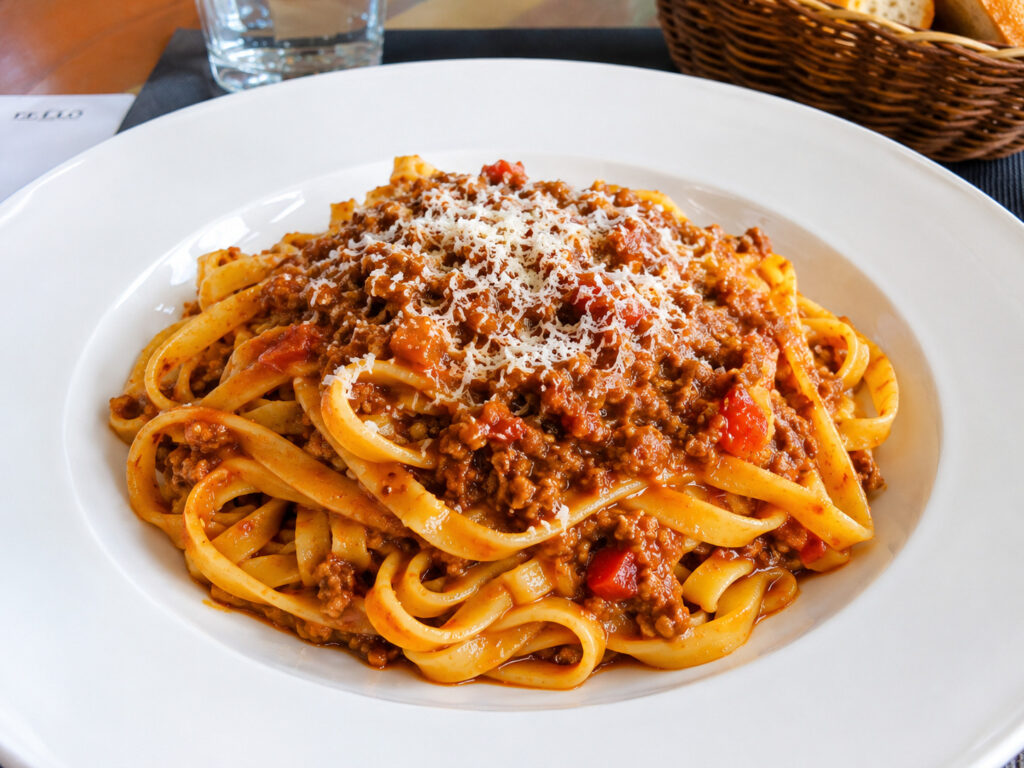
Pasta is one of the defining foods of Italian cuisine and one of the most popular foods in the world. From simple spaghetti with tomato sauce to stuffed varieties like tortellini and ravioli, Italy has created an incredible range of pasta shapes, sauces, cooking methods, and regional traditions.
Although pasta is now enjoyed all over the world, Italian pasta is deeply regional. Different parts of Italy have their own favorite pasta shapes, ingredients, sauces, and ways of preparing the dish.
The History of Pasta
The history of pasta is more complicated than the popular story that Marco Polo brought pasta from China to Italy. This story is generally considered a myth or, at the very least, a major oversimplification.
Different cultures in the ancient Mediterranean and Middle East made foods from grains and shaped dough in various ways. Italy’s unique pasta tradition developed over many centuries through a mix of local wheat farming, Mediterranean cooking traditions, Arab influence in Sicily, regional Italian cuisine, and the growth of commercial dried-pasta production.
By the Middle Ages, pasta-like foods were already well established in parts of Italy. Over time, each region developed its own shapes, recipes, and traditions, helping turn pasta into one of the most important symbols of Italian cuisine.
5. Pizza Napoletana
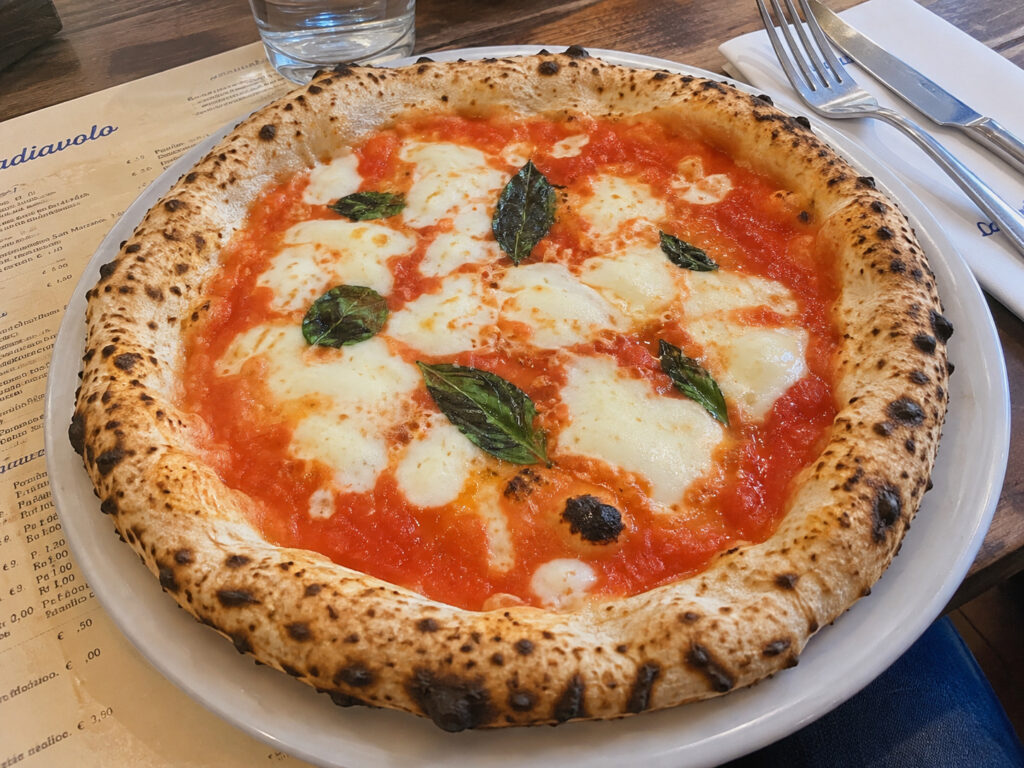
Pizza Napoletana, or Neapolitan pizza, is one of Italy’s most famous culinary traditions and the historic style of pizza associated with Naples (Napoli), in the Campania region.
It is known for its thin, soft center, puffy charred crust, simple ingredients, and extremely hot wood-fired baking. Unlike many modern pizzas, authentic Neapolitan pizza is meant to be soft and flexible rather than thick and crispy.
Its cultural importance is so great that the “Art of Neapolitan Pizzaiuolo” was added to UNESCO’s Representative List of the Intangible Cultural Heritage of Humanity in 2017.
Where Did Neapolitan Pizza Originate?
The story of pizza goes back much further than modern Neapolitan pizza. Ancient Mediterranean cultures enjoyed different types of flatbread topped with various ingredients.
However, the modern pizza tradition developed in Naples, especially after tomatoes became an important part of European cuisine. Tomatoes originated in the Americas and reached Europe after the Columbian Exchange.
At first, tomatoes were viewed with suspicion in some parts of Europe, but they eventually became a key ingredient in southern Italian cooking. In Naples, tomatoes, bread dough, olive oil, and cheese came together to form the foundation of the pizza we know today.
6. Croissant

Croissant is one of the most recognizable symbols of French cuisine. With its crescent shape, golden-brown exterior, delicate flaky layers, and rich buttery aroma, it has become a worldwide symbol of French breakfast culture.
But there’s an interesting twist to its history: the modern croissant is French, but its roots are closely connected to Austria.
Why Is the Croissant Associated With France?
Although croissants are now closely associated with French food culture, their history is a little more complicated. The croissant belongs to a wider family of crescent-shaped pastries from Central Europe, and its development in France is strongly linked to Viennese pastry traditions that arrived in Paris during the 19th century.
French bakers later adapted and refined the pastry, developing the laminated, buttery, flaky croissant that we know today. So, in simple terms, its story can be described as Austrian roots → French development → global icon.
7. Fish and Chips
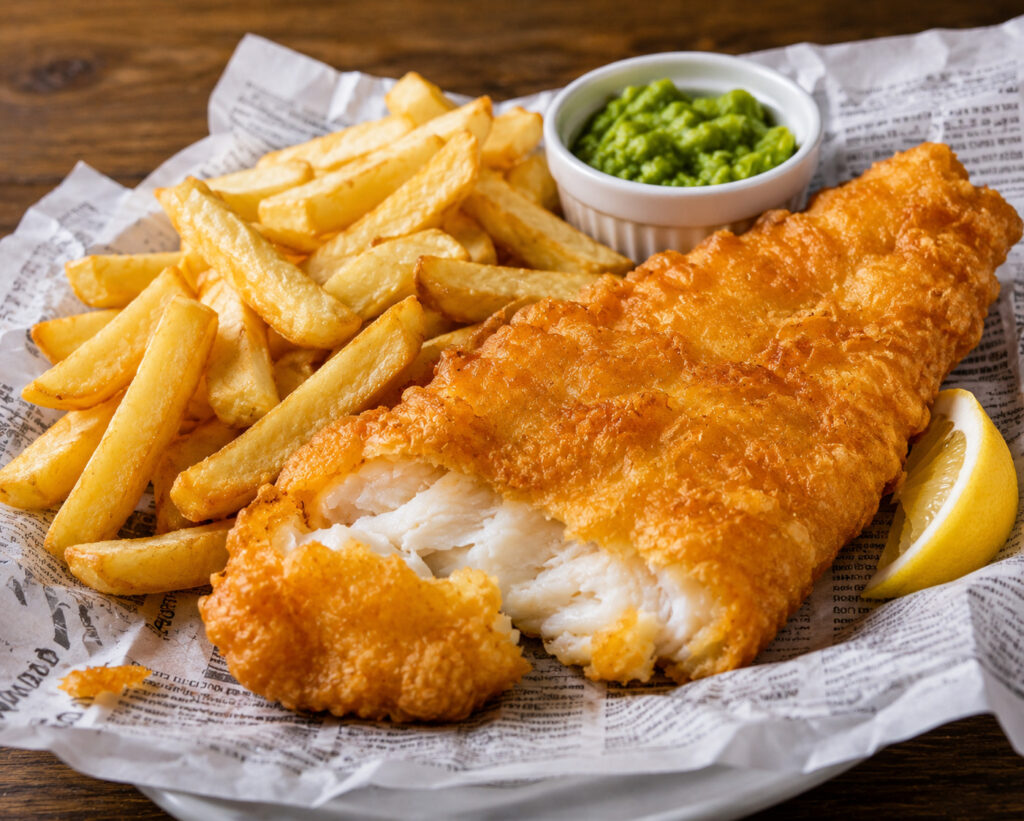
Fish and chips is one of the most famous dishes of the United Kingdom and a classic symbol of British food culture. It combines deep-fried battered fish with thick-cut fried potatoes, usually served with salt and malt vinegar.
Although it looks like a simple meal, fish and chips has a fascinating history tied to Britain’s fishing industry, industrialization, railway expansion, working-class communities, and seaside culture.
Today, it remains a much-loved British comfort food and can be found everywhere from traditional “chippies” to modern restaurants.
History of Fish and Chips
The history of fish and chips actually brings together two separate food traditions: fried fish and fried potatoes.
Fried fish was already popular in Britain before the modern fish-and-chips shop appeared. Jewish immigrants from Portugal and Spain who settled in England brought traditions of frying fish, including methods that made it possible to prepare the fish ahead of time and eat it later.
At the same time, fried potatoes were becoming increasingly popular in Britain and other parts of Europe. Eventually, the two foods were brought together to create the classic combination we know today.
By the 19th century, fish and chips had developed into a recognizable and affordable meal, especially popular among Britain’s working-class communities. As the fishing and railway industries expanded, the dish became even more widely available across the country.
8. Brussels Waffles

Belgian waffles, or gaufres, are among Belgium’s most famous culinary specialties. But there’s one important thing to know: there isn’t just one traditional Belgian waffle.
The two most famous varieties are the Brussels waffle (Gaufre de Bruxelles), which is large, rectangular, light, and crisp, and the Liège waffle (Gaufre de Liège), which is smaller, denser, chewy, and caramelized with pearl sugar. They may look similar, but they are made with different types of dough and have very different textures and flavors.
The Story of Brussels Waffles
Waffles have a long history in Belgium, with early traces of Brussels-style waffles dating back to at least the 16th century. References to waffles can even be seen in artworks associated with Pieter Bruegel, while written references to the specific Brussels waffle appeared later, including in the 1830s.
Interestingly, the history of the Brussels waffle is a little more complicated than its name suggests. According to Visit Brussels, an early version of what later became known as the Brussels waffle was made in Ghent during the 19th century by Brussels pastry chef Florian Dacher. The name “Brussels waffle” became established later, helping turn it into one of Belgium’s best-known foods.
9. Irish Stew
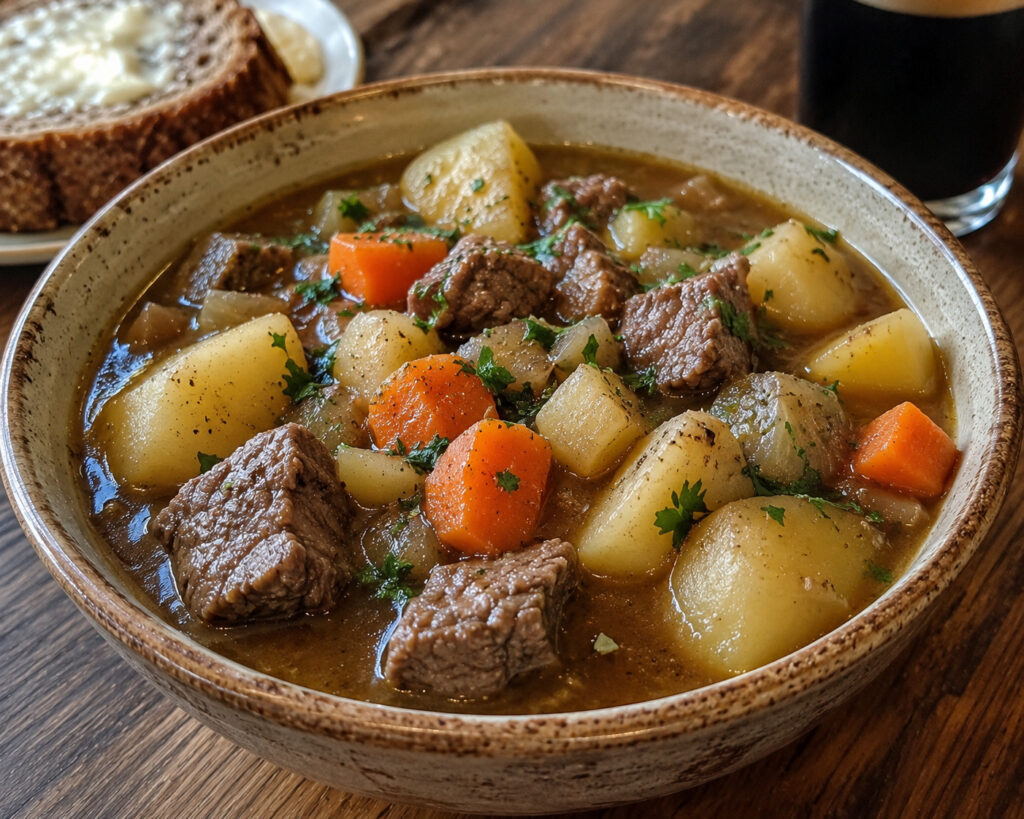
Irish stew is one of Ireland’s most traditional and recognizable dishes. It is a hearty, slow-cooked dish built around meat, potatoes, onions, and simple vegetables, reflecting Ireland’s agricultural traditions and the importance of affordable, filling food in rural communities.
Traditionally associated with mutton or lamb, Irish stew has evolved over time, and modern versions commonly use lamb or beef.
Unlike heavily spiced stews from other cuisines, traditional Irish stew is deliberately simple. Its character comes from good ingredients, slow cooking, and the natural flavors of the meat and vegetables.
History of Irish Stew
The exact origin of Irish stew is difficult to pinpoint because people have been combining meat and vegetables in pots for thousands of years. The distinctive Irish version developed around ingredients that were readily available in Ireland.
Historically, mutton was particularly important.
Mutton is meat from an older sheep, and it has a stronger, richer flavor than young lamb.
Older Irish recipes often emphasized mutton + potatoes + onions, rather than the elaborate ingredient lists found in some modern recipes.
10. Stamppot
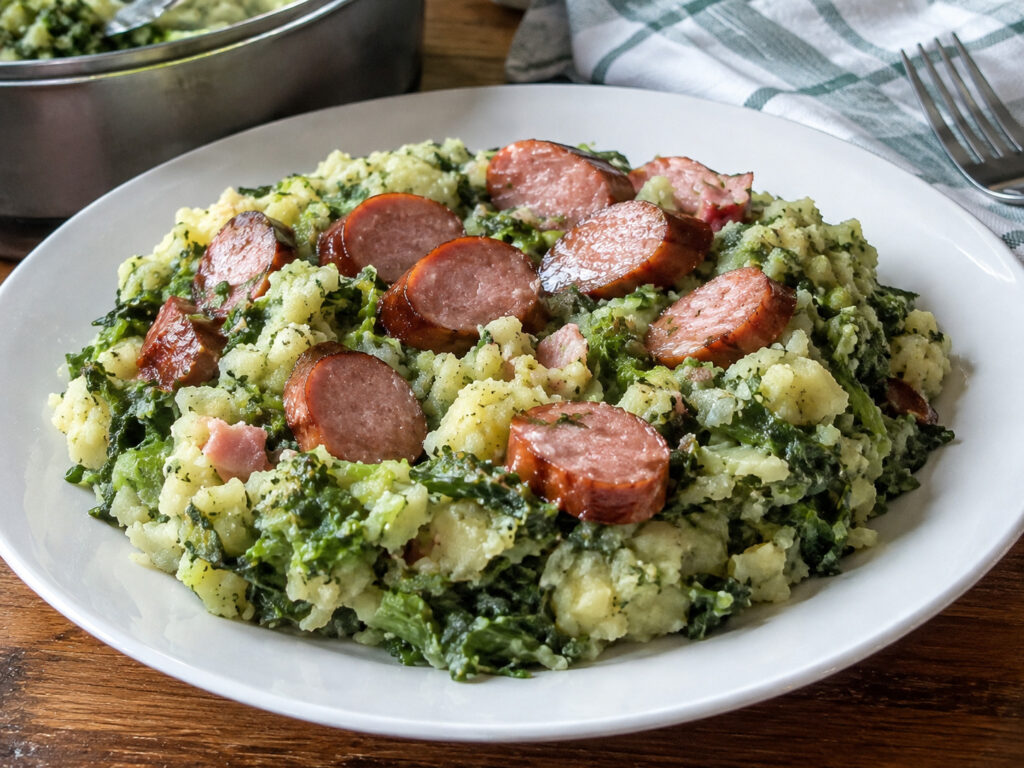
Stamppot is one of the most traditional and comforting dishes of the Netherlands. The name literally means “mashed pot” or “mashed dish,” referring to the simple way it is prepared: potatoes are mashed together with vegetables and often served with smoked sausage (rookworst), meat, gravy, or a simple sauce.
Rather than being a single recipe, stamppot is really a family of Dutch mashed-potato dishes with many seasonal and regional variations. One of the most popular versions is boerenkoolstamppot, made with kale and potatoes and traditionally served with rookworst.
History of Stamppot
The exact origins of stamppot are difficult to pin down because mashing vegetables and potatoes together is a simple cooking method rather than one specific invention.
The dish developed as the potato became an important part of Dutch cuisine. Potatoes became widely established in the Netherlands from the 18th century onward and eventually became one of the country’s most important staple foods.
As potatoes became a regular part of everyday meals, people began combining them with different vegetables and ingredients, leading to the many versions of stamppot enjoyed across the Netherlands today.
11. Goulash
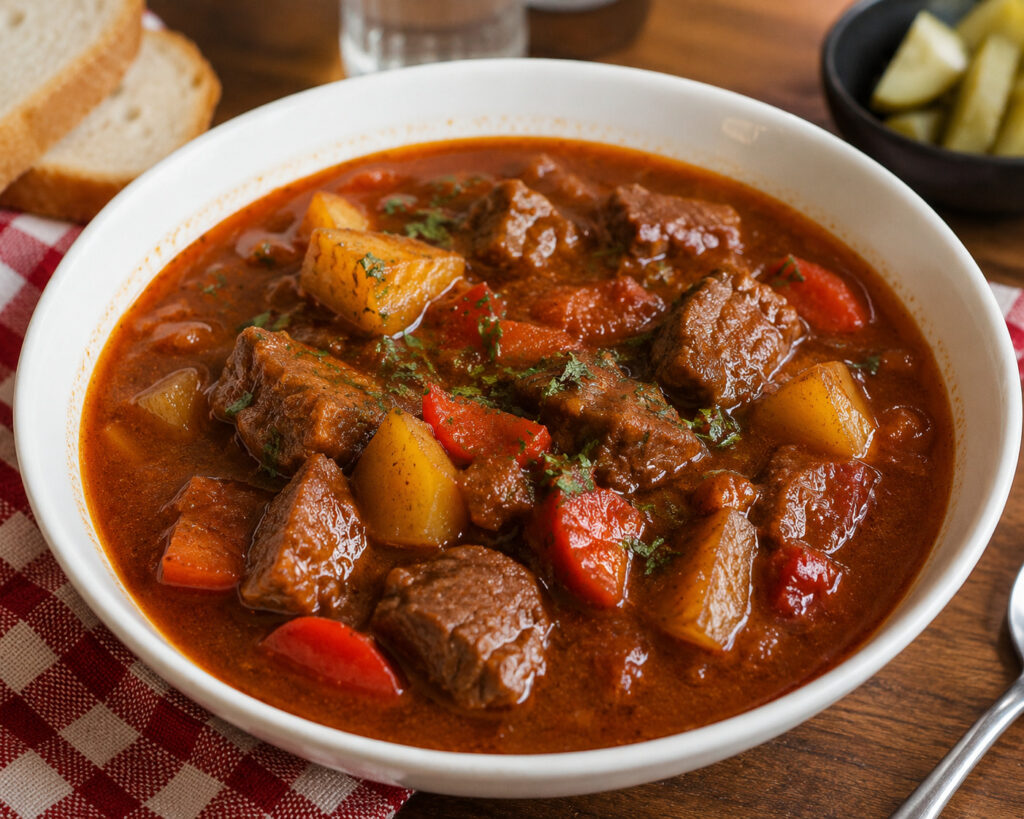
Goulash, known as gulyás in Hungarian, is one of Hungary’s most famous traditional dishes and an important part of Hungarian cuisine and culture.
Unlike the thick meat stew that is often called “goulash” outside Hungary, traditional Hungarian gulyás is actually a hearty soup made with beef, onions, paprika, potatoes, and other vegetables.
Its rich red color and distinctive flavor mainly come from Hungarian paprika, while slow cooking gives the meat a deep and savory taste.
The History of Goulash
The history of goulash is closely connected with the Hungarian Great Plain, known as the Puszta.
The Hungarian word gulyás originally referred to a cattle herder. These herders often spent long periods away from home while looking after large herds of cattle, so they needed food that was simple, filling, easy to prepare, and suitable for cooking outdoors.
This led to the tradition of cooking meat, onions, and other ingredients over an open fire in a large kettle. Over time, this simple outdoor meal developed into the beloved gulyás that is now considered one of Hungary’s most iconic traditional dishes.
12. Wiener Schnitzel
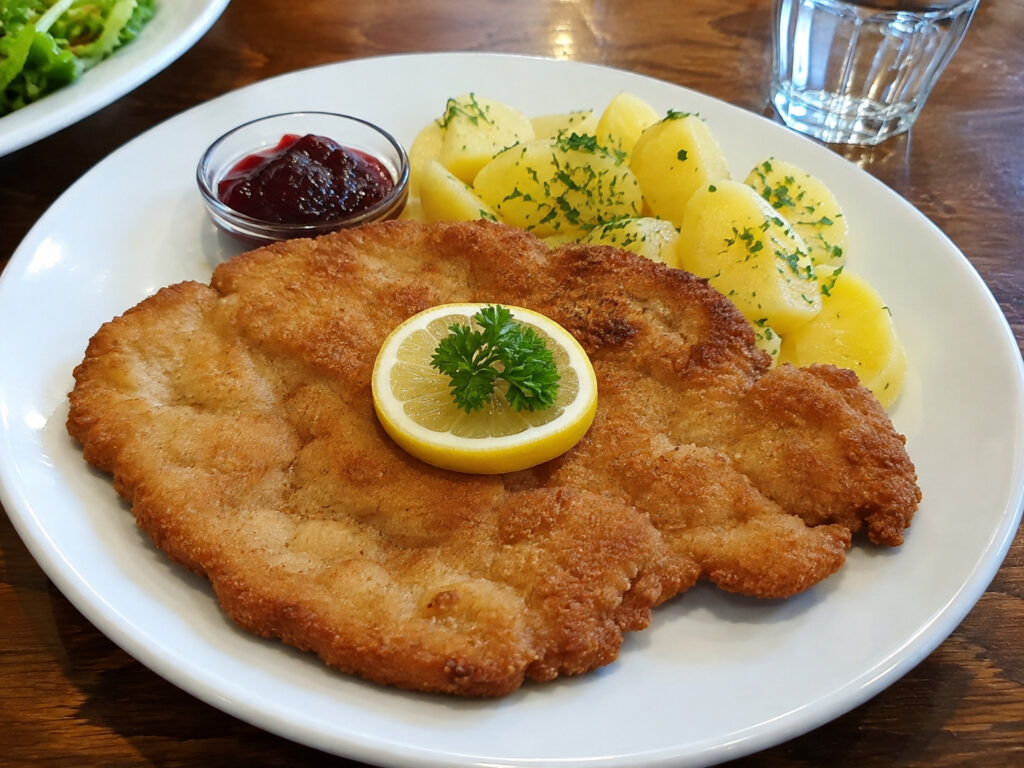
Wiener Schnitzel is Austria’s most famous traditional dish and one of the world’s best-known breaded meat dishes. Originating in Vienna (Wien), it consists of a thin slice of veal coated in flour, egg, and breadcrumbs, then fried until golden and crisp.
The name literally means “Viennese schnitzel.” Although the dish looks simple, making a good Wiener Schnitzel takes some care. The veal should be thin and evenly pounded, while the breadcrumb coating should turn light, crisp, golden, and slightly puffed when fried, leaving the meat tender inside.
History of Wiener Schnitzel
The exact history of Wiener Schnitzel is still debated. The dish became firmly established as a Viennese specialty during the 19th century, although breading and frying meat was already common in several European cuisines.
One popular story claims that Field Marshal Joseph Radetzky brought a similar breaded meat dish from Italy to Vienna, which then inspired Wiener Schnitzel. However, historians have found little solid evidence to support this story, so it is better viewed as a popular legend rather than a proven origin.
What is clear is that Wiener Schnitzel became an important part of Viennese cuisine and eventually grew into one of Austria’s best-known culinary symbols.
13. Bratwurst
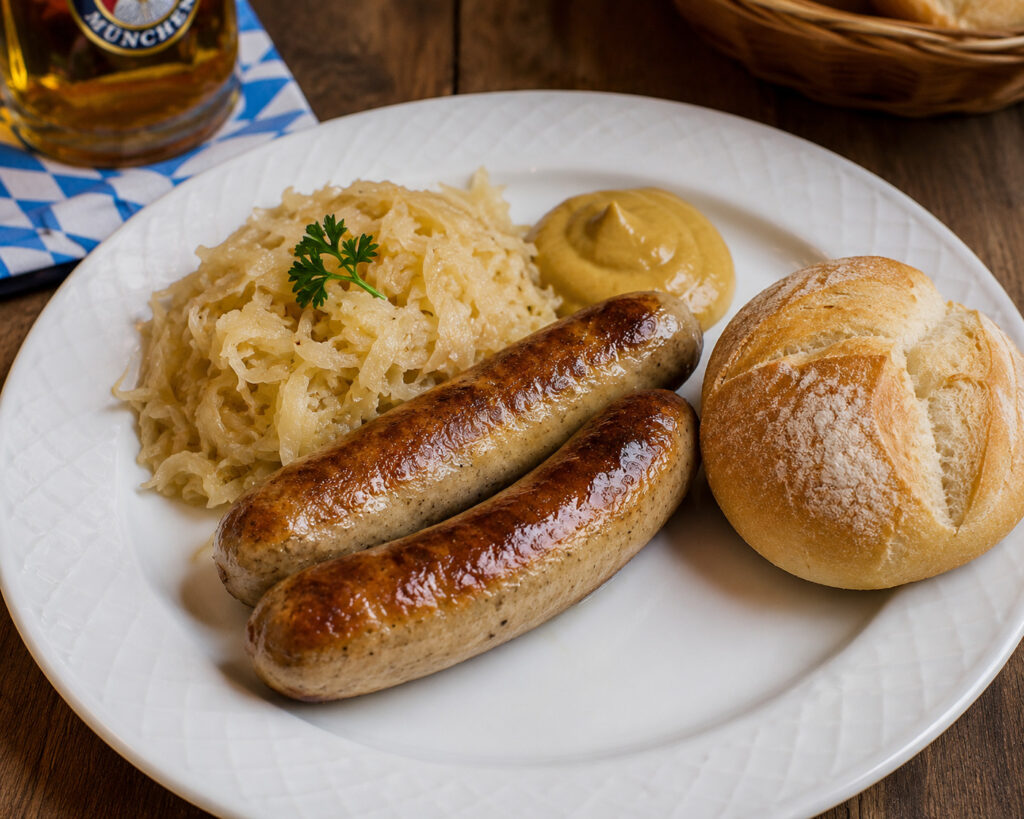
Bratwurst is one of Germany’s most famous traditional foods and one of the country’s best-known sausages. The name refers to a large family of German sausages, rather than just one recipe.
Depending on the region, Bratwurst can be made from pork, beef, veal, or a combination of meats, with recipes varying in size, seasoning, texture, and cooking methods. Some of the best-known varieties include Thüringer Rostbratwurst, Nürnberger Rostbratwurst, Fränkische Bratwurst, and Rote Wurst.
History of Bratwurst
Germany has a long and rich sausage-making tradition, with different regions developing their own recipes based on local livestock, available spices, preservation methods, and regional cooking traditions.
Bratwurst developed as part of this wider German sausage culture. One of the earliest known written references to a sausage called Bratwurst dates back to Nuremberg in 1313, showing just how old this tradition is.
Over the centuries, different parts of Germany created their own versions, turning Bratwurst into a much-loved part of German food culture. Today, it is commonly enjoyed grilled, fried, or cooked over an open flame, often served with mustard, bread, or traditional side dishes.
14. Fondue
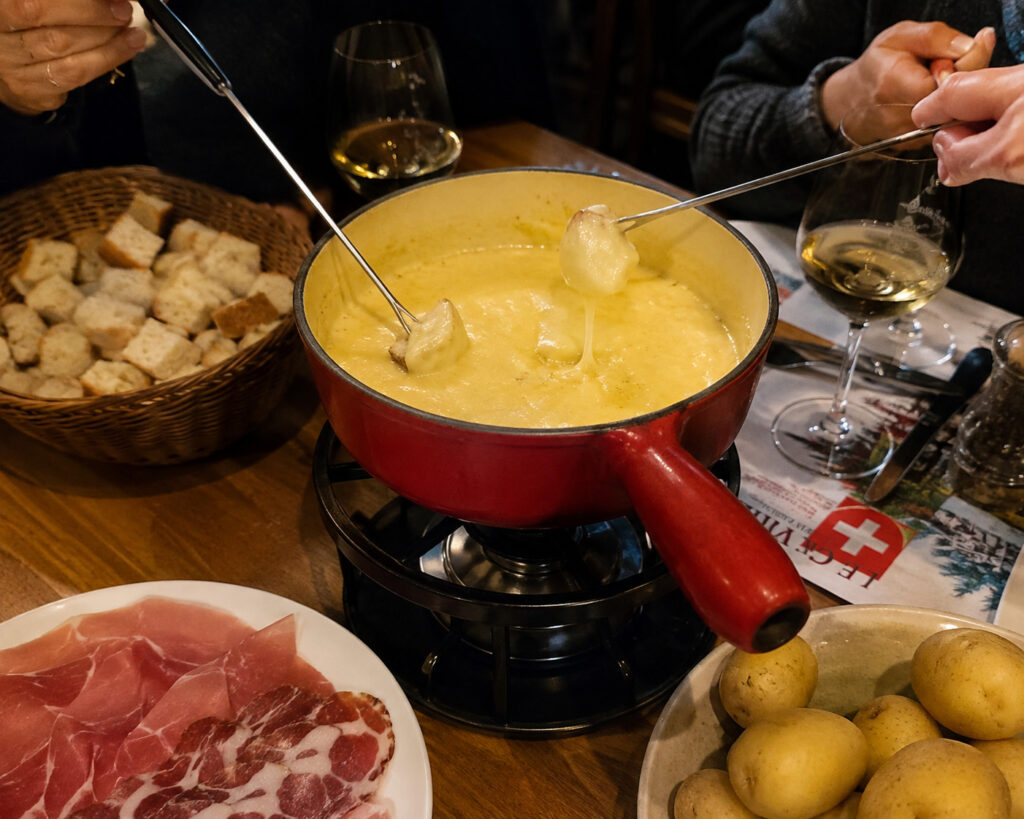
Swiss fondue is one of Switzerland’s most famous traditional foods. It is a communal dish in which melted cheese is kept warm in a special pot called a caquelon, then enjoyed by dipping pieces of bread into the hot, creamy cheese with long forks.
The classic Swiss version is usually made with cheeses such as Gruyère and Vacherin Fribourgeois or Emmental, along with white wine, a little kirsch, garlic, and seasoning.
Fondue is more than just a dish—it reflects Swiss Alpine food traditions, communal dining, and the country’s long cheese-making tradition.
History of Swiss Fondue
The exact origins of cheese fondue are difficult to pin down. The basic idea of melting cheese and eating it with bread is so old that it cannot be credited to a single person or place.
The dish developed in Swiss-speaking regions where cheese was widely produced and bread and dairy products were important parts of the local diet, especially during the colder months. Earlier versions were also practical because cheese could be stored, stale bread could be softened by dipping it into melted cheese, and the whole meal could be prepared over a fire.
Over time, this simple and practical way of eating cheese and bread developed into the classic Swiss fondue that is now enjoyed both in Switzerland and around the world.
15. Svíčková
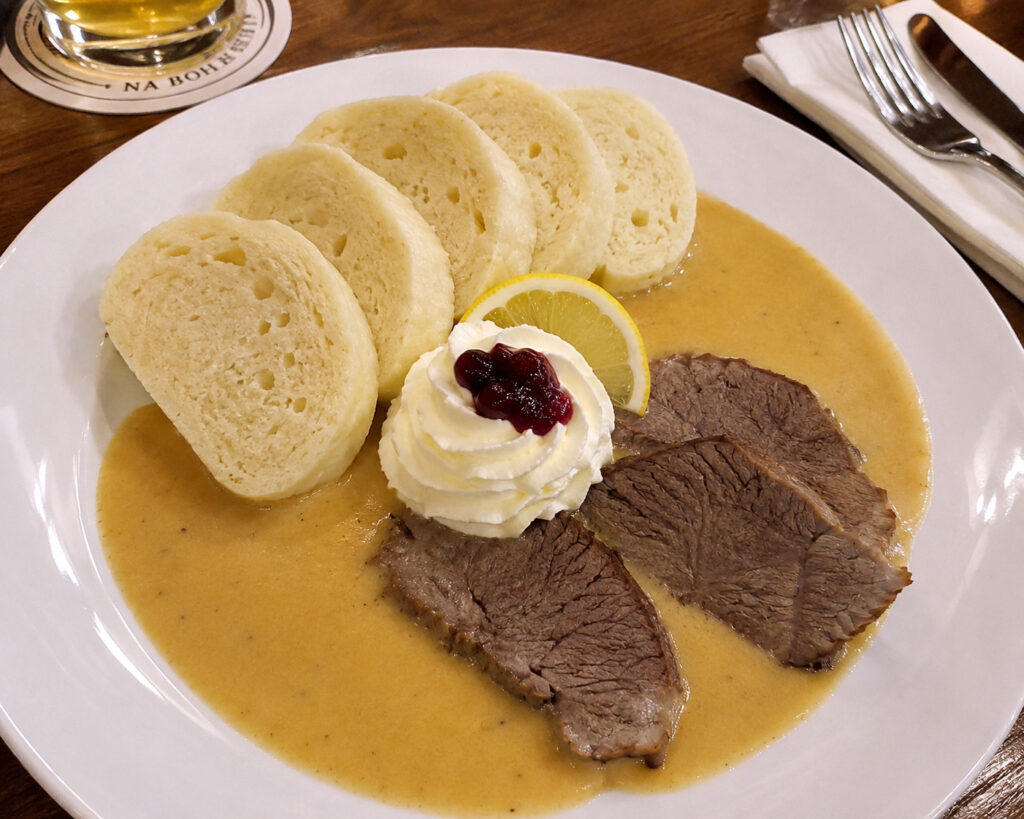
Svíčková, usually called svíčková na smetaně, is one of the most iconic dishes of Czech cuisine. It consists of beef served with a creamy root-vegetable sauce, traditionally accompanied by Czech bread dumplings (knedlíky), whipped cream, and cranberry sauce.
The dish brings together sweet, savory, tangy, and creamy flavors, making it a great example of traditional Czech comfort food. It is especially popular as a hearty homemade meal and is also commonly found in Czech restaurants.
History of Svíčková
The exact origins of Svíčková are not fully documented, and there is no universally accepted story about a single person or restaurant that invented the dish.
What we do know is that Svíčková is part of the long culinary tradition of Bohemia, the historic Czech region where many of today’s best-known Czech dishes developed. Over time, the combination of tender beef, creamy vegetable sauce, and dumplings became a classic of Czech cuisine.
16. Smørrebrød
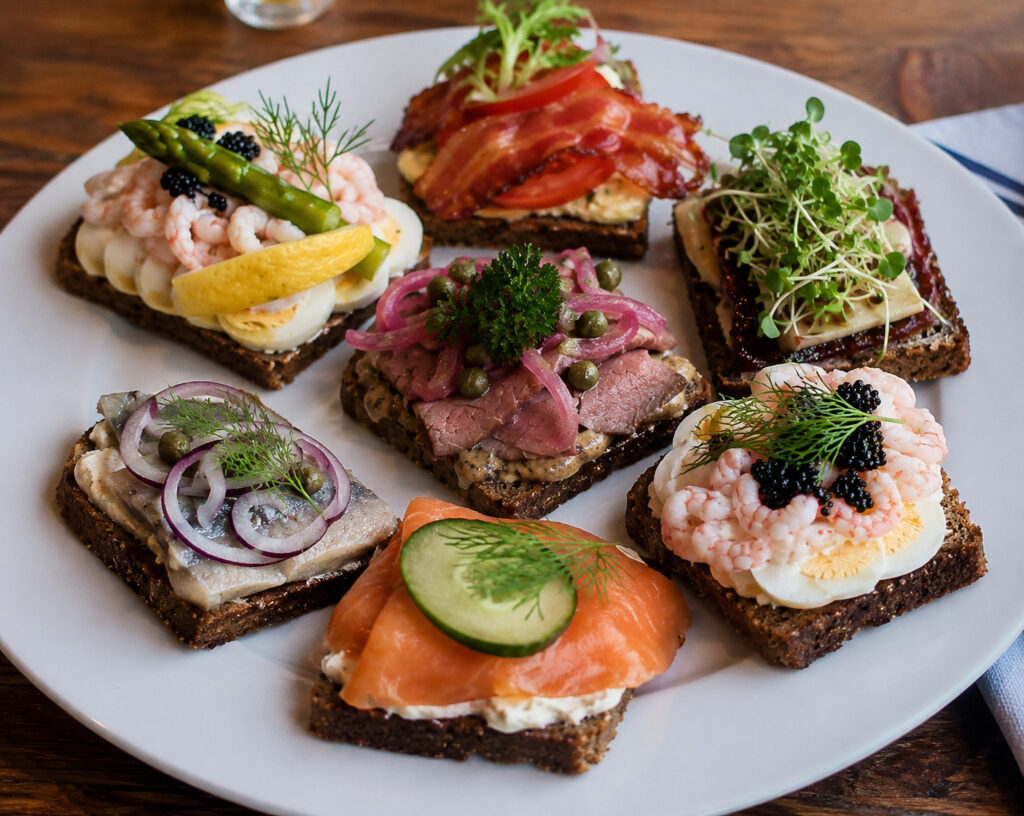
Smørrebrød is one of the most iconic foods of Denmark. It is a traditional open-faced sandwich made with dense Danish rye bread (rugbrød) and topped with a wide variety of ingredients, such as pickled herring, smoked fish, roast beef, liver pâté, shrimp, cheese, eggs, and vegetables.
Unlike a regular sandwich, smørrebrød is usually carefully arranged and beautifully decorated. It is an important part of Danish food culture and is commonly enjoyed for lunch, celebrations, and social gatherings.
History of Smørrebrød
The idea of putting toppings on bread is much older than the word smørrebrød itself. Its development is closely connected to the traditional Danish diet, which included rye bread, butter, preserved foods, fish, meat, and dairy products.
During the 19th century, open-faced sandwiches became increasingly popular in Denmark and gradually became an important part of everyday food culture.
Over time, restaurants and specialized sandwich shops helped turn smørrebrød into a more refined culinary tradition. Different combinations of toppings were created, and the way the sandwiches were arranged became almost an art form.
Today, smørrebrød remains a beloved part of Danish cuisine, combining simple ingredients with careful presentation and traditional flavors.
17. Köttbullar
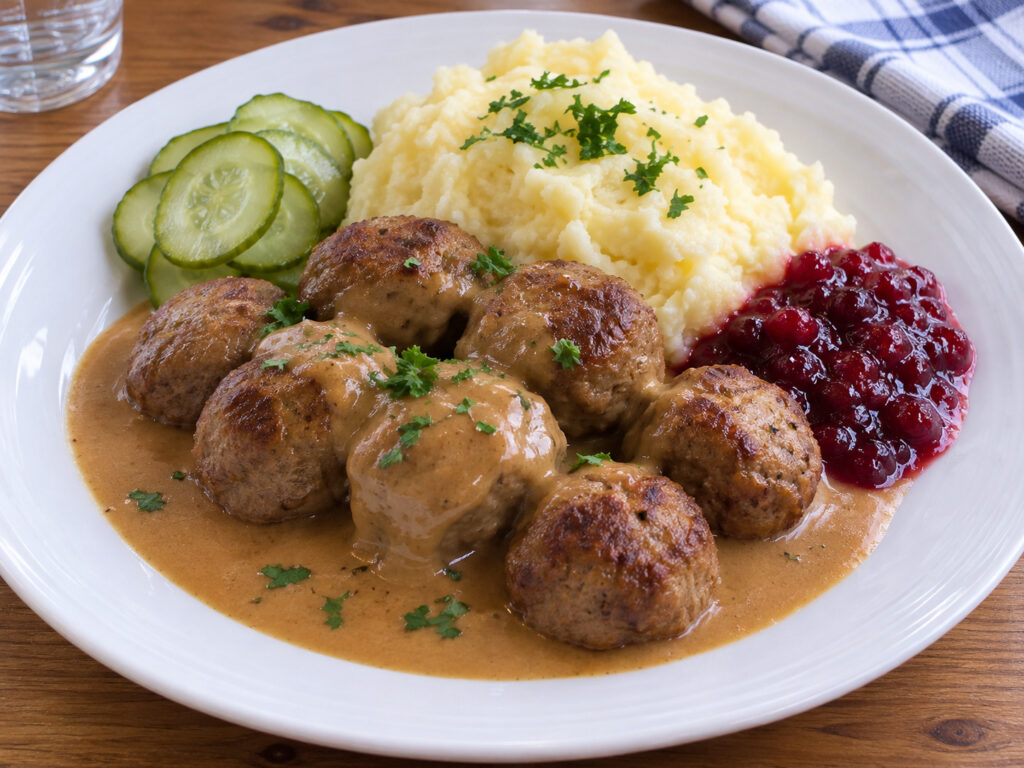
Köttbullar are traditional Swedish meatballs and one of Sweden’s most recognizable national dishes. They are usually made with ground meat, breadcrumbs, milk, onion, egg, salt, and spices, shaped into small balls, and fried until nicely browned.
Classic Swedish köttbullar are traditionally served with creamy gravy, mashed potatoes, lingonberry jam, and sometimes pickled cucumber. The combination of savory meatballs, creamy sauce, and sweet-tart lingonberries gives the dish its distinctive Swedish character.
History of Köttbullar
Sweden has a long tradition of meatball-style dishes, but the history of modern Swedish meatballs is a little more complicated than it might seem. The dish developed over time as part of Swedish home cooking, while also being influenced by wider European culinary traditions.
A popular story connects Swedish meatballs to King Charles XII and his travels in the Ottoman Empire during the early 18th century. According to the story, he brought a meatball recipe back to Sweden.
However, the exact historical connection is still debated, so it is better to view this as a popular story rather than definite proof of the dish’s origin.
What is clear is that köttbullar eventually became deeply rooted in Swedish home cooking and grew into one of the country’s most beloved traditional dishes.
18. Fårikål
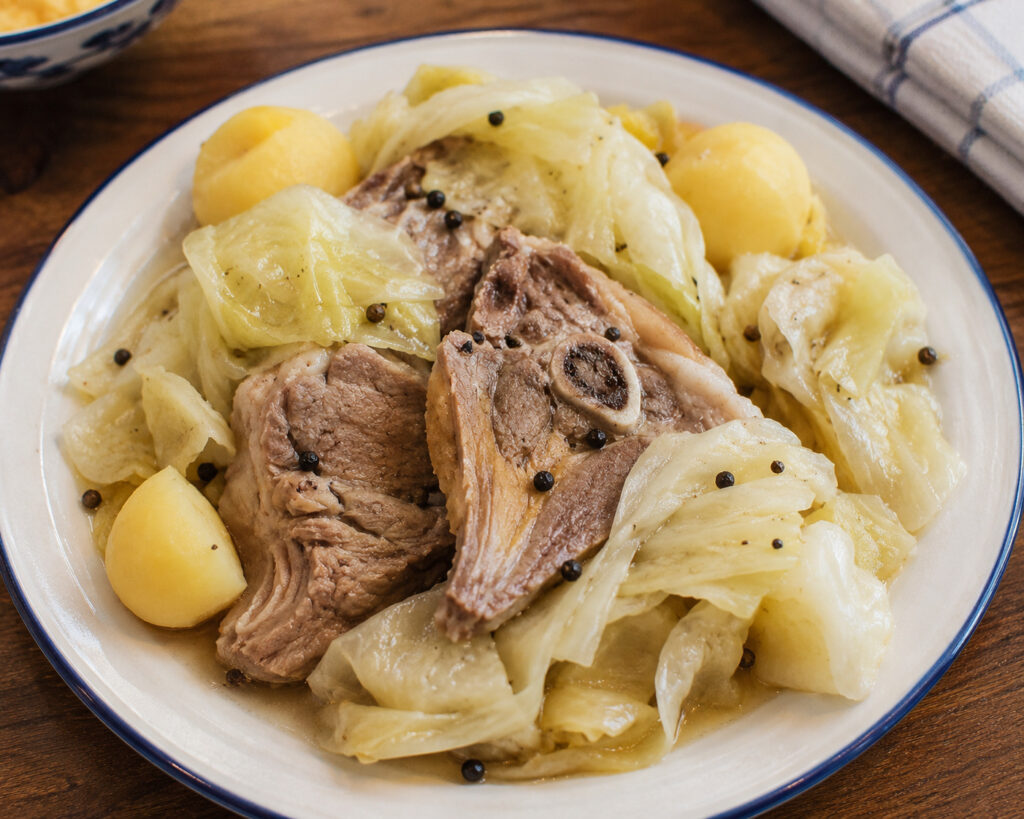
Fårikål is one of Norway’s most traditional dishes and is widely regarded as the country’s national dish. It is a simple and hearty stew made mainly with mutton or lamb, cabbage, whole black peppercorns, and water, and it is traditionally served with boiled potatoes.
Unlike many more elaborate European dishes, fårikål is intentionally simple. Its comforting flavor comes from slowly cooking tender lamb or mutton with sweet cabbage, creating a rich and savory broth.
History of Fårikål
Fårikål has deep roots in Norwegian home cooking. Its exact origin is difficult to pinpoint because similar combinations of sheep meat and cabbage have been eaten in Northern European cooking for a long time.
The dish became closely associated with Norwegian rural food traditions because its ingredients were practical, affordable, and easy to find. Norway has a long history of sheep farming, cabbage cultivation, and potato farming, and fårikål brought these everyday ingredients together in one simple pot.
Over time, it became a beloved part of Norwegian food culture and remains especially popular during the autumn months, when families traditionally gather to enjoy this hearty dish.
19. Hákarl
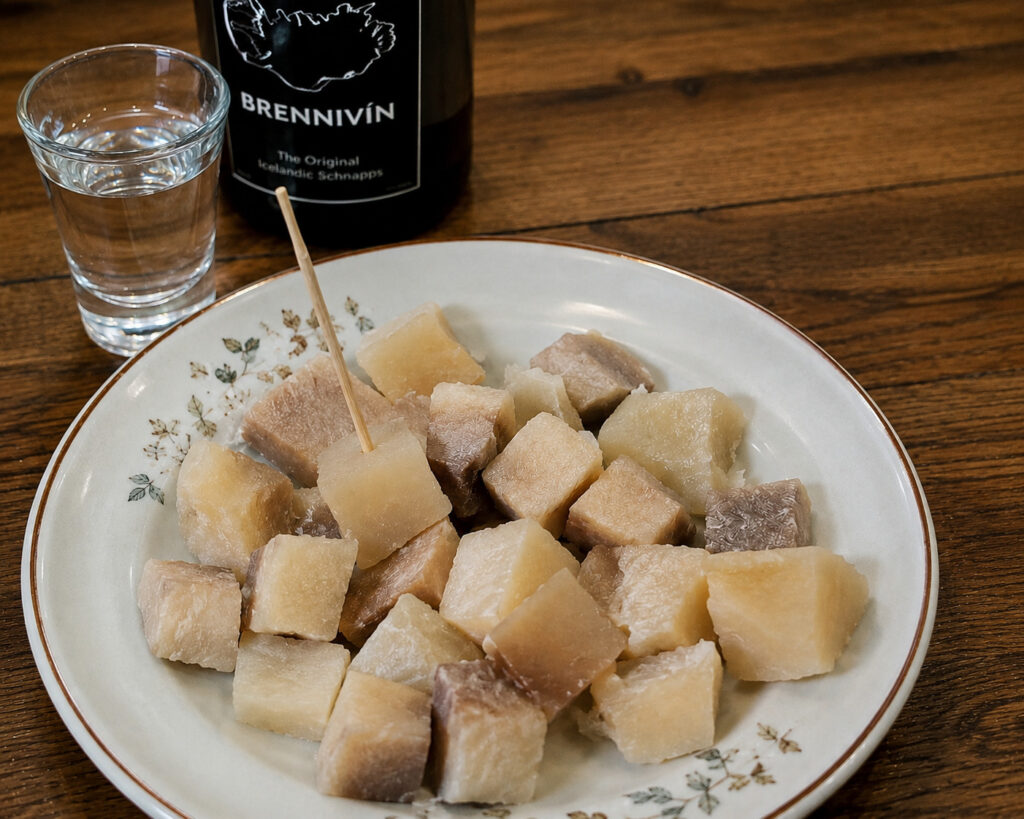
Hákarl is one of Iceland’s most famous—and most unusual—traditional foods. It is fermented shark, traditionally made from Greenland shark (Somniosus microcephalus). The shark goes through a long fermentation and drying process that makes it safe to eat by reducing naturally occurring toxic compounds. The result is small pieces of meat with a very strong smell and a distinctive ammonia-like flavor.
For Icelanders, hákarl is more than just an unusual food. It is connected to the country’s harsh environment, fishing heritage, traditional food preservation, and centuries of survival practices.
History of Hákarl
Hákarl developed in a place where preserving food was essential for survival. Historically, Iceland had long, cold winters, limited agricultural resources, few opportunities to grow a wide variety of crops, and a strong dependence on fishing.
Because of this, people needed reliable ways to keep food for long periods. Fermentation, drying, salting, and smoking all became important traditional preservation methods.
Hákarl is one of the most extreme examples of this preservation tradition. Greenland shark meat contains naturally occurring compounds that make it unsafe to eat fresh, but the traditional fermentation and drying process makes it suitable for consumption.
Over time, hákarl became an important part of Icelandic food heritage, and it is still traditionally enjoyed today, especially during cultural celebrations such as Þorrablót.
20. Karjalanpiirakka
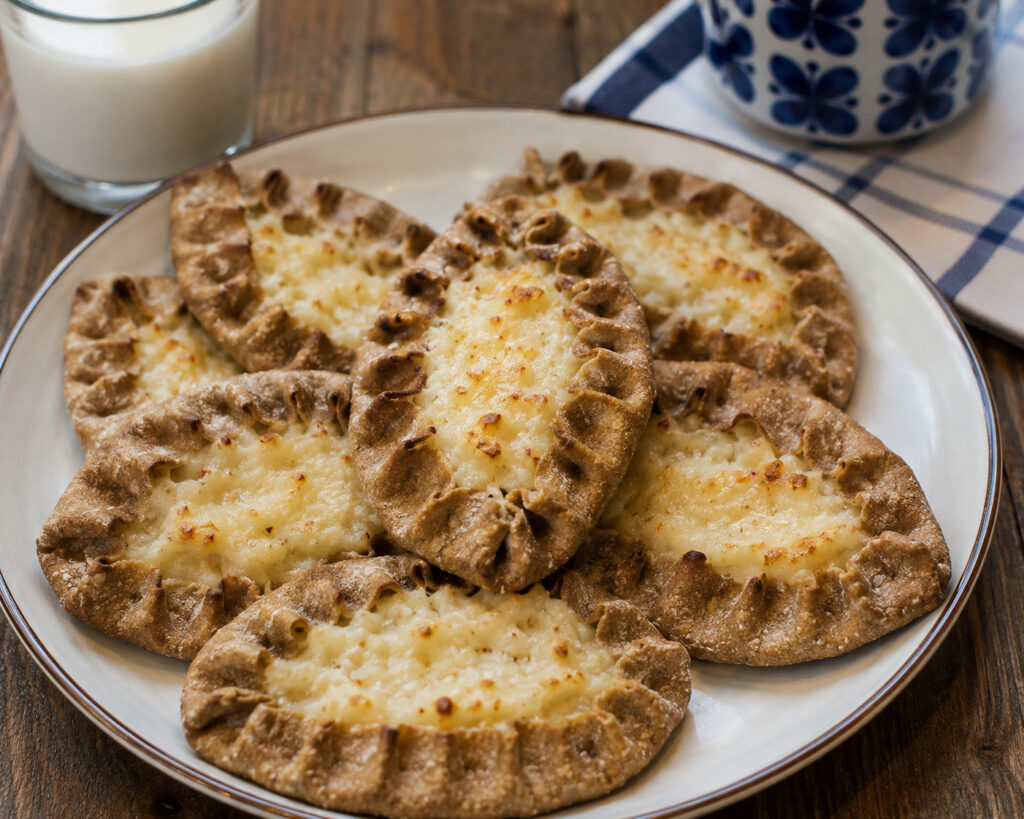
Karjalanpiirakka, commonly called Karelian pie in English, is one of Finland’s most beloved traditional foods. It is a small, oval-shaped pastry with a thin rye crust and creamy rice filling, traditionally topped with egg butter (munavoi).
The pastry originated in the historic Karelia region and became an important part of Finnish food culture. Its simple ingredients—rye, rice, milk, butter, and eggs—reflect the traditional cooking of eastern Finland.
History of Karjalanpiirakka
Karjalanpiirakka originated in Karelia, a historic region that today lies partly in Finland and partly in Russia.
The pastry developed as part of traditional Karelian cuisine, and early versions were not necessarily made with rice. Other traditional fillings included barley, buckwheat, potato, and carrot.
Rice became an increasingly popular filling later, as it became more widely available and affordable. Over time, the rice-filled version became the best-known style of Karjalanpiirakka and an important symbol of Finnish and Karelian food traditions.
21. Pierogi
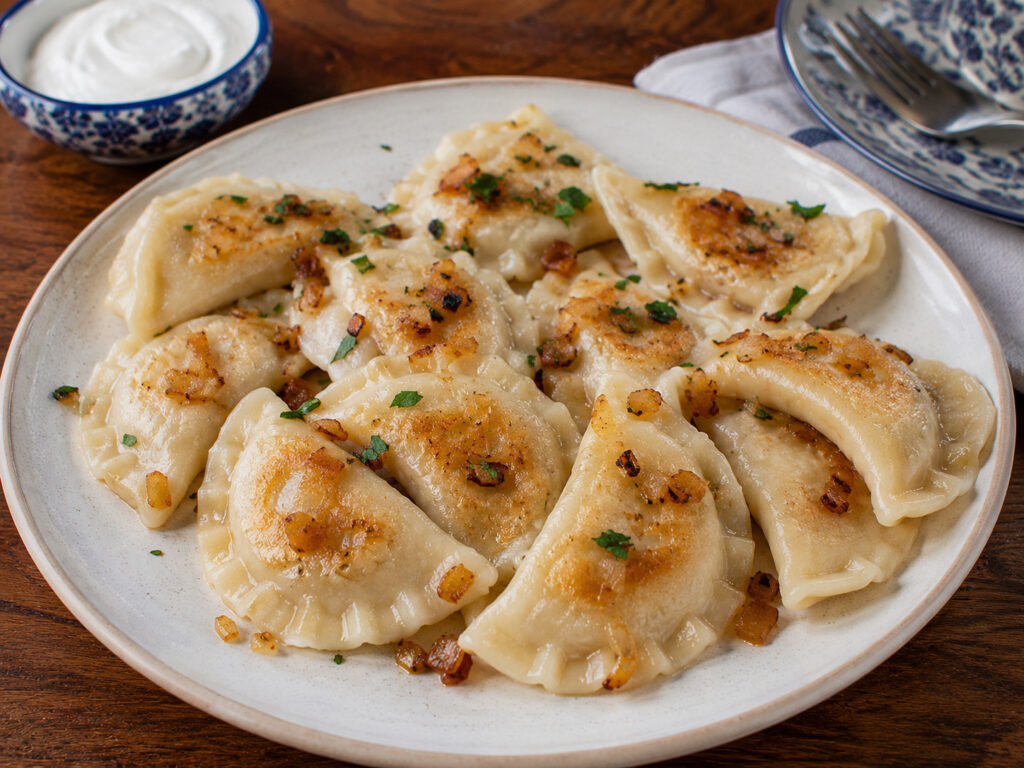
Pierogi are one of the most iconic foods of Poland and perhaps the country’s best-known traditional dish internationally. They are filled dumplings made from unleavened dough, usually boiled and sometimes pan-fried in butter afterward.
Traditional fillings range from potato and farmer’s cheese to sauerkraut and mushrooms, meat, cabbage, and sweet fruit. Pierogi can be enjoyed as everyday food, served during holidays and celebrations, or simply made at home as part of traditional Polish family cooking.
History of Pierogi
Pierogi have a long history in Polish cuisine, although their exact origins are difficult to pin down. Filled dumplings have been made in many parts of Europe and Asia for centuries, so it is hard to say exactly where the idea first began.
Over time, Polish cooks developed their own distinctive styles, fillings, and cooking traditions. Pierogi became especially associated with home cooking and regional Polish cuisine, with different parts of Poland developing their own favorite versions.
Today, pierogi are one of the best-known symbols of Polish food culture, enjoyed both in Poland and around the world.
22. Borscht
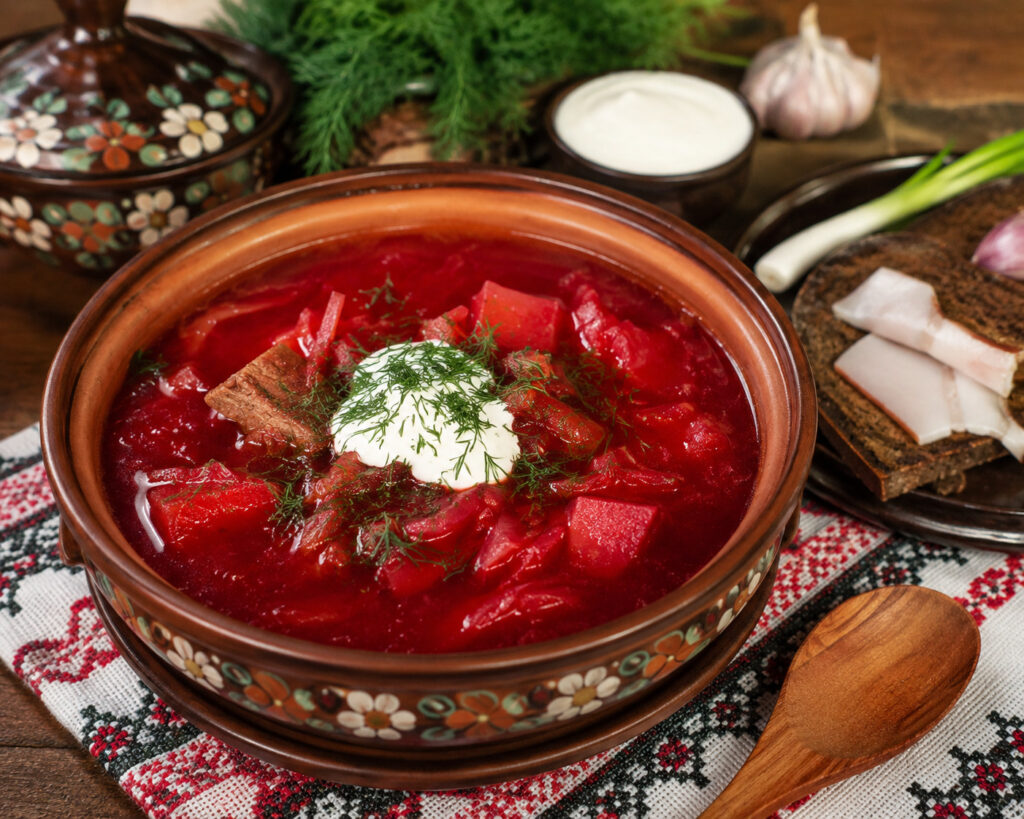
Borscht (Ukrainian: борщ, borshch) is one of the most iconic dishes of Ukraine and an important part of Ukrainian food culture. It is a hearty beet-based soup, usually made with beets, cabbage, potatoes, carrots, onions, and tomatoes, and often prepared with meat or meat broth.
Its deep red color mainly comes from beets, while garlic, herbs, sour cream, and sometimes vinegar or fermented ingredients add a distinctive balance of sweet, sour, savory, and earthy flavors.
In 2022, UNESCO added the culture of Ukrainian borscht cooking to its List of Intangible Cultural Heritage in Need of Urgent Safeguarding. This recognition highlights how important borscht is to Ukrainian cultural identity, traditions, and communities.
History of Ukrainian Borscht
Borscht has deep roots in the food traditions of Ukraine and the wider Eastern European region. The modern beet-based version developed gradually over many centuries rather than being created at one specific time.
Historically, cooks relied on locally available ingredients such as cabbage, root vegetables, herbs, beetroot, grains, meat, and fermented foods. These ingredients were affordable, filling, and well suited to the region’s traditional cooking.
As farming, local ingredients, and cooking traditions changed over time, many different versions of borscht developed across Eastern Europe. However, Ukrainian borscht became especially important as a symbol of Ukrainian home cooking, family traditions, and cultural identity.
23. Sarmale
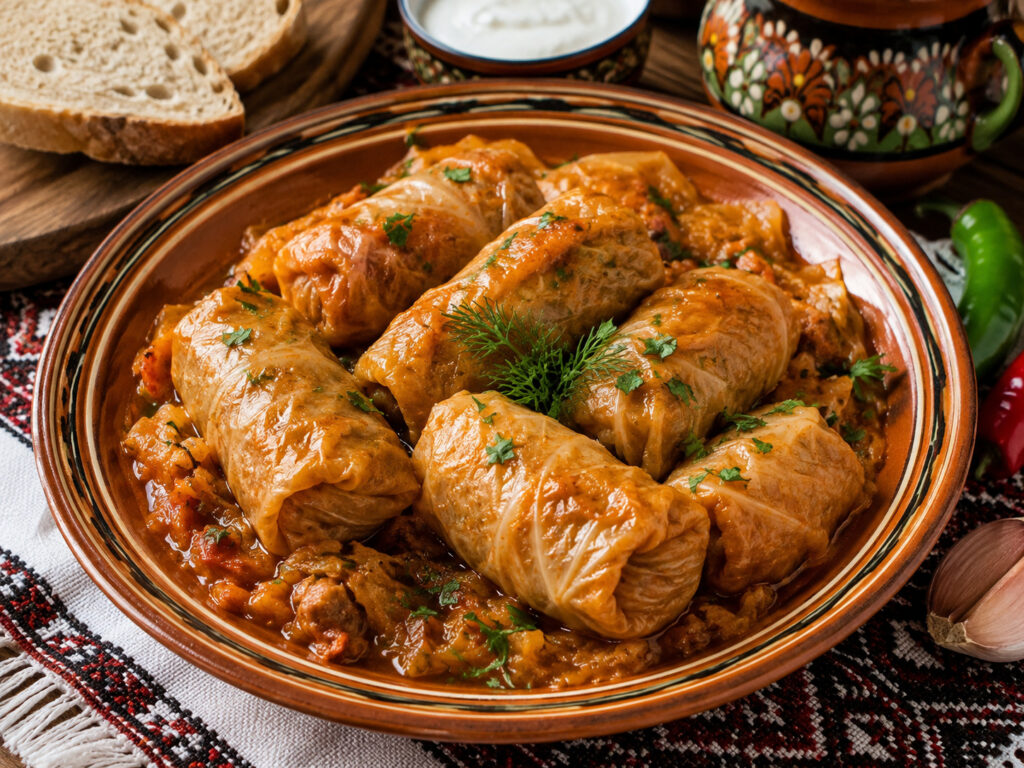
Sarmale are one of the most beloved traditional dishes of Romania. They are stuffed cabbage rolls, usually made by wrapping a filling of minced meat, rice, onions, and seasonings in fermented cabbage leaves, then slowly cooking them until tender.
Sarmale are especially popular during Christmas, Easter, weddings, baptisms, and other important family celebrations. They are commonly served with mămăligă (Romanian polenta), sour cream, and sometimes smoked meat.
Although similar stuffed-vegetable dishes can be found across the Balkans, Eastern Europe, the Caucasus, and the Middle East, sarmale have become deeply connected to Romanian food culture and identity.
History of Sarmale
The history of sarmale is part of a much larger tradition of stuffed-leaf dishes found across the former Ottoman Empire and neighboring regions.
The word sarma comes from a Turkic verb meaning “to wrap” or “to roll.” Similar dishes can be found in Turkey, Greece, Bulgaria, Serbia, Bosnia and Herzegovina, Croatia, Hungary, Moldova, Ukraine, the Caucasus, and the Middle East.
Romanian cooks developed their own version using ingredients and cooking methods that suited local tastes. Over time, sarmale became a staple of Romanian home cooking and an important dish for family gatherings and celebrations.
24. Khinkali
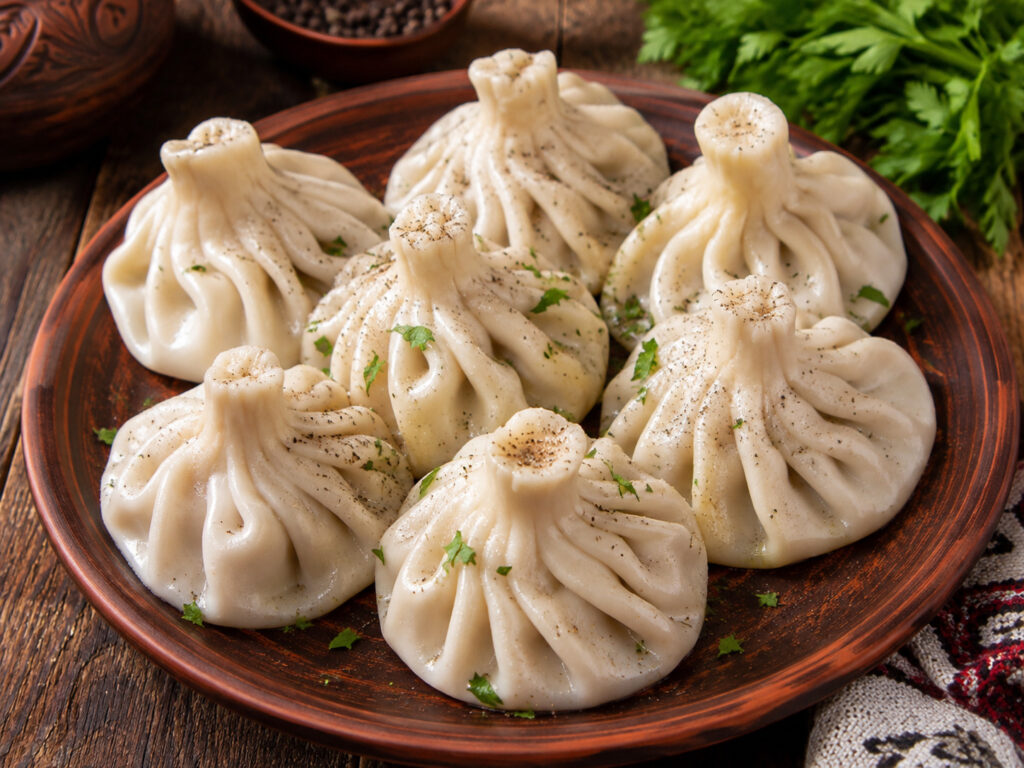
Khinkali (Georgian: ხინკალი) are one of the most iconic foods of Georgia. These large, pleated soup dumplings are traditionally filled with seasoned minced meat and broth, then boiled and served hot.
Unlike many other dumplings, khinkali are made to hold juicy broth inside the dough. Eating them is part of the fun: you pick one up by its knotted top, bite a small hole in the side, carefully drink the hot broth, and then eat the filling and dough.
Khinkali are closely associated with the mountainous regions of Georgia and have become one of the best-known symbols of Georgian cuisine.
History of Khinkali
The exact origins of khinkali are still debated. Georgian culinary tradition strongly connects them with the country’s mountain regions, where they developed as a distinctive local dish.
Georgia has historically been located at a crossroads between Europe and Asia, so its cuisine has been influenced by many neighboring cultures. Similar filled dumplings can be found across the wider region, but Georgian khinkali developed their own distinctive shape, preparation methods, and eating traditions.
Over time, khinkali spread beyond the mountain regions and became a beloved part of Georgian food culture, enjoyed in homes, restaurants, and traditional gatherings across the country.
25. Ćevapi
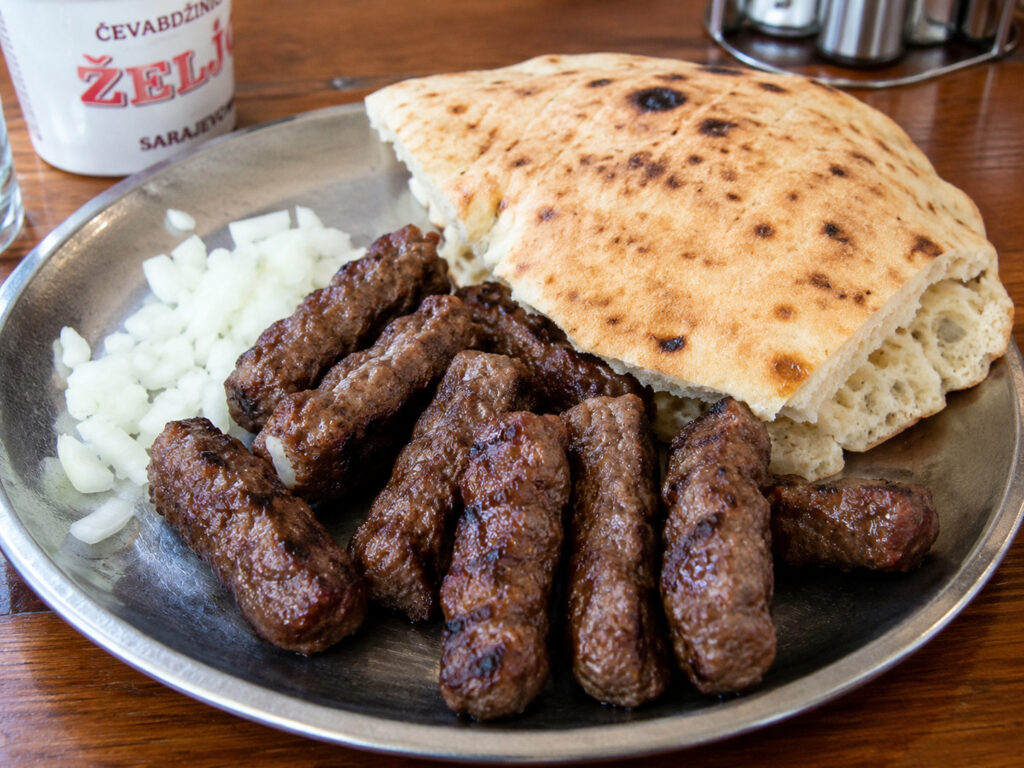
Ćevapi (also spelled ćevapčići) are small, finger-shaped grilled minced-meat sausages that are among the most beloved foods of the Balkans. They are especially popular in Bosnia and Herzegovina, Serbia, Croatia, Montenegro, and North Macedonia, with each region having its own variations in meat, seasoning, size, and serving style.
Unlike traditional sausages, ćevapi are usually made from seasoned minced meat without a casing. They are grilled over high heat and traditionally served with flatbread, chopped raw onion, and a creamy or pepper-based accompaniment.
The dish is particularly famous in Bosnia and Herzegovina, where Sarajevo ćevapi and Banja Luka ćevapi are well-known regional specialties.
History of Ćevapi
The history of ćevapi is closely connected to Ottoman culinary influence in the Balkans. The name is related to kebab, part of a much wider tradition of seasoned and grilled meat dishes.
As Ottoman cooking traditions mixed with local Balkan cuisines, different types of minced-meat dishes developed across the region. Over time, ćevapi became deeply rooted in the food cultures of the former Yugoslav region, with different towns and regions creating their own distinctive styles.
Today, ćevapi are a popular part of Balkan food culture, enjoyed at casual restaurants, family gatherings, and outdoor grills throughout the region.
Final Thoughts
The traditional foods of Europe offer a delicious journey through history, geography, culture, and regional identity.
From the wood-fired pizzas of Italy and seafood dishes of Portugal to the hearty stews of Hungary and comforting dumplings of Eastern Europe, every dish tells a story about the people, places, and traditions that shaped it.
And this list of 25 traditional European dishes only scratches the surface. Europe is home to thousands of regional specialties, family recipes, breads, cheeses, desserts, and traditional cooking methods, each with its own unique story.
Whether you’re planning a European adventure or simply exploring international cuisine from home, trying traditional food is one of the best ways to experience the culture of a destination. After all, sometimes the best way to understand a place is to taste it.